The first time I gathered the courage to tell someone I love them. It made me feel weak in the knees. It’s stime nice to hear even the millionth time you say. But the phrase may also start to feel familiar. There are other ways to say I love you when simple words feel overdone.
The phrase I love you starts feeling losing some of its meaning. Using the same words over and over again, you need to think about what you are saying. That is why switching up what you say is important. Let’s see how a change in words will help you revive your love life.
Deepest feelings are often very hard to express. The three small words are not always enough to carry the weight. The most profound love is what is trapped in spaces between words. The following ways will show your love without saying a single word.
I noticed you were running low on your favorite shampoo, so I picked some up today. It moves beyond generic “thoughtfulness” and into the realm of hyper-specific, mundane observation. It says, “I pay attention to the details of your life that even you might overlook.”
When you’re stressed, I instinctively lower my voice and move more slowly around you. It highlights an unconscious, physical calibration of one’s own energy to create a safe space for someone else. It’s love as a calming presence.
I saved that article you mentioned three weeks ago, just so I could ask you about it today. It demonstrates a commitment to valuing their intellectual and conversational threads, weaving a connection over time rather than just in the moment.
I don’t always need a solution when you vent; I just need you to know that your frustration lives in me now, too. It reframes empathy as emotional cohabitation. It’s not just understanding their feeling, but carrying them alongside them.
I cleared my schedule just to have nothing to do with you. It elevates “boring” time to the highest luxury. It says that your presence is the only agenda I need, making shared emptiness a profound act of intimacy.
I remember exactly how you take your coffee, but more importantly, I remember how you took it five years ago. It acknowledges that love is a living history. It celebrates not just knowing someone, but witnessing and remembering their evolution.
When you’re telling a story, I’m not waiting for my turn to speak. It defines love as the rare gift of complete, unselfish attention, killing the natural urge to interject or relate everything to oneself.
I kept that silly voicemail you left three years ago. I listen to it sometimes when I miss your voice. It reveals that love creates its own archive of artifacts, finding profound value in things the world would consider trivial.
I see the weight you’re carrying, and I’m going to silently walk beside you until you’re ready to put some of it down. It frames love as steadfast companionship without the pressure to “fix” anything. It’s the promise of not abandoning someone in their heavy season.
I won’t tell you “I told you so,” even though I’m dying to. It identifies love as the conscious sacrifice of being “right” for the sake of protecting someone’s dignity in a moment of vulnerability.
I built a bookshelf last weekend. While I did, I kept thinking, “She would put her poetry books right here on this shelf.” It shows that love is a lens through which you see the world, integrating the other person into your solitary activities and plans.
When you achieve something, my first instinct isn’t just pride—it’s a fierce, protective urge to shield your joy from anyone who might try to diminish it. It identifies a primal, almost warrior-like instinct that comes from deep love—not just celebrating wins, but guarding them.
I’ll let you steal a fry from my plate, even though that is, objectively, my favorite fry. It grounds love in the miniature, almost absurd sacrifices that punctuate daily life. It’s a small death of the ego for the sake of shared pleasure.
Your silence doesn’t scare me. I’ll sit in it with you until you’re ready to fill it. It confronts the discomfort most people have with quiet, transforming it into an act of profound acceptance. It says, “I don’t need you to perform for me.”
I’m not just invested in the person you are today, but I’m genuinely excited to meet all the future versions of you. It projects love forward, committing not just to the present moment but to the entire, unknown journey of a person’s growth and change.
2. Other Ways To Say I Love You So Much
Saying I love you always in one way creates a space, and true love disappears without a trace. Love is not about measurement but the weight of proof. When “so much” is not there, the feelings start to disappear. Reignite your love with the following quotes to rebuild your foundation.
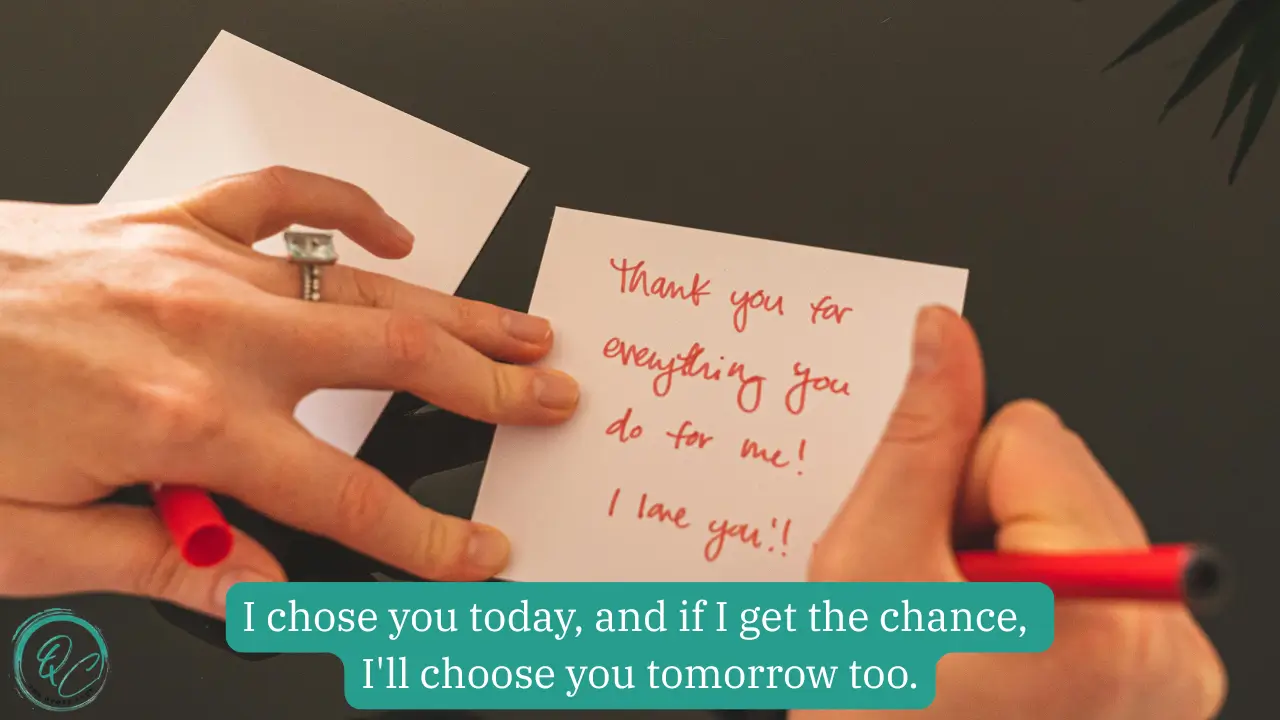
I chose you today, and if I get the chance, I’ll choose you tomorrow too. Why “I love you so much” isn’t enough: Because love isn’t a feeling you have—it’s a decision you make, repeatedly, especially on the days when the feeling is hiding.
I was angry, but I stayed soft with you anyway. Why “I love you so much” isn’t enough: Because anyone can be loving when it’s easy. Real depth is measured by how gently you handle someone when you’re not feeling particularly loving at all.
Your happiness doesn’t threaten mine—it completes it. Why “I love you so much” isn’t enough: Because “so much” often implies volume, but mature love is about integration—their joy actually becomes a necessary ingredient for your own.
I don’t just want to be there for the milestones; I want to be there for the Tuesday nights. Why “I love you so much” isn’t enough: Because big love is easy to perform on big days. The mundane, uncelebrated moments are where real devotion either shows up or doesn’t.
I caught myself smiling at my phone because I remembered something you said three hours ago. Why “I love you so much” isn’t enough: Because the declaration fades instantly, but the residue—the lingering smile hours later—is proof the feeling never left.
I’m not afraid of the hard conversations. I’m more afraid of the silence we’d create by avoiding them. Why “I love you so much” isn’t enough: Because it’s easy to say when things are smooth. True love is measured by the willingness to risk comfort for connection.
I know exactly where you’re sensitive, and I walk carefully there without you having to ask. Why “I love you so much” isn’t enough: Because words can’t map the tender terrain of someone’s wounds. Only observation and care can learn the path.
When you succeed, it feels personal—like my own blood just won something. Why “I love you so much” isn’t enough: Because “so much” is external. This is internal—their victory actually courses through your veins as if it were yours.
I kept a piece of news to myself all day just so I could watch your face when I told you first. Why “I love you so much” isn’t enough: Because it describes quantity. This describes priority—you being the first person I want to witness my life.
I don’t need you to perform your love for me. I just need you to stay. Why “I love you so much” isn’t enough: Because grand declarations often become performances. The quiet act of remaining—through boredom, through difficulty—is the only proof that matters.
I’ve already imagined three different futures for us, and I’d be happy in all of them. Why “I love you so much” isn’t enough: Because loving “so much” is present tense. This shows you’ve already invested in versions of us that don’t even exist yet.
When the world humiliates you, I don’t rush to fix it—I just stand between you and it for a while. Why “I love you so much” isn’t enough: Because words can’t shield you from shame. Only a body willing to absorb the impact can do that.
I remember the small things you’ve forgotten about yourself. Why “I love you so much” isn’t enough: Because you can forget your own value, but love is the memory bank that holds it for you until you’re ready to reclaim it.
I don’t love you despite your flaws. I love you, including them—they’re part of the architecture. Why “I love you so much” isn’t enough: Because conditional love always has a ceiling. This removes the ceiling entirely by integrating the imperfections.
If I had to build a life from scratch, I’d build it the same—just to end up here with you again. Why “I love you so much” isn’t enough: Because “so much” measures intensity. This measures destiny—the belief that you’re not just loved, but fated.
Want to surprise him with something sweet and meaningful? Explore our thoughtful collection of
voice message ideas
to make your boyfriend feel truly special.
3. Easy Ways to Say I Love You
If you think it always needs a perfect time to say I love you are wrong. The only thing you need is courage and attention. The willingness to witness what others hide can make your day in real time.
You first. How easy? Two words. Let them take the last bite, the warmer seat, the smaller inconvenience. Priority is the shortest love language.
I saved that for you. How easy? An article, a meme, a piece of chocolate from a hotel room. Thinking of someone when they’re not there requires zero effort—just presence.
Go ahead, I’m listening. How easy? Putting down your phone, turning your body toward them, and meaning it. Attention is the cheapest luxury you can give.
Come with me. How easy? Errands, coffee runs, boring Sunday grocery trips. Including them in the mundane says they’re not just invited to the events—they’re invited to the life.
I made enough for two. How easy? An extra scoop of rice, a second cup of coffee brewed automatically, leftovers portioned with them in mind. Anticipation is love without the recipient even knowing.
Tell me more. How easy? Two words that say their thoughts aren’t boring you, their stories have room to grow, and you’re not just waiting for your turn to speak.
I got this. How easy? Taking something off their plate—literally or figuratively—without being asked. Love is often just the subtraction of someone else’s burden.
You’re going to be so good at that. How easy? Catching their insecurity before it speaks and replacing it with belief. Confidence is expensive to build alone—cheaper when someone else invests first.
Sit down. I’ll handle it. How easy? Five words that say rest is allowed, you’re not alone in the labor, and someone else can carry for a while. Love is sometimes just a permission slip to stop.
I noticed. How easy? New haircut, bad day they’re hiding, extra effort they hoped someone would see. Witnessing is free. Withholding it costs nothing. Choose to speak.
Stay there. I’m coming to you. How easy? Removing the distance, being the one who moves, not making them travel when they’re tired. Love is often just showing up on their side of town.
That reminded me of you. How easy? A song, a sky, a stranger who laughed like them. Pointing out the moments they haunt you is just telling the truth about where your mind lives.
How did that feel? How easy? After their presentation, their difficult conversation, their small win. Asking about the feeling behind the event says you care about their experience, not just the outcome.
I’ll drive. How easy? Two words that mean they can rest, look out the window, and arrive less tired. Love is sometimes just taking the wheel so they don’t have to.
I’m not going anywhere. How easy? Four words that cost nothing to say but everything to prove over time. The easiest promise to make. The most valuable one to keep.
Which of these quiet, easy acts of love made you pause and think, “I could do that today”—and who’s the first person who deserves to feel it from you? Tell us in the comments.
4. Poetic Ways to Say I Love You
Love is always inspired by poetry that carries the weight of emotions. But sometimes only “I love you” is too small to feel loud. Poetry is not to decorate but to shape it. The following poetic ways are what your love deserves.
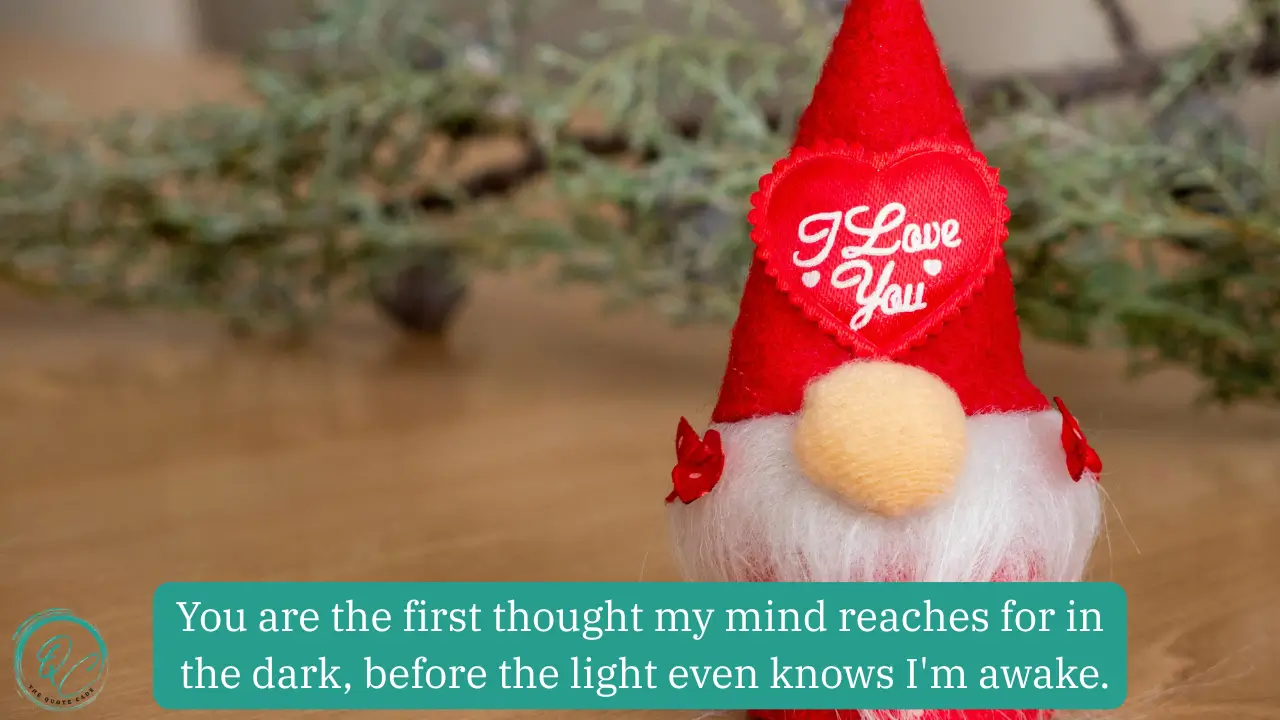
You are the first thought my mind reaches for in the dark, before the light even knows I’m awake. How poetic is this? It captures love as instinct—not a decision, but the brain’s default setting the moment consciousness returns.
I didn’t know my heart had rooms I hadn’t visited until you opened the doors and walked in. How poetic is this? It reframes love not as filling you up, but as expanding the very architecture of who you are.
You are the reason I believe in parallel lives—because I’m certain I’ve loved you in every single one. How poetic is this? It transcends this lifetime, making love a cosmic constant rather than a fortunate accident.
I want to be the silence you come home to after a world that won’t stop shouting. How poetic is this? It positions love as refuge, not excitement—the peace, not the noise. Mature love knows which one matters more.
You exist in me as memory exists in the body—not something I think about, but something I can’t move without. How poetic is this? It makes love physical, biological, inseparable from function and motion.
I have traced the shape of your absence on every room you’ve ever left. How poetic is this? It admits that missing someone is active, not passive—a constant drawing and redrawing of where they used to be.
You are the plot twist I never saw coming, but now I can’t imagine the story without you. How poetic is this? It honors the unexpected nature of real love while acknowledging that retrospect makes it feel inevitable.
Loving you has taught me that infinity isn’t about time—it’s about moments that feel like they should never end. How poetic is this? It rescues “forever” from the clock and places it in the quality of presence, not the quantity of days.
You are the language my heart was always trying to speak before it found you. How poetic is this? It suggests that all previous attempts at love were just stuttering practice for the fluency you finally achieved with them.
I want to be the person you call when the world proves you right about your fears—and the person who proves you wrong by how I answer. How poetic is this? It promises not just celebration but repair—the mending of wounds the world inflicted.
You are not just the love of my life. You are the life in my love—the reason any of it means anything at all. How poetic is this? It inverts the cliché, suggesting they don’t just receive your love—they animate it, give it purpose.
I carry you the way the sky carries the moon—not holding, but orbiting. Always near. Always affected. Always pulled. How poetic is this? It captures love as gravitational, invisible, yet undeniable—a constant force that shapes your movement.
You are the question I no longer need answered because just asking it brought me here. How poetic is this? It finds peace in uncertainty, suggesting that the search itself—the wondering about love—was the destination.
I have stopped counting the ways I love you because numbers are for things that end. How poetic is this? It refuses to quantify the infinite, understanding that measurement is a form of limitation.
You are the first place I go when I need to find myself. How poetic is this? It says that your love doesn’t just hold me—it orients me, reminds me who I am when I’ve forgotten.
Looking for meaningful ways to express your feelings? Explore our heartfelt collection of
paragraph ideas for him
to show your love and appreciation.
5. Romantic Activities to Say “I Love You.”
Love is not always loud. It is often expressed in moments we cannot imagine. A right and light activity can say everything that grand gestures cannot. The following quotes prove that someone is seen, known, and chosen in silence.
Cook their favorite meal from childhood—the one their parents used to make—and watch them travel back in time with every bite. You’re not just feeding them. You’re giving them access to a version of themselves that only memory could previously visit.
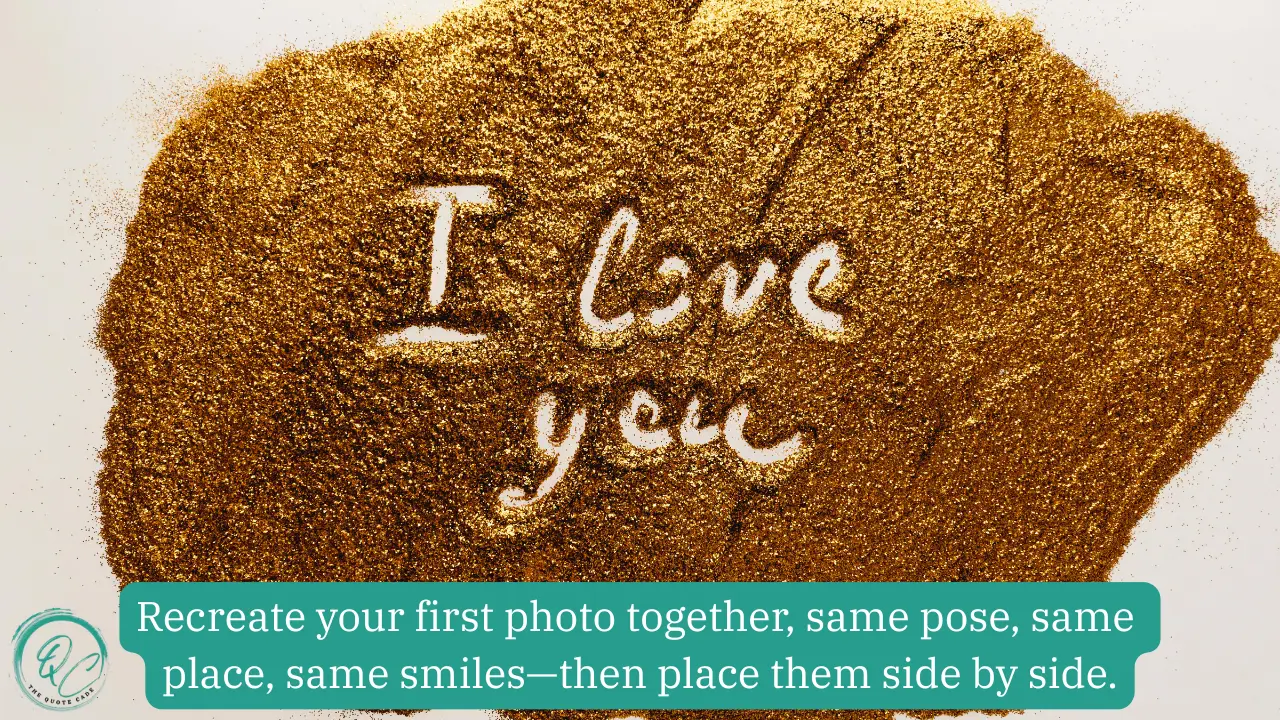
Recreate your first photo together, same pose, same place, same smiles—then place them side by side. You’re not just being nostalgic. You’re building a visual timeline that proves your love has endurance, not just intensity.
Plant something together that takes years to grow—a tree, a garden, anything that demands patience. You’re not just passing time. You’re investing in a future you’re both assuming you’ll share when that thing finally blooms.
Wake them up at 3 a.m. just to drive and watch the sunrise somewhere neither of you has been. You’re not just being spontaneous. You’re proving that comfort matters less than experience when you’re with them.
Write them a letter by hand, seal it, and hide it somewhere they’ll find months from now. You’re not just communicating. You’re leaving evidence of your love for a future version of them who might need it.
Learn something difficult, specifically because they love it—an instrument, a game, a hobby that never interested you before. You’re not just being supportive. You’re entering their world so completely that their joy becomes accessible to you.
Take them to an airport with no bags packed and people-watch, inventing stories for every stranger who walks by. You’re not just being playful. You’re building a shared imaginary world together —a private mythology that belongs only to you.
Rebuild something they broke—not for them, but with them—and don’t rush to finish. You’re not just fixing an object. You’re modeling that broken things can be restored, and that repair is its own kind of intimacy.
Create a ritual around something boring—Sunday coffee, Wednesday night laundry, Friday morning commutes—and never break it. You’re not just establishing a routine. You’re making the mundane sacred by showing up for it consistently.
Buy two journals. Write in yours for a month, then swap and read each other’s private thoughts without judgment. You’re not just sharing feelings. You’re allowing yourself to be witnessed in your raw, unedited state—no performance allowed.
Take them to a place that mattered to you before they existed—your childhood park, your college library, your first apartment—and tell them the stories. You’re not just sharing history. You’re inviting them into the person you used to be, giving them context for who you’ve become.
Plan a day where you do everything they want—no negotiation, no compromise, no “what do you want to do?”—just pure surrender to their preferences. You’re not just being generous. You’re demonstrating that their happiness is genuinely more interesting to you than your own agenda.
Build a fort in your living room like children would, complete with blankets and pillows, and refuse to leave until morning. You’re not just being silly. You’re accessing the part of each other that existed before adult responsibilities taught you to be serious.
Create a shared playlist that evolves with your relationship—add songs quarterly, never delete, and listen to it from start to finish once a year. You’re not just making music. You’re building an audio time capsule that captures who you were at every stage of loving each other.
Spend an entire day in silence together—no phones, no words, just presence—and communicate only through touch and gesture. You’re not just being quiet. You’re discovering that your connection doesn’t rely on language, and that comfort in silence is the deepest intimacy of all.
6. Funny Ways to Say “I Love You.”
Love is not only about a candlelight dinner or standing at the top hill. Sometimes, naughty gestures or teasing your partner can fill the atmosphere with love. Because the couples who laugh together actually enjoy more. Let the quotes below add some fun to your love life.
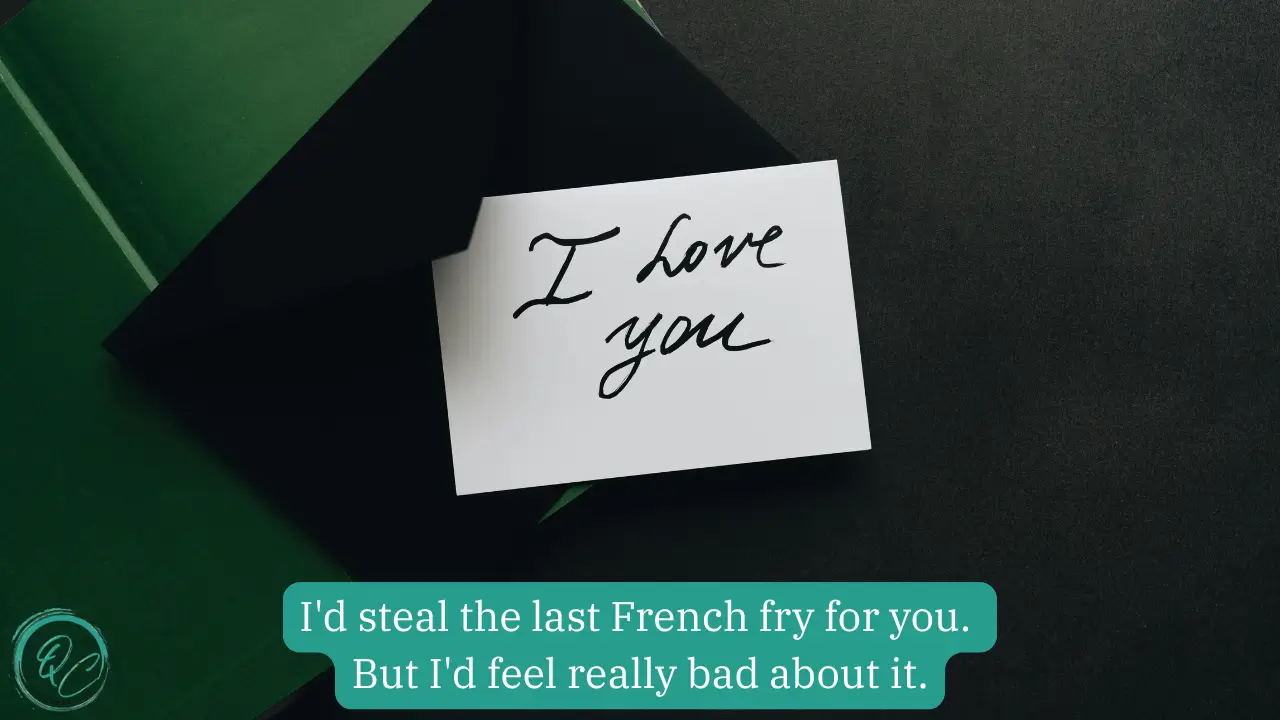
I’d steal the last French fry for you. But I’d feel really bad about it. How does fun add spice? It admits the theft while proving the guilt, which is basically marriage in one sentence.
If loving you is wrong, I don’t want to be right. Mostly because you have the car key,s and I’m too lazy to walk. How does fun add spice? It turns devotion into a practical joke, reminding them that love and convenience sometimes share a bed.
I love you more than coffee. Which, for both our safety, is the highest compliment you’ll ever receive. How does fun add spice? It uses shared knowledge—your caffeine addiction—as the ultimate benchmark. They know what you’re sacrificing.
I’m not saying you’re my favorite person, but if you were a pizza, I’d never share the last slice. How does fun add spice? It redefines romance as exclusive pizza rights, which is honestly more binding than most vows.
I love you even when you leave your socks everywhere. That’s not romantic—that’s clinical insanity. But here we are. How does fun add spice? It names the annoyance while confirming it’s not a dealbreaker, which is the actual definition of long-term love.
You’re the only person I’d willingly share my wifi password with. Don’t make me regret this. How does fun add spice? It positions trust as something precious and slightly terrifying—which is exactly what real intimacy feels like.
I love you. And I have witnesses. So you can’t return me. How does fun add spice? It frames commitment as a legally binding transaction with no refunds—playful, possessive, and weirdly reassuring.
You’re my favorite notification. How does fun add spice? In a world of spam and noise, being the one alert someone actually wants to open is deeply modern romance.
I love you more than my phone battery at 2%. And that’s statistically impossible. How does fun add spice? It uses millennial anxiety—low battery panic—as the ultimate measure of devotion. They know you mean it.
I’d give you the last of my water at 3 a.m. But I’d definitely sigh dramatically first, so you know it cost me something. How does fun add spice? It admits the tiny sacrifice while keeping it honest—no performative sainthood, just real partnership with commentary.
You’re the reason I check my phone. And also the reason I never get anything done. Balance. How does fun add spice? It blames them for the distraction while admitting the distraction is exactly what you wanted.
I love you. Now pass the remote and nobody gets hurt. How does fun adds spice? It wraps affection in playful threat, acknowledging that love and negotiation are permanently tangled.
You had me at “I’ll drive.” But you really had me at “I brought snacks.” How does fun adds spice? It honors the practical evolution of love—from grand gestures to the quiet heroism of remembering the chips.
I love you even when you’re annoying. Especially then, actually. Because annoying means you’re comfortable enough to be yourself. How does fun add spice? It reframes irritation as intimacy, flipping the script on what “annoying” actually proves about a relationship.
You’re stuck with me. I asked your mom—she said no returns, exchanges, or refunds. Lifetime warranty void if you try to leave. How does fun add spice? It brings in the family, the fine print, and the threat—all while making them smile at being permanently claimed.
Want to touch her heart with beautiful words? Check out our romantic collection of
romantic love poems
to express your deepest feelings and make her feel cherished.
7. Ways to Say “I Love You” Using Acts of Service
Love does not always need words. Sometimes it’s shown in actions without being asked. The burden is lifted for another person, which shows you care.
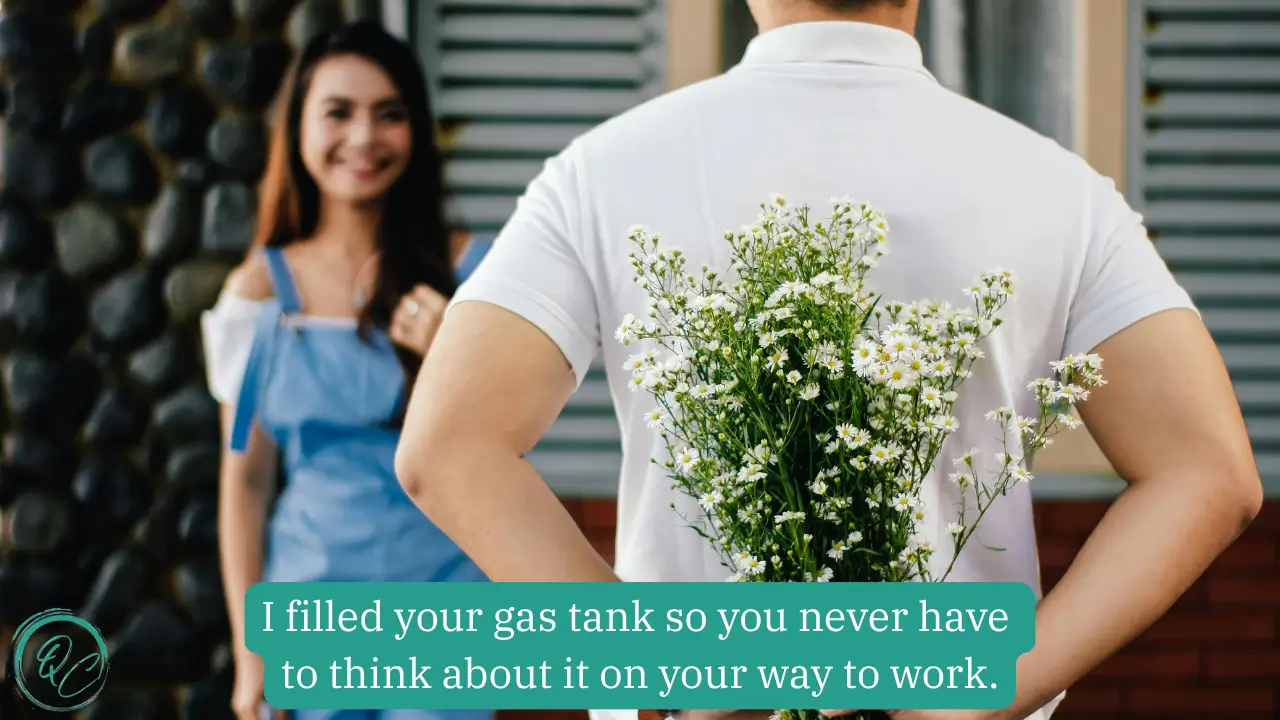
I filled your gas tank so you never have to think about it on your way to work. One less mental load. One less stop. One less thing between them and their day.
I already called your mom, so you don’t have to pretend you remembered her birthday. Absorbing the guilt of forgetting so they can feel the joy of being remembered.
I fixed the thing you’ve been cursing at for three weeks while you were out. Translating their frustration into relief before they even have to ask again.
I packed your bag last night because I know mornings are hard for you. Meeting them in their struggle before the struggle even arrives.
I let you sleep in and handled the chaos alone. Absorbing the morning madness so their rest remains undisturbed.
I already did the paperwork you’ve been avoiding since March. Slaying their procrastination dragon while they pretend it doesn’t exist.
I warmed your side of the bed so you don’t have to shiver yourself to sleep. Physical comfort is engineered while they’re still brushing their teeth.
I made enough lunch for two because I know you always forget yours. Anticipating their forgetfulness and quietly covering for it.
I took your car for the oil change because you haven’t stopped talking about being tired. Listening to what they’re saying between the words—and acting on it.
I ran interference with your family so you could have a quiet hour. Being the shield so they don’t have to be the warrior today.
I stocked the fridge with exactly what you like when you were too busy to notice it was empty. Noticing the emptiness so they don’t have to arrive home to it.
I figured out the thing that’s been confusing you and left instructions on the counter. Turning their confusion into clarity while they’re not watching.
I carried the heavy thing without asking if you needed help because you always say no. Bypassing their polite refusal and just doing what needed doing.
I cleaned up the evidence of your bad day, so you wake up to a fresh start. Erasing yesterday’s weight so today feels lighter before it even begins.
I remembered the appointment you forgot and moved my schedule to take you. Reorganizing your own life to catch what slipped through theirs.
Which of these acts made you think, “That’s exactly what I wish someone would do for me”—or better yet, “That’s what I want to do for them”?
8. Say “I love you” Without Saying it in a Text
In a world of digital era, the most powerful expression is not in words. But in the quiet corners of the screen. The skill of reading between the lines lets you say I love you without saying a word.
I sent you that meme at 2 a.m. because you’re the first person I think of when I laugh alone. The silent worth: It proves you occupy their thoughts in moments of pure, unguarded joy—not just when they need something.
I didn’t just like your photo. I zoomed in on your face and smiled. The silent worth: It’s the difference between public acknowledgment and private reverence—the latter is where love actually lives.
I typed out a message, deleted it, typed it again, and sent it anyway because you matter more than my fear. The silent worth: It shows they’re worth overcoming your own hesitation, your own insecurity, your own pride.
I responded immediately, even though I said I was going to bed. The silent worth: It says your notification is the only alarm I’m willing to ignore sleep for.
I screenshotted our conversation so I can read it again when I miss you. The silent worth: It turns your words into keepsakes, your ordinary moments into artifacts worth revisiting.
I still have the first text you ever sent me. I’ll never delete it. The silent worth: It preserves the origin story, the moment before everything changed, as something sacred and untouchable.
I sent you a voice note because I wanted you to hear my smile. The silent worth: It refuses to let tone be flattened by text, insisting that you deserve the full warmth of my presence.
I texted you “good morning” even though we’re not talking right now. The silent worth: It says the connection isn’t conditional on conversation—my care for you exists regardless of our current status.
I re-read your message three times before responding because I wanted to understand exactly what you meant. The silent worth: It treats your words as worthy of deep attention, not just quick replies while multitasking.
I sent you something that reminded me of you, even though it wasn’t funny or important—just because it was you. The silent worth: It elevates association to an art form, proving you’re the filter through which they experience the world.
I left you on read for an hour because I didn’t have the right words yet—and I refused to give you less than you deserve. The silent worth: It prioritizes quality over speed, meaning over performance, depth over digital etiquette.
I texted you first. You know I hate texting first. The silent worth: It signals that you’re worth breaking personal rules for, worth the vulnerability of reaching out.
I sent you a photo of something boring—my lunch, my sky, my feet—because I wanted you in my ordinary. The silent worth: It invites them into the unfiltered, uncurated version of your life, which is the only real intimacy.
I didn’t respond to anyone else for hours, but I responded to you in seconds. The silent worth: It reveals your priority without announcing it, letting the speed of reply speak the truth.
I sent “I saw this and thought of you” with nothing attached—because sometimes just thinking of you is the whole message. The silent worth: It admits that you don’t need a reason to think of them—they’re simply the background music of your mind.
Conclusion
The expression of love is very diverse. Whether you are a native English Speaker or learning the language. We all have the choice of the right words. When we want to express our feelings beyond the classic three words. There are different ways to cherish the moments.
FAQ’s: (Frequently Ask Questions)
How do I say “I love you” in a unique way?
Say it by remembering the small things they’ve forgotten about themselves. Show up without being asked. Protect their peace when they can’t protect it themselves.
What can I say instead of “I love you”?
“You’re my favorite person to do nothing with.” “I’m always on your side.” “You feel like home.” “I choose you, today and tomorrow.”
How do you say “I love you” 100 ways?
Through actions: the coffee brewed, the hand held, the silence respected. Through words: the inside jokes, the private names, the honest admissions. Through presence.
How to secretly text “I love you”?
Use inside jokes that only they understand. Send a song lyric. Type “831” eight letters, three words, one meaning. Send a photo of something that reminded you of them.
Does 831 mean I love you?
Yes. 831 means “I love you” in numeric code: eight letters, three words, one meaning. It’s a secret language for hearts that prefer subtlety.