

I have learned with experience that the right words have the power. The powerful motivational quotes for employees are not magic but an art. The inspirational people around the world know they can realign a group on a shared purpose.
I have seen how a piece of inspiration can shift the energy in a room toward collective positivity. No matter what the occasion or situation is. The goal we follow remains the same: to inspire teamwork.
That’s why I have compiled a list of these phrases. A profound list of gems. Use them from starting meetings to your daily routines so people don’t work for a paycheck but for meaning.
Table of Contents
Toggle1. Motivational Quotes for Employees To Work Hard
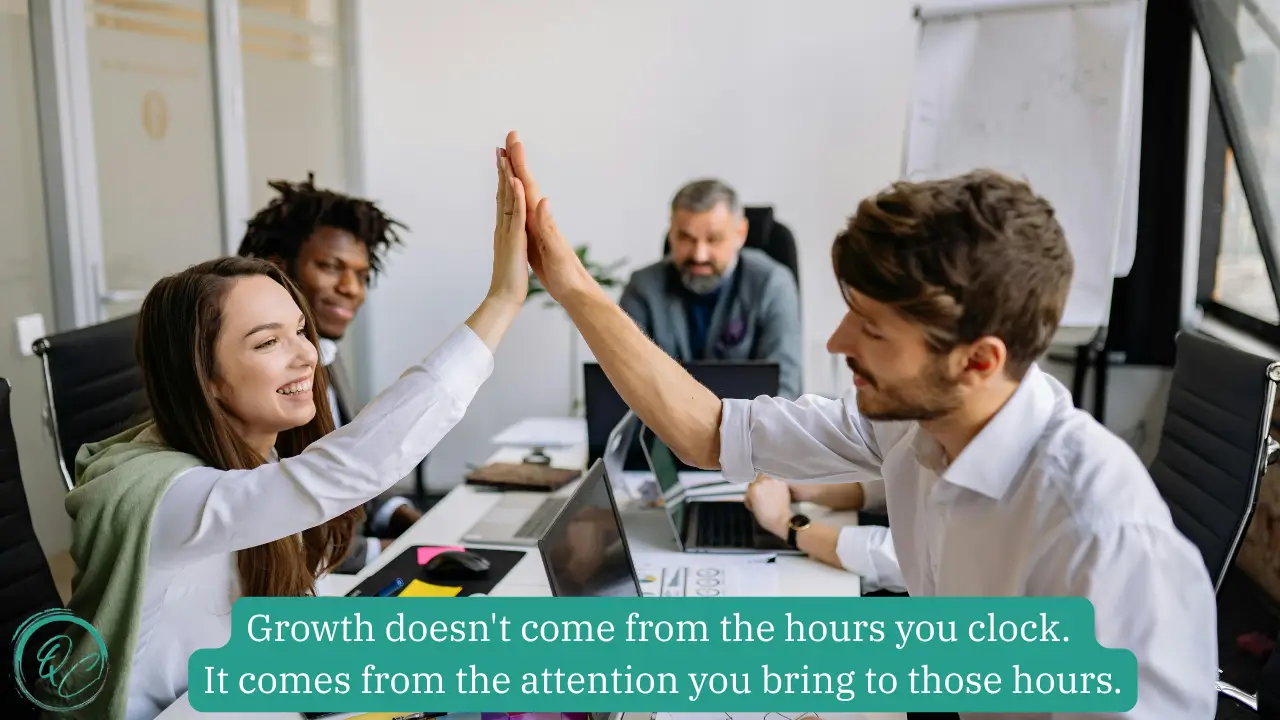
Motivational quotes have a quiet power. They cannot only change the mood but also reset the mind. The following quotes are to remind us that hard work is not only about grinding. But about finding a meaning for what you are hustling.
- Growth doesn’t come from the hours you clock; it comes from the attention you bring to those hours.
This motivates hard work by reframing effort as presence rather than time spent, making the act of working feel intentional instead of draining. - Hard work stops feeling heavy the moment you connect it to a purpose that outlasts your fatigue.
It shifts the focus from enduring pain to pursuing meaning, which makes persistence feel lighter and more sustainable. - Your effort today is quietly paying forward a debt to your future self, a self you haven’t met yet but already owe everything to.
This creates a personal sense of responsibility, framing work as an act of self-care rather than external pressure. - Motivation is a spark, but discipline is the slow, steady burn that actually warms the room.
It validates the reality that feelings fade, and encourages the reader to rely on something deeper and more reliable. - Nobody sees the quiet hours you spend sharpening your craft, but everyone notices the day you show up, cutting clean.
This honors unseen effort and promises that invisible work eventually becomes undeniable skill. - You don’t need to feel ready to begin; you just need to begin, and readiness will catch up somewhere along the way.
It removes the barrier of waiting for confidence, permitting to start messy and figure it out in motion. - The difference between exhaustion and fulfillment isn’t the workload; it’s whether you can see your own reflection in the outcome.
It encourages hard work by highlighting the importance of personal connection and ownership over the task. - You’re not just completing tasks today, you’re quietly building the reputation that will walk into rooms before you ever do.
This links daily effort to long-term identity, making even boring work feel like a strategic investment. - Rest is not the enemy of hard work; it’s the only reason hard work ever becomes sustainable.
It gives readers permission to recover, which paradoxically strengthens their willingness to push harder when it counts. - Small, consistent actions don’t feel heroic in the moment, but they’re the only things that ever actually change a life.
This removes the pressure to be extraordinary daily and celebrates the unglamorous truth of real progress. - Don’t confuse motion with progress; busy hands can still be building nothing if the mind hasn’t chosen a direction.
It motivates by challenging the reader to pair effort with clarity, making work smarter, not just harder. - You owe effort to the dreams you keep talking about; they’re just stories you tell yourself to feel better.
This uses gentle accountability, nudging the reader to match their actions with their ambitions. - Hard work doesn’t promise success, but it does promise change, and sometimes change is the success you didn’t know you needed.
It redefines the reward, making the transformation itself valuable, regardless of external outcomes. - When motivation fades, let routine carry you; your habits are the scaffolding that hold you up while your feelings rebuild.
This gives practical, emotional reassurance that structure can save you when inspiration disappears. - You’re not behind; you’re in the middle of a chapter that hasn’t revealed its purpose yet. Keep writing.
It offers patience and perspective, encouraging persistence without comparison to anyone else’s timeline
🌿 Looking for fresh motivation to stay productive and inspired throughout the spring season? Discover powerful April motivational quotes to keep your energy high and your mindset focused all month long.
2. Empowering Quotes About Overcoming Obstacles
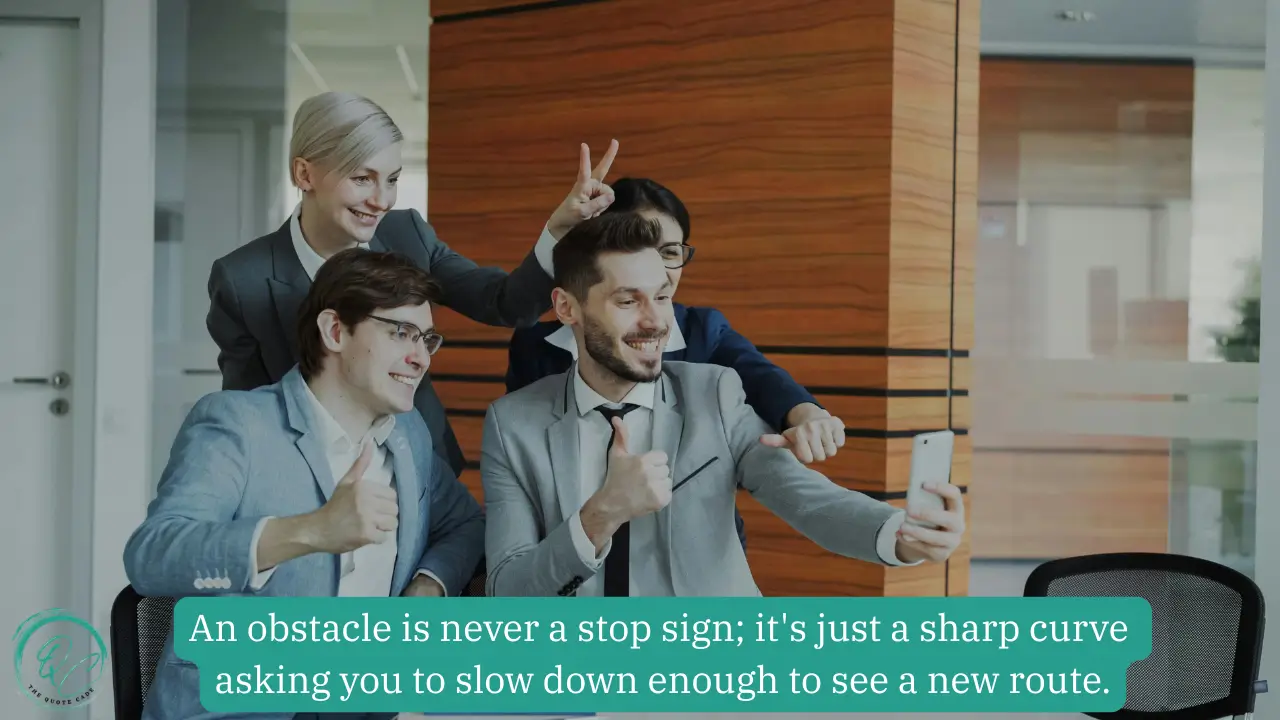
Obstacles are not the end, but a chance to build a new path. It reveals the strength we never knew we had. The right words can turn a wall into a door; this is why the following quotes are crafted.
- An obstacle is never a stop sign; it’s just a sharp curve asking you to slow down enough to see a new route.
This empowers your employees by reframing barriers as redirections rather than dead ends, encouraging adaptive thinking instead of defeat. - The mountain in front of you isn’t blocking your path; it’s training your legs for the rest of the journey.
It shifts the narrative from “why me” to “what is this building in me,” helping employees see struggle as preparation for future leadership. - You’ve already survived every hard day you’ve had so far; that’s a hundred percent success rate that nobody can take from you.
This reminds employees of their own quiet track record of resilience, instantly boosting confidence through personal evidence rather than empty praise. - What feels like breaking apart right now might actually be a rearrangement into something that fits you better.
It empowers by normalizing discomfort as part of growth, reducing shame around struggle, and encouraging openness during transitions. - The obstacle doesn’t get to name you; you get to name the obstacle, call it what it really is, and watch it shrink.
This gives employees a sense of agency and control, reminding them that how they define a challenge determines its power over them. - Being stuck is just your mind’s way of telling you it’s gathering energy for the next leap, so don’t mistake stillness for failure.
It redefines stagnation as a necessary phase of incubation, removing guilt and encouraging patience with the creative process. - Every single person you admire walked through something that should have stopped them; the only difference is that they kept walking.
This normalizes hardship by connecting it to admired figures, making obstacles feel like a shared human experience rather than personal punishment. - You don’t overcome obstacles by becoming stronger than them; you overcome them by becoming more stubborn than your doubt.
It empowers through relatability, admitting that strength isn’t always the answer; sheer persistence and stubbornness can carry you through. - The crack in the plan is not the end of the plan; it’s the beginning of a version you couldn’t have designed on a good day.
This encourages creative problem-solving and optimism, framing unexpected problems as hidden upgrades to the original idea. - Obstacles test your patience, but they also refine your instincts. Trust the version of you that emerges mid-struggle, not just the one who started.
It empowers employees by validating their growth in real time, urging them to honor the evolving self shaped by difficulty. - Some walls exist only to see how badly you want what’s on the other side, so you want it with everything you have.
This taps into desire and commitment as fuel, pushing employees to reconnect with their deeper motivation rather than focusing on the barrier itself. - You’re allowed to rest against the obstacle, just don’t mistake leaning for surrendering; even a short pause can be strategic.
It permits breathing without guilt, reframing rest as a tactical move rather than weakness, which prevents burnout and defeat. - The obstacle you’re facing today will one day be a paragraph in a success story you tell someone who needs to hear it.
This empowers by assigning meaning to the struggle, turning present pain into future purpose, and positioning employees as eventual mentors. - Difficult roads don’t just lead to beautiful destinations; they create interesting people who are worth traveling with.
It broadens the focus from outcome to personal transformation, reminding employees that who they become matters as much as where they arrive. - When nothing goes according to plan, you’re finally free from the plan, and that open space is where real innovation begins.
This reframes chaos as creative freedom, empowering employees to see disruption as an invitation to think differently rather than a loss of control.
🌱 Feeling stuck in life or ready for a fresh mindset shift? Explore change and growth motivational quotes to help you embrace new beginnings, build resilience, and stay inspired through every stage of life.
3. Short and Inspiring Motivation Quotes for Your Employees

Not always are long sentences ideal to motivate. But short sentences can inspire more and reignite the spark. The following quotes are compact, but they can gently steer their mindset back toward purpose.
- Show up, even when your motivation didn’t.
This short quote inspires by normalizing the gap between feeling and doing, reminding employees that presence alone can build momentum. - Small steps are still steps.
It motivates by removing the pressure of giant leaps, validating incremental progress as legitimate and meaningful. - Your work matters, even on the quiet days.
This is inspired by affirming unseen effort, helping employees feel valued when results aren’t immediately visible. - Start before you’re ready.
It pushes employees past hesitation, framing action as the cure for doubt and encouraging bold, imperfect beginnings. - Effort is a habit, not a mood.
This is motivated by separating work from emotion, helping employees build consistency regardless of how they feel each morning. - Done is better than perfect.
It inspires relief from perfectionism, freeing employees to complete tasks without the paralysis of overthinking. - You belong in this room.
This short phrase fights imposter syndrome directly, offering quiet reassurance and grounding employees in their earned place. - Rest, then return stronger.
It motivates by honoring recovery as part of the performance cycle, preventing guilt, and encouraging sustainable energy. - Focus on what you can control.
This inspires clarity in chaos, redirecting mental energy toward actionable ground instead of wasted worry. - Every expert was once a beginner who didn’t quit.
It normalizes the growth curve, motivating employees to persist by reminding them that mastery is a slow, universal process. - Bring your whole self to work.
This inspires authenticity and psychological safety, motivating employees to contribute fully without hiding parts of who they are. - Listen louder than you speak.
It motivates thoughtful collaboration, encouraging employees to value understanding over being understood, which strengthens team dynamics. - Failure is just feedback in disguise.
This reframes mistakes as information, inspiring resilience and a learning mindset rather than shame or avoidance. - Celebrate someone else’s win today.
It motivates by shifting focus outward, building team morale, and reminding employees that generosity amplifies collective success. - Tomorrow needs what you’re building today.
This short quote connects present effort to future impact, inspiring long-term thinking and giving mundane tasks a sense of legacy.
4. Positive Quotes and Messages for Employees
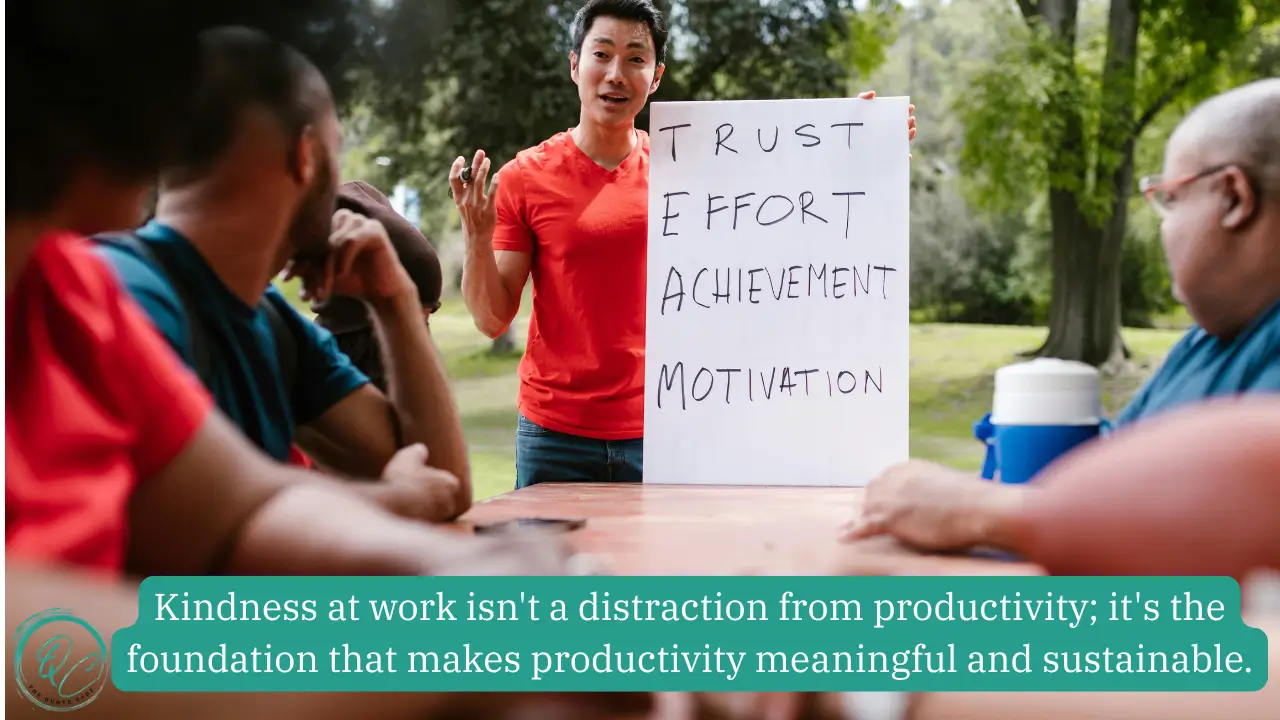
Positivity in the workplace does not mean to become careless or ignore things. It’s about choosing your way that builds, not breaks. These quotes and messages will boost genuine warmth and encouragement in your team.
- You’re doing better than you think, and even on days when progress feels invisible, growth is happening quietly beneath the surface.
The positivity here lies in its gentle reassurance; it validates private struggle while affirming unseen progress, removing the loneliness of self-doubt. - Kindness at work isn’t a distraction from productivity; it’s the foundation that makes productivity meaningful and sustainable.
This message reframes soft skills as essential strengths, validating compassionate employees and encouraging a supportive culture. - Your presence on this team isn’t accidental; someone saw something in you worth investing in, and that remains true today.
The positivity comes from anchoring belonging in objective truth, not flattery, helping employees feel chosen rather than just hired. - Good work doesn’t always make noise; sometimes it happens in the quiet consistency of showing up and caring deeply about the details.
This celebrates the unsung heroes, validating steady contributors who might feel overlooked, and turning routine into something honorable. - You have permission to be proud of yourself, not just for the big wins but for navigating the small, exhausting moments nobody else sees.
This gives employees emotional permission to acknowledge their own resilience, actively fighting burnout by normalizing self-recognition. - A team isn’t measured by the absence of difficult days, but by how people hold each other up during those days without being asked.
The positivity here is rooted in connection and collective care, highlighting mutual support as the truest marker of team strength. - Positivity isn’t pretending everything is fine; it’s trusting that you and the people around you can handle what isn’t fine together.
This redefines positivity as grounded optimism, removing toxic cheerfulness and replacing it with shared capability and trust. - The energy you bring to a room is part of your contribution; never underestimate how your calm, your humor, or your steadiness steadies others.
This message affirms the intangible value employees bring beyond tasks, elevating emotional labor to rightful recognition. - There’s something brave about staying hopeful in a world that often rewards cynicism; your optimism is a quiet act of courage.
The positivity resides in honoring hope as strength rather than naivety, empowering idealists to keep their outlook without apology. - When you encourage a colleague, you’re not just lifting them; you’re strengthening the whole structure you both depend on.
This highlights interconnection and mutual benefit, making positivity feel strategic and communal rather than purely altruistic. - You are not your worst mistake, and you are not defined by a single off day; you are the sum of your recoveries and your willingness to keep going.
This message offers forgiveness and a long-term perspective, relieving employees from the crushing weight of perfectionism. - Bad days don’t cancel out good work; they coexist with it, and both deserve their place in your story without shame.
The positivity comes from its acceptance of duality, allowing employees to hold complexity without letting darkness erase past light. - Your quiet dedication hasn’t gone unnoticed. Someone sees the extra care you take, the follow-through, the integrity you bring when nobody’s watching.
This message directly counters the fear of invisibility, offering specific, believable recognition that feels personal and earned. - What you’re building with your effort today extends far beyond this quarter or this year; it’s shaping the person you’re becoming for decades.
The positivity lies in its long-range view, transforming short-term pressure into meaningful evolution and legacy. - Joy at work isn’t a luxury or a bonus; it’s a sign of health, and chasing it isn’t selfish; it’s essential for longevity and contribution.
This message legitimizes happiness as a professional priority, empowering employees to seek fulfillment without guilt.
🎄 Want to spread warmth and festive positivity with meaningful words that truly connect? Explore heartfelt “may your days be merry and bright” to brighten someone’s day and share the true spirit of joy, peace, and celebration.
5. Inspirational Quotes for Employees
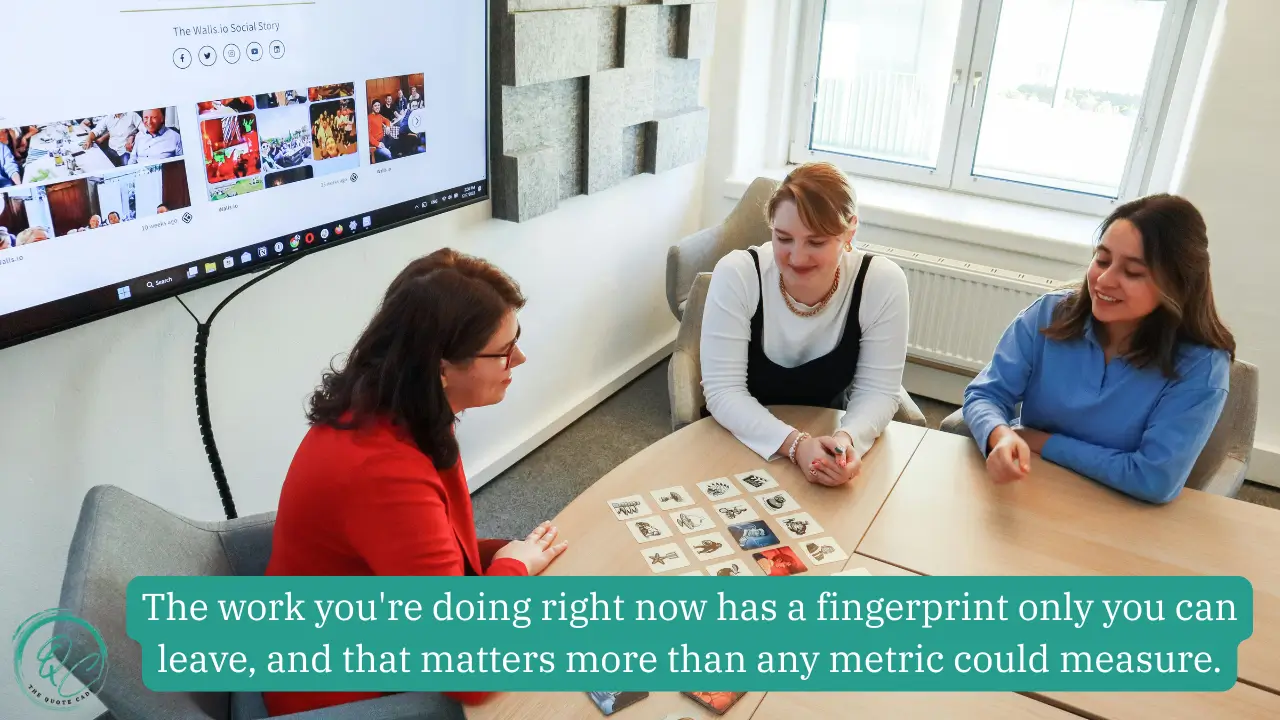
Inspiration at work does not come only from speeches. It often whispers through tiny spaces that land exactly at the right moment. These quotes are crafted to reach your employees where they need to be. And inspire real hope for something meaningful.
- The work you’re doing right now has a fingerprint only you can leave, and that matters more than any metric could measure.
This inspires by personalizing contribution, reminding employees that their unique imprint on a task or project cannot be replicated or replaced. - You’re not just earning a living, you’re building a body of work that will outlast your job title and speak long after you’ve left the room.
It inspires a legacy mindset, shifting focus from transactional effort to the lasting evidence of one’s professional existence. - Some days you’re the mentor, some days you’re the student, and both roles are equally important to the health of a growing team.
This inspires humility and mutual respect, normalizing the fluidity of roles and encouraging a learning culture without hierarchy or ego. - Inspiration doesn’t always arrive like lightning; sometimes it shows up as a slow, steady curiosity that keeps you asking what’s possible.
It inspires patience with the creative process, removing the pressure to feel electrified and instead validating quieter, sustainable drive. - Your career is not a straight line; it’s a collection of detours that eventually make sense when you look back with honest eyes.
This inspires comfort during confusing transitions, reassuring employees that nonlinear paths hold their own kind of wisdom. - The world needs people who care about the details, because the details are where ordinary work becomes unforgettable.
It inspires pride in precision, elevating meticulous employees from feeling obsessive to feeling essential and seen. - Leadership isn’t a title; it’s the moment you choose to take responsibility for the energy you bring into a room.
This inspires personal agency, empowering every employee to see themselves as a cultural influencer regardless of formal position. - Don’t measure your beginning against someone else’s middle; the timeline that matters is the one you’re actually living.
It inspires self-compassion and patience, actively dismantling comparison culture that drains ambition and breeds inadequacy. - The project that scares you a little is usually the one that changes you a lot. Lean into the discomfort; it’s trying to teach you something.
This inspires courage by reframing fear as a compass pointing toward growth, not a warning to retreat. - You can be grateful for where you are and still hungry for where you’re going; gratitude and ambition are not opposites, they’re partners.
It inspires balance, resolving the guilt employees feel about wanting more while remaining appreciative of their current position. - Teams don’t thrive because they have no problems; they thrive because they’ve decided problems are puzzles they solve together.
This inspires collaborative resilience, transforming collective stress into shared purpose and reinforcing the power of unity. - The most valuable skill you can bring to any job is your ability to stay curious when it would be easier to become cynical.
It inspires long-term engagement by framing curiosity as a competitive advantage and an act of professional defiance against burnout. - What you’re learning now during this challenging season will be the wisdom you offer someone else in a few years, so pay attention.
This inspires meaning-making in hardship, turning painful experiences into future gifts and positioning employees as eventual guides. - Your voice in a meeting, your idea in an email, your perspective on a call, all of it carries weight even when the response isn’t immediate.
It inspires quiet contributors to keep speaking up, combating the invisibility felt by those whose impact unfolds slowly rather than loudly. - Work done with integrity never really fades; it builds a reputation that speaks for you in rooms you haven’t entered yet.
This inspires long-term commitment to character over shortcuts, reassuring employees that consistent honesty accumulates into undeniable trust.
6. Motivational Quotes about Employee Value

Employee value is not a material, a balance sheet, or a footnote, and it is measured only at year-end. It’s the real force that can turn your strategy into reality. The following quotes are to remind every worker that their worth extends far beyond the output.
- Your value to this company isn’t measured by how fast you finish, but by what would break if you walked away and took your thinking with you.
This reflects employee value by shifting the metric from speed to irreplaceable intellectual and cultural contribution. - You are not a cog in a machine; you are the intuition a machine will never replicate, the judgment no algorithm can simulate.
It reflects value by distinguishing human insight from automation, positioning employees as uniquely essential in an increasingly technical world. - The biggest asset you bring to work isn’t on your resume, it’s the way you read a room, steady a stressed colleague, or speak truth when it’s needed.
This reflects value by highlighting emotional intelligence and interpersonal gifts that formal credentials never capture. - Every time you solve a problem before anyone notices it existed, you’ve just proven your worth in a language louder than any performance review.
It reflects value by honoring proactive, invisible labor that prevents crises rather than simply responding to them. - Companies don’t build cultures, people do, and the person who brings warmth, humor, or calm is as vital as the one who brings technical genius.
This reflects value by elevating cultural contribution to an equal footing with functional expertise. - You are not replaceable; you are a specific combination of experiences, instincts, and relationships that would take years to even approximate.
It reflects value by naming the impossibility of true replacement, combating the fear of disposability with honest, grounded truth. - The loyalty you show by choosing to stay and grow here rather than jumping elsewhere carries a weight that retention metrics can’t calculate.
This reflects value by validating commitment as a contribution in itself, especially in an era of constant turnover. - When you mentor a new hire or patiently explain something for the third time, you’re not just helping, you’re weaving the connective tissue that holds teams together.
It reflects value by framing generosity and patience as structural necessities, not optional extras. - Your perspective is a lens this company doesn’t own and can’t manufacture, and losing it would leave a blind spot no consultant could fill.
This reflects value by underscoring the uniqueness of individual viewpoints and the cost of their absence. - The questions you ask in meetings, the ones that push back gently or wonder aloud, those shape decisions more than any single presentation ever could.
It reflects value by honoring curiosity and constructive challenge as drivers of smarter organizational choices. - You carry the institutional memory that documents can’t hold, the stories, the context, the why behind the what, and that knowledge is irrecoverable once you leave.
This reflects value by recognizing the depth of unwritten organizational wisdom living inside long-term employees. - Value isn’t just about what you produce this month; it’s about the trust you’ve built with clients and colleagues that compounds quietly over the years.
It reflects value by introducing a long-term lens, measuring worth through accumulated relational capital. - The empathy you extend to a struggling teammate isn’t a distraction from real work; it is real work, protecting the emotional infrastructure of the team.
This reflects value by legitimizing care and support as core job functions rather than side kindnesses. - You are the reason a process runs smoothly, a customer stays loyal, or a new idea gets traction, and none of that appears in a spreadsheet cell.
It reflects value by connecting daily actions to tangible outcomes, giving employees a clear line of sight between their effort and organizational success. - Being valued isn’t about being the loudest in the room; it’s about being the one whose absence would leave a silence no one else can fill.
This reflects value by redefining presence through impact rather than volume, speaking directly to quieter but deeply influential team members.
🧠 Struggling with emotional balance when things don’t go as planned? Explore expect disappointment mindset quotes to understand how adjusting expectations can help you stay mentally stronger and more resilient in everyday life.
7. Employee Motivational Teamwork Quotes
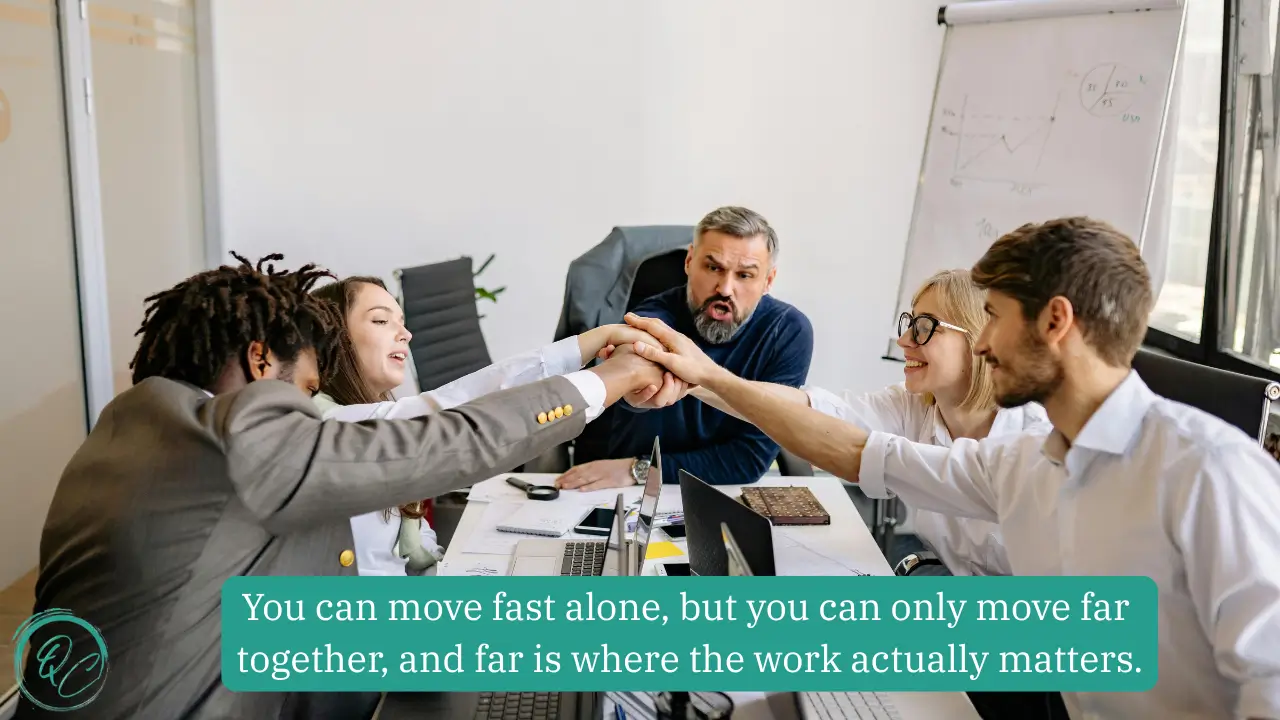
Teamwork is not about dividing tasks, but collaborating to fill the gaps and weak points. The following quotes are to remind employees that teamwork is about trust, and the magic happens when different minds come together to pull in.
- The best teammate isn’t the one with all the answers; it’s the one who notices who hasn’t spoken yet and makes space for that voice.
It brings teamwork by elevating inclusion over brilliance, reminding employees that facilitation is a leadership skill everyone can practice. - Teamwork isn’t about fifty people doing the same thing; it’s about fifty people trusting each other enough to do different things toward one goal.
This brings teamwork by celebrating diversity of function and unified purpose, reducing the friction that comes from varied working styles. - You can move fast alone, but you can only move far together, and far is where the work actually matters.
It brings teamwork by reframing speed as short-term and sustainability as long-term, encouraging patience with collective rhythm. - Every team has a quiet glue, the person who connects people without a title, and that role is as critical as any leadership position.
This brings teamwork by honoring invisible connectors, validating relational contributors who often go unrecognized in formal structures. - Passing credit forward costs nothing and builds everything. A team where wins are shared is a team that survives losses together.
It brings teamwork by linking generosity to resilience, encouraging a culture where recognition flows freely rather than being hoarded. - Great teamwork isn’t the absence of ego; it’s the moment ego steps aside long enough to let the best idea win, no matter whose mouth it came from.
This brings teamwork by acknowledging real human pride while framing its temporary surrender as a mark of professional maturity. - When you hand something off to a teammate, you’re not just transferring a task; you’re extending trust, and trust is the only currency that compounds.
It brings teamwork by deepening the meaning of delegation, turning simple workflow into an investment in mutual reliability. - A broken process will break a team faster than a difficult person ever could, so fix the system before you blame the people.
This brings teamwork by redirecting frustration toward structure rather than individuals, protecting relationships from unnecessary erosion. - The strongest teams aren’t built on talent alone; they’re built on people who choose to assume good intent before jumping to suspicion.
It brings teamwork by introducing the practice of generous interpretation, reducing unnecessary conflict, and increasing psychological safety. - You don’t need to like everyone on your team, but you do need to believe they’re capable, and that belief can be built even without friendship.
This brings teamwork by separating personal affection from professional respect, making collaboration accessible even across personality differences. - Silence in a meeting doesn’t always mean agreement; sometimes it means someone doesn’t feel safe enough to speak, and noticing that is a team responsibility.
It brings teamwork by shifting accountability for inclusion from the quiet individual to the entire group, making safety a shared project. - Celebrate the small wins loudly, because those small moments of shared joy become the emotional reserves you draw from during hard seasons.
It brings teamwork by building a positive history, creating a bank of goodwill that sustains morale when pressure mounts. - A team that reflects together grows together. The willingness to look back honestly on what worked and what didn’t is a form of collective courage.
It brings teamwork by destigmatizing retrospection, positioning honest evaluation as a brave and necessary group practice. - Your individual success inside a team is never purely individual; someone covered for you, taught you, defended you, or believed in you along the way.
This brings teamwork by dismantling the myth of self-made achievement, fostering gratitude and humility across the group.
8. Employee Motivational Quotes about Excellence
Excellence does not mean no need to learn anymore. This is the standard that turns every ordinary work into what everyone demands. The following quotes are designed to reframe your personal excellence that lives inside you long-term.
- Excellence isn’t about being better than someone else; it’s about being better than the version of you who showed up yesterday.
This motivates for excellence by removing unhealthy comparison and anchoring the standard in personal evolution, which feels achievable rather than intimidating. - The difference between good and excellent is usually just one more thoughtful question, asked at the right moment.
It motivates by shrinking the gap between adequate and exceptional down to a single, accessible action anyone can take. - Excellence is a habit you build in the small, boring moments when shortcuts are tempting, and nobody would notice if you took one.
This motivates by elevating integrity in private as the true training ground, making invisible choices feel heroic rather than meaningless. - You can’t chase excellence like a sprint; it’s a slow, quiet loyalty to your craft that you renew every morning before the world wakes up.
It motivates by reframing excellence as devotion rather than intensity, encouraging sustainability over burnout. - Mediocrity is often just excellence that got interrupted by distraction, so guard your focus like it’s the only asset that actually compounds.
This motivates by positioning attention as the bridge between average and exceptional, making focus feel urgent and valuable. - Excellence isn’t loud; it doesn’t need to announce itself. It shows up in the details someone else would have overlooked and lets the work speak.
It motivates by validating substance over showmanship, appealing to employees who lead with quiet quality rather than self-promotion. - The cost of excellence is discomfort, the willingness to sit in the tension of something not being good enough yet and keep refining anyway.
This motivates by normalizing struggle as a feature of quality, not a sign of failure, giving permission to stay in the hard part longer. - Excellence leaves clues; study the people whose work you admire, not to copy them, but to understand the standards they refused to negotiate on.
It motivates by encouraging curiosity and mentorship, framing excellence as something observable and learnable rather than innate. - Every time you fix a small error nobody asked you to fix, you just deposited a reputation that will outlast this quarter.
This motivates by connecting tiny, voluntary acts of quality to long-term professional identity and trust. - The pursuit of excellence can feel lonely, because it requires standards the crowd won’t always understand or celebrate.
It motivates by acknowledging the solitude of high standards, offering solidarity rather than sugar-coating, which makes the journey feel less isolating. - Excellence is not the same as perfection; perfection freezes you in fear, while excellence keeps you moving, learning, and adjusting.
This motivates by clearly separating healthy ambition from paralyzing perfectionism, giving employees freedom to iterate rather than freeze. - Your name on a piece of work is a promise, and excellence is simply keeping that promise more often than you break it.
It motivates by personalizing quality as integrity and consistency, turning every deliverable into a reflection of personal honor. - Excellence isn’t a gift you’re born with; it’s a series of decisions you make when staying average would have been so much easier.
This motivates by democratizing excellence, making it about choices anyone can access rather than relying on innate talent. - The world pays attention to excellence eventually, but you shouldn’t need the attention to keep producing it.
It motivates by encouraging intrinsic drive, building a self-sustaining engine of quality that doesn’t depend on external validation. - Excellence compounds quietly; the effort you invest today in getting something right will be the foundation someone else builds on tomorrow.
This motivates by introducing legacy and interconnection, framing quality work as a contribution to future teams and unknown beneficiaries.
🌤️ Want to make someone’s day feel lighter, warmer, and more meaningful with just a few words? Explore simple hope your day is going well to spread positivity, show care, and instantly brighten someone’s mood with thoughtful daily check-ins.
9. Employee Motivational Success Quotes

Success at work is different for everyone. But a hunger to feel meaningful is universal. The following quotes are crafted to not only motivate but also push yourself without losing along the way.
- Success isn’t a destination you arrive at; it’s a direction you choose every morning when you decide what deserves your energy today.
This motivates employees for success by making it a daily, controllable decision rather than a distant, intimidating milestone. - The most successful people you admire didn’t skip the hard years; they just refused to let those years convince them they were on the wrong path.
It motivates by normalizing struggle as a universal phase of the journey, removing the false belief that success comes easily to others. - Success built on authenticity lasts longer than success built on imitation, because you can sustain your own voice forever, but pretending exhausts you eventually.
This motivates by encouraging original contributions over copying others, protecting employees from the burnout of inauthentic performance. - Don’t measure your success by someone else’s scoreboard; their game was never yours to play, and their rules don’t apply to your life.
It motivates by dismantling comparison culture, permitting employees to define winning on their own, deeply personal terms. - Success is rarely a sudden breakthrough; it’s usually a slow accumulation of efforts that felt insignificant until they suddenly weren’t.
This motivates by honoring micro-progress, validating small, consistent actions that feel unremarkable in the moment but compound powerfully. - The moment you stop waiting for permission to succeed is the moment you actually begin.
It motivates by transferring agency back to the employee, removing the illusion that someone else holds the key to their advancement. - Real success includes res, a definition of winning that destroys your health or your relationships isn’t success, it’s just expensive failure.
This is motivated by redefining success holistically, permitting employees to protect their well-being while pursuing ambitious goals. - Failure and success are not opposites; they’re neighbors on the same street, and you often have to pass through one to reach the other.
It motivates by destigmatizing failure, repositioning it as a necessary geographic feature of the journey rather than a permanent identity. - Your definition of success is allowed to change as you grow; what you wanted at twenty-five might feel hollow at forty, and that evolution is wisdom, not inconsistency.
This motivates by honoring personal growth and shifting priorities, releasing employees from commitments their younger selves made. - Success leaves breadcrumbs; look back at your own wins, small and large, and you’ll find patterns that reveal your unique formula.
It motivates by turning past achievements into a personal playbook, encouraging self-awareness and confidence through reflection. - The scariest part of pursuing success isn’t the possibility of failing; it’s the responsibility of succeeding and realizing you’re capable of more than you thought.
This motivates by reframing fear of success as a sign of untapped potential, challenging employees to step into their full capacity. - Celebrate the success of others loudly, because their wins don’t shrink your possibilities; they expand the evidence that progress is possible for everyone.
It motivates by combating a scarcity mindset, fostering a culture of mutual celebration that fuels collective ambition. - Success isn’t just about climbing; sometimes it’s about digging deep into the role you’re already in and finding gold where others saw dirt.
This motivates by elevating mastery over mobility, encouraging employees to find fulfillment and impact without always needing a promotion. - The quietest form of success is waking up and still believing your work matters, even when the metrics haven’t caught up yet.
It motivates by anchoring success in internal conviction rather than external validation, sustaining morale during slow or invisible seasons. - Your success story is still being written, the chapter you’re in right now, however confusing, is setting up a plot twist you can’t yet see but will one day be grateful for.
This motivates by injecting patience and narrative hope, helping employees trust the process even when the current chapter feels discouraging.
10. Employee Motivational Quotes about Action
Action is where intention is no longer a wish but becomes reality. The following quotes are crafted to overcome procrastination and overthinking. These quotes have the potential to actually move careers and companies forward.
- The first step doesn’t have to be perfect; it just has to be taken, because perfection has never once started anything meaningful.
This motivates employees to take action by removing the impossible weight of getting it right before they even begin. - Ideas are fragile things that die in silence; the only way to save one is to act on it before doubt talks you out of it.
It motivates by creating urgency around execution, reminding employees that an unacted-upon idea is a slow loss, not a safe holding pattern. - You don’t need to see the whole staircase; you just need to trust that the next step will appear once your foot leaves the ground.
This motivates by shrinking overwhelming projects into single, manageable movements that anyone can handle right now. - An ounce of action is worth a ton of theory, because theories gather dust while actions gather results.
It motivates by contrasting thought with doing, framing action as the only legitimate currency of progress. - Waiting for the right moment is just fear dressed up in patience, and fear will keep you waiting forever if you let it.
This motivates by exposing procrastination as disguised anxiety, giving employees permission to start messy and figure it out along the way. - Momentum is a gift you give yourself; it doesn’t arrive, it’s built one small decision after another until suddenly you’re unstoppable.
It motivates by showing that action creates more action, turning a static mindset into a self-propelling cycle of productivity. - The gap between where you are and where you want to be is filled with a thousand small actions, not one grand gesture.
This motivates by breaking ambition into achievable increments, making the distance feel closeable rather than discouraging. - You can’t steer a parked car, so start moving even if you’re unsure of the direction; clarity comes through motion, not before it.
This motivates by validating uncertainty while insisting on forward movement, freeing employees from needing answers they can’t possibly have yet. - Stress lives in the space between knowing and doing; the moment you take action, stress starts packing its bags.
It motivates by connecting action to emotional relief, framing doing as the antidote to the anxiety of avoidance. - Everyone who achieved something remarkable was once a beginner who simply refused to stop beginning again.
This motivates by normalizing repeated starts after failure, stripping away the myth that successful people get it right the first time. - The cost of inaction is invisible but enormous; you’re not just losing time, you’re losing the person you could have become by now.
It motivates by reframing stagnation as loss, creating a healthy urgency that makes standing still feel riskier than moving. - Small steps compound into big transformations; you just have to stay in motion long enough for the math to work in your favor.
It motivates by invoking the quiet power of consistency, reassuring employees that modest daily effort eventually produces extraordinary results. - Action creates confidence, not the other way around, so stop waiting to feel ready and start acting until you do.
It motivates by reversing the common belief that confidence must precede action, giving employees a practical formula to build self-trust. - The work you’re avoiding is probably the work that matters most, and facing it head-on is how you earn your own respect.
It motivates by appealing to self-integrity, transforming dreaded tasks into opportunities for building internal dignity and pride.
11. Motivational Quotes for Employees to Achieve Targets

Targets can push you to work more. They are promises you make to yourself for achieving what you are capable of. These quotes are crafted to pull you more towards something meaningful.
- A target isn’t a threat; it’s a conversation between who you are today and who you’re trying to become tomorrow.
This motivates employees to achieve targets by reframing them as personal development milestones rather than external demands. - Don’t let the size of the target intimidate you; every big number is just a collection of small wins that haven’t been stacked yet.
It motivates by breaking overwhelming goals into manageable pieces, making the path to achievement feel walkable instead of impossible. - Hitting a target feels good, but becoming the kind of person who can hit it feels even better. Aim for the transformation, not just the number.
This motivates by shifting focus from outcome to identity, making the pursuit about growth that outlasts any single metric. - The target doesn’t care how talented you are; it only responds to consistent effort applied over time until the math works in your favor.
It motivates by democratizing achievement, reminding employees that persistence beats raw ability in the long game. - When you own a target instead of just accepting it, something shifts internally, obligation becomes ambition, and suddenly you’re chasing it instead of carrying it.
This motivates by encouraging psychological ownership, turning assigned goals into personal missions. - Falling short of a target isn’t failure; it’s data, and data is just a clearer map for your next attempt.
It motivates by destigmatizing misses, repositioning shortfalls as valuable intelligence rather than permanent verdicts. - The most satisfying targets are the ones you didn’t think you could hit, because they expand your definition of what you’re capable of.
This motivates by selling the emotional reward of exceeding self-expectations, making ambitious goals feel like opportunities for self-discovery. - Don’t check the scoreboard every five minutes, trust the process enough to keep running the plays and let the results accumulate when they’re ready.
It motivates by discouraging obsessive outcome-tracking, protecting morale during the slow middle phase of any pursuit. - Targets achieved through integrity last longer in your memory than targets achieved through shortcuts, because pride needs a clean foundation to stand on.
This motivates by appealing to character, helping employees value how they achieve as much as what they achieve. - A shared target turns a group of individuals into a team, because suddenly, success is a collective story with everyone’s name in the credits.
It motivates by highlighting camaraderie and mutual reliance, making goal pursuit socially rewarding rather than isolating. - When a target scares you, that’s useful information. It means you’re reaching beyond your comfort zone, and that’s exactly where growth lives.
This motivates by reinterpreting fear as a compass pointing toward expansion, making discomfort feel productive rather than paralyzing. - You don’t need to love the target to hit it; you just need to respect the commitment you made when you accepted the challenge.
It motivates by anchoring motivation in integrity and follow-through, giving employees a reason to persist even when enthusiasm wanes. - Track your progress, not to beat yourself up over gaps, but to prove to yourself that forward motion is happening even on days it doesn’t feel like it.
This motivates by encouraging self-compassionate monitoring, protecting against the despair that comes from perceived stagnation. - The target you hit today was once the target you doubted you could ever reach, so let that be proof that your doubts are unreliable narrators.
This is motivated by using personal history as evidence, building confidence through one’s own track record of overcoming previous disbelief. - Every target has a quiet period where it seems unreachable; that’s not a sign to stop, it’s just the phase where most people quit right before the breakthrough.
This motivates by normalizing the difficult middle, offering hope that persistence through the hard part is often the only difference between success and surrender.
💼 Conclusion
I have seen how people struggle for the right words when their team needs them most. After building a company culture for years. I have seen managers struggling hard to find motivational quotes for employees.
They need simple and powerful expressions only for motivating their employees. There are messages across the world that have shaped many lives. These motivational quotes, when woven into the daily routine. They can give the right entry points. Watch how your team and tasks transform.
FAQ’s: (Frequently Ask Questions)
Q1. What is the link between motivation and employee engagement?
Motivation supplies the initial spark, while engagement is the sustained fire. A motivated employee feels energized to begin; an engaged employee stays committed, connected, and willingly invests discretionary effort long after the initial push fades.
Q2. What are the types of motivation?
Intrinsic motivation comes from within, driven by purpose, growth, and personal fulfillment. Extrinsic motivation relies on external rewards like bonuses, recognition, or promotion. Both play distinct roles, but lasting performance usually roots itself in intrinsic drivers.
Q3. What are some strategies to improve employee motivation?
Recognize contributions genuinely and often, connect daily tasks to a larger purpose, offer autonomy over how work gets done, provide growth pathways through skill development, and foster psychological safety so people feel safe contributing ideas without fear.
Q4. What to say to employees to motivate them?
“I noticed the extra effort you put into that, and it didn’t go unseen.” Specific, timely acknowledgment that names the contribution directly. “Your perspective shifted how we approached this, thank you.” Words that affirm their unique value and impact motivate deeply.
Q5. What is an uplifting quote for employees?
“The quiet effort you bring today is building a reputation that will speak for you in rooms you haven’t entered yet.” It reminds employees that unseen dedication accumulates into lasting trust, affirming that consistent integrity always outlasts momentary visibility.