After writing for a decade, I know how the lack of forgiveness transforms. The pain of unexpected breakups and deep family trauma. To the sting of betrayal, the resentment settles in our hearts.
But the right words have the magic to inspire us to forgive and forget. That’s the power of motivational quotes about forgiveness. These words are reminders for your compassion journey.
Moving on, penning a card to mend a bridge, or crafting a social media caption. These quotes are a power pack of wisdom and give a new starting point.
Forgiveness isn’t about erasing the past. It’s about reclaiming the energy that the past has been stealing from your present. It’s the deliberate, difficult, and deeply personal art of setting down a weight you were never meant to carry.
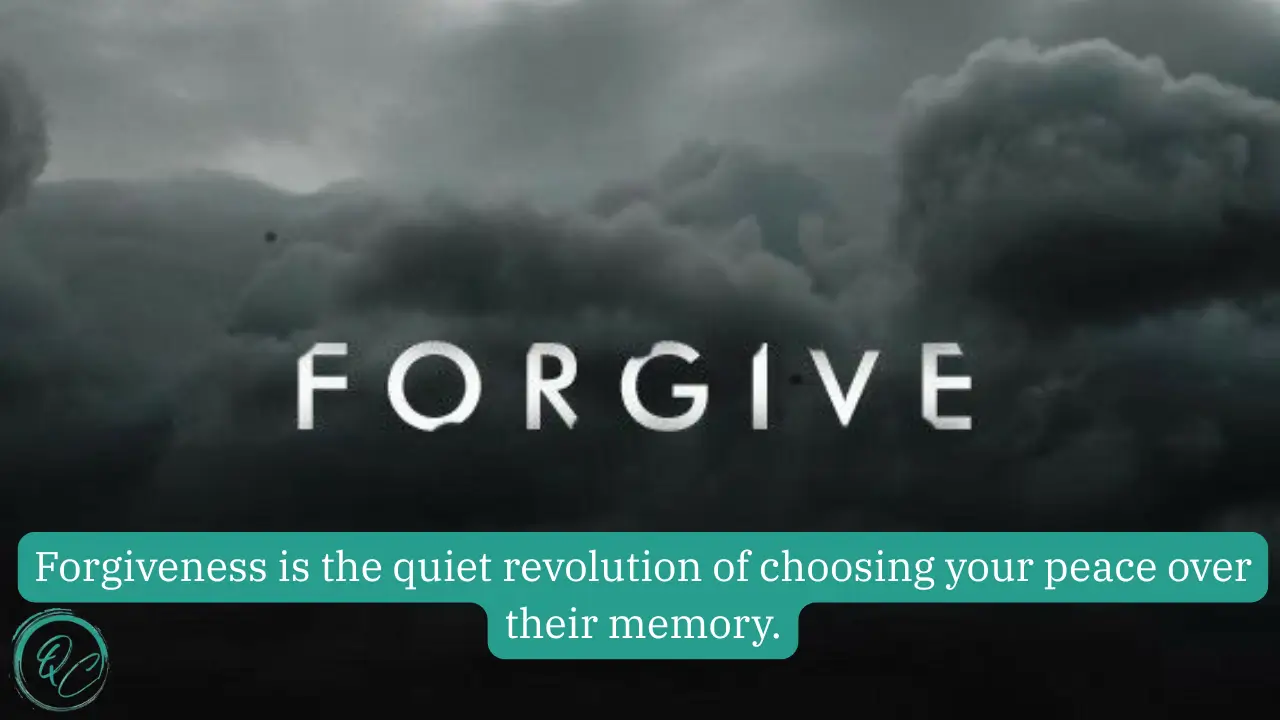
Forgiveness is the quiet revolution of choosing your peace over their memory. How it brings peace: It ends the silent, exhausting war in your mind, replacing conflict with a ceasefire you control.
You don’t forgive because they deserve it. You forgive because your soul deserves the room to breathe. How it brings peace: It clears the emotional clutter, creating space for calm and new growth where resentment once lived.
Holding a grudge is letting someone live rent-free in your mind. Forgiveness serves the eviction notice. How it brings peace: It reclaims your mental and emotional real estate, allowing you to build a home for your own joy.
The story doesn’t change. But when you forgive, you stop being the main character in your own pain. How it brings peace: It shifts you from a victim of the narrative to the author of your next chapter.
Forgiving yourself is the first whisper that you are still worthy of your own love. How it brings peace: It mutes the inner critic, replacing the noise of shame with the quiet relief of self-acceptance.
It’s not a white flag of surrender; it’s a declaration that your life is worth more than a permanent battlefield. How it brings peace: It trades the adrenaline of anger for the steadiness of safety within yourself.
Forgiveness is giving up the hope for a different yesterday. How it brings peace: It anchors you firmly in the now, where life is actually happening, freeing you from the anchor of the past.
They may have handed you the hurt, but only you can decide to build a shrine around it. How it brings peace: It allows you to stop tending to the monument of your pain and start tending to your own garden.
It’s the ultimate act of self-defense: disarming the past so it can no longer shoot at your present. How it brings peace: It removes the constant, internal threat, letting your nervous system finally stand down.
Forgiveness doesn’t say what happened was okay. It says you are going to be okay. How it brings peace: It separates your identity from the injury, restoring a sense of wholeness and future safety.
It’s returning the debt to the universe and walking away unburdened. How it brings peace: It settles a ledger that was costing you your joy, bringing the profound relief of a debt forgiven.
Sometimes forgiveness is simply seeing the wound clearly and deciding it’s no longer your compass. How it brings peace: It stops letting pain dictate your direction, giving you the serenity to navigate by your own values.
You stop keeping score of the old hurt, and suddenly you have two free hands to build something new. How it brings peace: It releases the exhausting mental accounting, freeing up your energy for creation, not calculation.
It’s not forgetting. It’s remembering without letting the memory sting. How it brings peace: It transforms a triggering memory into a neutral fact, draining its power to disrupt your inner calm.
The tightest chains are the ones we forge from our own unforgiveness. The key was in your hand all along. How it brings peace: It is the moment of unlocking your own cage, exchanging the confinement of bitterness for the liberty of release.
Struggling with unmet expectations? Discover why
expecting disappointment wisely
can help protect your peace and strengthen your mindset.
2. Asking for Forgiveness Quotes
Asking for forgiveness is the courageous archaeology of the heart. It requires gently brushing away pride to uncover the integrity buried beneath.
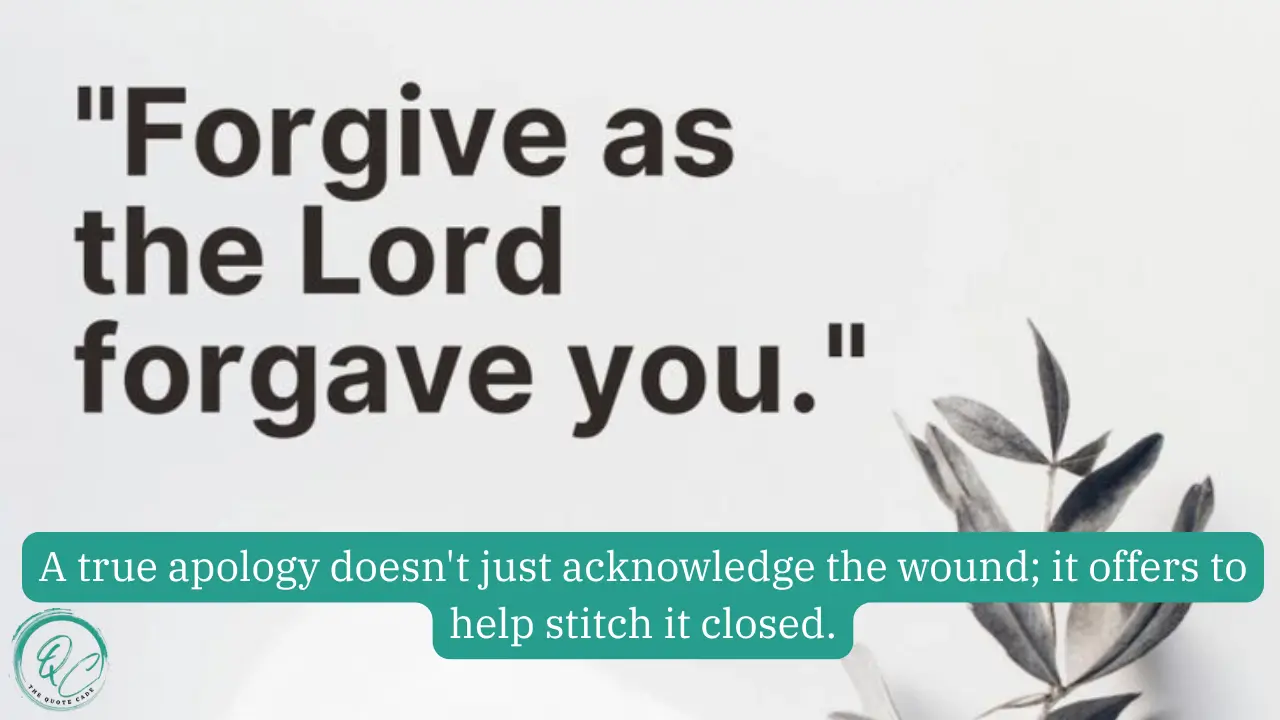
A true apology doesn’t just acknowledge the wound; it offers to help stitch it closed. It brings peace by transforming you from the source of hurt into a source of healing, restoring your own sense of goodness.
“I was wrong” are the three most powerful words to rebuild a bridge you burned. It brings peace by replacing the isolating silence of regret with the possibility of reconnection and closure.
Asking for forgiveness is returning the dignity you took from someone, and finding your own in the process. It brings peace by allowing you to look in the mirror again without flinching, reclaiming your self-respect.
An apology is the anchor you drop so the relationship doesn’t drift away forever. It brings peace by giving you the relief of knowing you did everything you could to prevent a permanent loss.
You don’t apologize to end their anger. You apologize to end your own complicity in the hurt. It brings peace by freeing you from the passive role of “the offender” and moving you into the active role of “the repairer.”
It’s the vulnerable hand you extend, not knowing if it will be held or slapped away, but offering it anyway. It brings peace by proving to yourself that your courage is bigger than your fear, regardless of the outcome.
A heartfelt “I’m sorry” is the sound of your ego making space for your humanity. It brings peace by ending the internal civil war between wanting to be right and knowing you need to be real.
Seeking forgiveness is telling someone they mattered too much to be treated carelessly, and you matter too much to stay that way. It brings peace by: Honoring the value of the relationship and your own commitment to growth.
It’s the ledger you choose to balance, not for them, but so your soul isn’t burdened with debt. It brings peace by: Providing the profound relief of a clean conscience and an unburdened heart.
The apology that costs you your pride is the only one that can buy back their trust. It brings peace by exchanging the cheap currency of ego for the genuine wealth of restored faith.
Asking forgiveness is the ultimate act of responsibility: you stop blaming the circumstance and start mending the consequence. It brings peace by empowering you. You move from being a victim of a mistake to the architect of its repair.
It’s speaking the truth of your failure into the space between you, so that silence stops poisoning the air. It brings peace by clearing the toxic, unspoken tension, allowing both people to breathe freely again.
You apologize to change the memory’s ending from “and they never cared” to “and they showed me they did.” It brings peace by rewriting the final chapter of that story from one of abandonment to one of accountability.
It’s the humble brick you lay to start rebuilding the part of your character that cracked. It brings peace by allowing for self-repair. You demonstrate to yourself that you can fix what you broke, starting within.
An unspoken apology is a ghost that haunts every future conversation. Giving it voice sets you both free. It brings peace by lifting the weight of the unsaid, creating clarity, and the potential for a lighter, honest future.
Looking to send warmth and kind wishes? Share thoughtful and uplifting
hope your day is going well messages
to brighten someone’s mood and spread positivity.
3. Short Forgiveness Quotes
Asking for forgiveness is the courageous grammar of the heart. It’s the sentence that rebuilds a bridge, word by word.
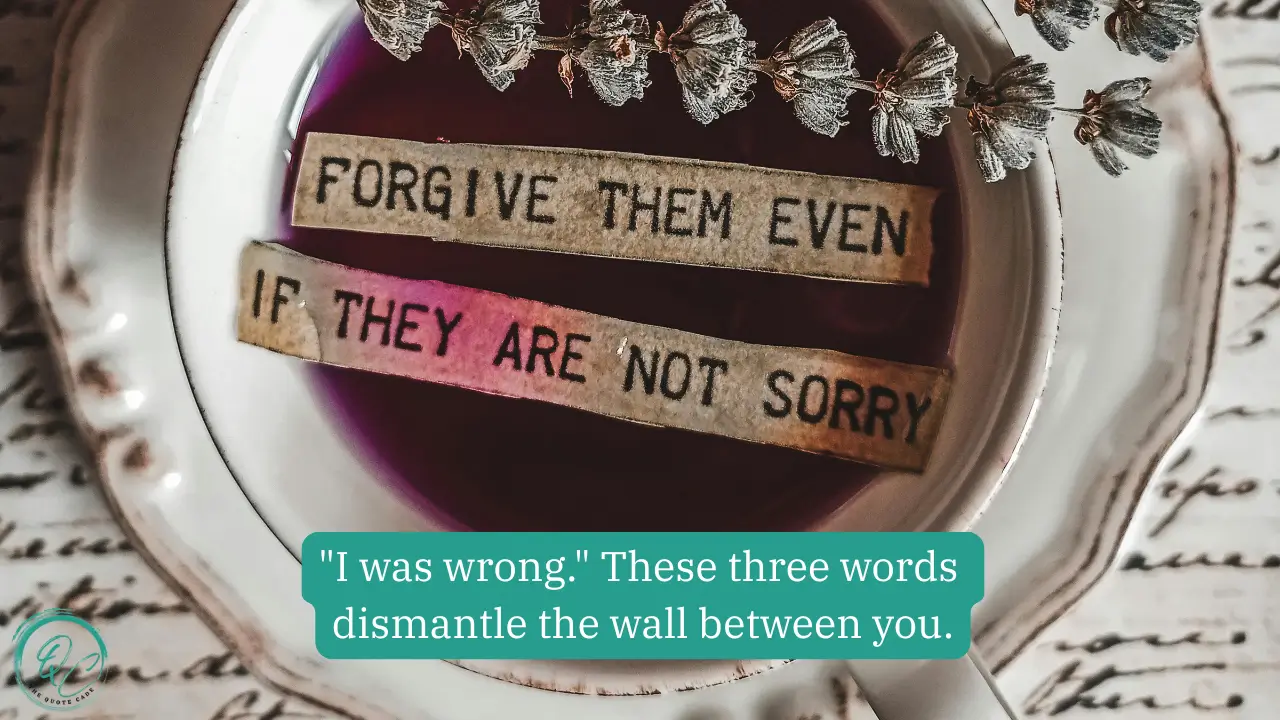
“I was wrong.” These three words dismantle the wall between you. How these words help you: They trade pride for possibility, reopening a closed door.
“I hurt you, and I see it now.” Validation is the first bandage for their wound. How these words help you: They prove your care is stronger than your defensiveness.
“My actions don’t reflect my heart.” It separates the mistake from the person. How these words help you: It reclaims your true character from a single poor choice.
“I am sorry for the pain I caused.” This focuses on their experience, not your intent. How these words help you: It centers their healing, which is the only path to your own.
“I want to make this right.” It shifts the energy from regret to repair. How these words help you: It transforms you from a source of hurt to a partner in solution.
“Thank you for hearing me.” It acknowledges their grace in listening. How these words help you: It honors the effort it takes them to even consider your apology.
“I will do better.” This turns a feeling into a future promise. How these words help you: It gives them—and you—a concrete reason to trust again.
“I understand if you need time.” It grants them the space you invaded. How these words help you: It shows your apology is for their sake, not your immediate relief.
“I take full responsibility.” It draws a clean circle around your fault. How these words help you: It ends the exhausting dance of blame and excuses.
“You didn’t deserve that.” It reaffirms their worth that you momentarily obscured. How these words help you: It realigns you with the truth of their value.
“I let us both down.” It frames the rupture as a shared loss. How these words help you: It rebuilds the “us” you fractured.
“Can we talk about how to heal this?” It invites collaboration in the mending. How these words help you: It initiates the next chapter instead of just rereading the last.
“I am learning from this.” It shows the wound wasn’t meaningless. How these words help you: They offer growth as the first fragile thread of restoration.
“Your peace matters to me.” It makes their inner state your concern. How these words help you: It demonstrates that your connection is bigger than the conflict.
“I am here, ready to listen.” It offers the one thing your earlier action denied: presence. How these words help you: It replaces the noise of your mistake with the quiet of your attention.
Sending warm holiday vibes? Share cheerful wishes and
merry and bright quotes
to spread joy and positivity.
4. Inspirational Forgiveness Quotes
Forgiveness is the quiet, relentless strength that rebuilds a world that resentment tried to destroy. It is inspiration born not from ease, but from immense courage.
You are not watering a dead plant. You are watering your own roots so you can grow in a new direction. The inspiration: It redefines the act from weakness to strategic self-care, motivating you to invest in your own future growth.
The past is a story. Forgiveness gives you the pen to write the next chapter. The inspiration: It ignites the creative power to see yourself as the author, not a prisoner, of your own narrative.
They built a box and put you inside. Forgiveness is the day you realize the walls were made of paper, and you can simply step out. The inspiration: It provides the stunning, simple realization that your confinement was an illusion you have the power to break.
Forgive not because they are worthy, but because you are too valuable to host their chaos any longer. The inspiration: It frames forgiveness as an act of high self-worth, compelling you to honor your own value.
Letting go isn’t losing a battle. It’s gaining the vast territory of your own peace. The inspiration: It reframes “surrender” as the ultimate victory, motivating you to claim a richer inner landscape.
The anchor you’re dragging isn’t keeping them in place. It’s only slowing you down. The inspiration: It offers a clear, visual reason to release the burden—not for them, but for your own journey’s momentum.
Forgiveness is the deep breath your soul has been holding for years. The inspiration: It connects the act to a tangible, physical sensation of relief, inspiring you to finally exhale.
It doesn’t erase the scar. It just stops letting the scar decide what you wear today. The inspiration: It empowers you to acknowledge your history without letting it dictate your present choices or style of living.
You are not polishing a tarnished past. You are building a brighter future with the metal you reclaimed from it. The inspiration: It sparks the vision of alchemy—transforming heavy, painful material into something strong and new.
The door you close on the past becomes the table you build your future upon. The inspiration: It provides a powerful image of practical utility, turning what you shut away into a foundation for what’s next.
Forgiveness is the ultimate home renovation: evicting a permanent tenant to make room for better guests. The inspiration: It motivates you to curate your inner space, making it inviting for joy, love, and new possibilities.
It is trading the museum of your grievances for a blank canvas. The inspiration: It excites the creative spirit, replacing the passive act of curation with the active thrill of creation.
You stop asking “Why did this happen to me?” and start asking “What can I build from this?” The inspiration: It catalyzes a profound shift from a passive, victim-oriented question to an active, builder-oriented one.
The knot in your chest isn’t a part of you. It’s just a tangle you’ve been carrying. Forgiveness is the gentle hand that begins to undo it. The inspiration: It offers a gentle, compassionate image of separation from pain, inspiring a patient and kind approach to yourself.
They occupied a room in your mind. Forgiveness is the moment you change the locks and claim the space for your own dreams. The inspiration: It inspires decisive action and ownership, turning mental real estate back into an asset for your own aspirations.
If you need words fuel strength and purpose, discover uplifting
marine motivational quotes
that help build courage, discipline, and resilience.
5. Self-Forgiveness Quotes to Nurture Self-love
Self-forgiveness is not a pardon for what you did. It is a promise to who you are becoming. It is the foundation upon which self-love is finally built.
You cannot build a future while constantly apologizing to your past. How it builds you: It allows you to turn your energy from a courtroom of regret into a workshop for your dreams.
The part of you that judges your mistakes and the part that learns from them are not the same voice. Choose which one you feed. How it builds you: It strengthens your inner coach over your inner critic, building resilience and wisdom.
Self-forgiveness is the decision to stop being both the prisoner and the warden of your own heart. How it builds you: It grants you a full pardon, freeing your capacity for joy to move about freely within you.
You are not breaking a rule by being human. You are following the only instruction there is. How it builds you: It reconstructs your identity from “flawed failure” to “perfectly imperfect learner,” building self-acceptance.
That chapter is closed. Stop writing footnotes in the margins of your life. How it builds you: It builds focus, directing your narrative energy toward the current page, not the edits you can no longer make.
Treat your past self with the gentle understanding you’d offer a dear friend who was doing their best with what they knew. How it builds you: It builds compassionate self-relation, transforming isolation into supportive inner companionship.
The mistake is a lesson, not a label. Peel it off. How it builds you: It builds a growth mindset, allowing you to integrate wisdom without being defined by the source.
You are not betraying your standards by forgiving yourself. You are honoring your complexity. How it builds you: It builds emotional integrity, allowing high standards to coexist with human fallibility.
Holding your own guilt is like clutching a hot coal to punish the fire. Release it and tend to the burn. How it builds you: It builds healing intelligence, shifting you from a posture of punishment to one of restoration.
You cannot hate yourself into a version you will love. How it builds you: It builds through positive reinforcement, proving that change is fueled by belief, not contempt.
Your worth is not a scorecard of your successes minus your failures. It is the constant, quiet light you carry beneath both. How it builds you: It builds an unshakeable core value, separating your intrinsic self from your performance.
Forgive the version of you who didn’t have the map you’re holding now. How it builds you: It builds gratitude for your growth, honoring the journey that brought you to greater awareness.
The shame is a wall you built for protection. Self-forgiveness is the door you install to let yourself back in. How it builds you: It builds self-reconnection, transforming a fortress of isolation into a home you can inhabit.
You are not starting from scratch. You are starting from experience. How it builds you: It builds a powerful platform for your next attempt, reframing every ending as an informed beginning.
Letting go of your perfect past is how you make room for your authentic present. How it builds you: It builds genuine self-expression, clearing the ideal to make space for the real and beautiful you.
Want to kick off the new year with encouragement? Discover uplifting
January inspirational quotes
to help you start the year with positivity and purpose.
6. Quotes About Choosing Forgiveness
Forgiveness is often framed as a feeling. It is not. It is a choice—a deliberate, strategic decision for your own peace. Here is the case for making it.
Choosing forgiveness is unsubscribing from a story that no longer serves you. How it makes life easy: It stops the endless, exhausting notifications of resentment from popping up in your mind.
You can carry the weight, or you can set it down. The choice is the only part that requires effort. How it makes life easy: It trades the chronic strain of carrying for the instant relief of release.
It is the decision to stop paying for a mistake with a currency they never even see: your joy. How it makes life easy: It ends the hidden, unfair tax on your happiness, leaving more for you to spend freely.
Choosing forgiveness is closing the app that was draining your battery in the background. How it makes life easy: It reclaims your precious mental and emotional energy for the programs you actually want to run.
You are not choosing their comfort. You are choosing your own clarity. How it makes life easy: It clears the fog of anger, making your path forward obvious and unobstructed.
It is the pragmatic choice to evict a tenant who pays no rent but monopolizes your space. How it makes life easy: It frees up room in your inner world for better, more nourishing thoughts to move in.
Forgiveness chooses to see the wound as a closed chapter, not an open tab. How it makes life easy: It lets you finally close the dozens of mental browser tabs slowing down your system.
It is deciding that your future is more interesting than your past is painful. How it makes life easy: It redirects your focus from the complicated maze of “why” to the simple, open road of “what’s next.”
You choose to forgive when you realize the grudge is a heavier burden than the offense ever was. How it makes life easy: It opts for the lighter load, making every step of your journey less arduous.
It is the choice to stop rehearsing a conversation that will never happen. How it makes life easy: It cancels the pointless, energy-draining play in your mind, giving you silence and presence back.
Choosing forgiveness is taking your hand off the hot stove. The burning only continues if you choose to keep it there. How it makes life easy: It ends the active, voluntary pain, allowing the natural and simpler process of healing to begin.
It is deciding that your peace of mind is non-negotiable, even if it means surrendering the fight. How it makes life easy: It makes your inner calm an immovable priority, simplifying all other decisions that flow from that center.
You choose it when you get tired of walking through your present while facing backwards. How it makes life easy: It allows you to turn around and see where you’re actually going, preventing stumbles and collisions.
It is the active release of a debt you know will never be paid, so you can stop wasting time on collections. How it makes life easy: It writes off a lost cause, freeing your time and ledger for profitable, positive investments.
Forgiveness is simply choosing to take the thorn out of your own foot, instead of demanding an apology for the bush. How it makes life easy: It provides immediate, tangible relief through your own action, without needing anyone else’s cooperation.
Looking for uplifting weekend energy to recharge your mindset? Explore
Saturday motivational quotes
to help refresh your focus and spark positive energy.
7. Christian Quotes On Forgiveness
Forgiveness stands at the very heart of the Christian faith—not as a passive feeling, but as a radical, deliberate choice that mirrors divine grace. It is love in its most courageous form.
Choosing forgiveness is aligning your heart with the very rhythm of grace. How Christianity appreciates this: It recognizes forgiveness as participating in God’s own nature, turning a personal act into a sacred reflection.
You are not merely letting go; you are creating a channel for mercy to flow through you. How Christianity appreciates this: It frames the choice as stewardship of the mercy you have freely received, making you a conduit of divine gift.
To forgive is to plant a flag on the battlefield that declares the war for your soul is over, and Love has won. How Christianity appreciates this: It echoes the triumph of the Cross, where ultimate forgiveness decisively conquered sin and hatred.
It is the daily decision to untangle someone from their mistake and see the person God still sees. How Christianity appreciates this: It mirrors Christ’s vision of us—separating the sin from the sinner, valuing the soul beyond the fault.
Choosing forgiveness is building a bridge across a chasm you did not create, because you believe in reunion. How Christianity appreciates this: It reflects the ministry of reconciliation, where God in Christ bridged the ultimate divide to restore the relationship.
It is the hard work of pulling weeds from the garden of your community so that fellowship can grow. How Christianity appreciates this: It upholds the health of the Body of Christ, prioritizing unity and peace as fruits of the Spirit.
You choose to forgive because a ledger of wrongs makes a very poor prayer book. How Christianity appreciates this: It honors the Lord’s Prayer—”forgive us our debts, as we also have forgiven our debtors”—making forgiveness integral to worship.
It is surrendering your right to be the judge, because you trust a higher court of perfect justice and mercy. How Christianity appreciates this: It embodies the command, “Vengeance is mine, I will repay, says the Lord,” placing trust in God’s perfect righteousness.
Forgiveness is the intentional dismantling of a wall, stone by stone, to see the image of God on the other side. How Christianity appreciates this: It affirms the Imago Dei in every person, choosing to honor that inherent dignity over the offense.
You choose to bear the cost yourself, not because it’s fair, but because you follow One who did it first. How Christianity appreciates this: It finds its model in Jesus, who absorbed the ultimate cost of sin without passing it back, demonstrating substitutionary love.
It is the quiet rebellion against the world’s economy of revenge, trading it for the economy of the Kingdom. How Christianity appreciates this: It flips worldly wisdom, showcasing the counter-cultural, transformative values of the Gospel.
Choosing forgiveness is watering the ground around you with the same living water that quenched your own thirst. How Christianity appreciates this: It is a practical outworking of being transformed by grace, allowing the gift you’ve received to become a gift you give.
You release them not to their own devices, but into the hands of a God who loves them still. How Christianity appreciates this: It combines trust in God’s sovereignty with a commitment to love, freeing you from the burden of changing someone else.
It is the deliberate act of tying a knot of mercy at the end of the rope of their failure, so they do not fall forever. How Christianity appreciates this: It mirrors the hope of redemption, refusing to define anyone solely by their worst moment, just as God does not define us by ours.
You choose forgiveness because a heart that is closed to others is, by necessity, closed to the healing it needs itself. How Christianity appreciates this: It acknowledges the spiritual principle that receiving grace is intertwined with extending it; an open hand to give is an open hand to receive.
Conclusion
After years of writing i have learned that these quotes are more than words. They may nor rase trauma or betrayal, but soften the resentment in our hearts.
Whether you have written one on your card or posted on a social media caption. You have a choice to forgive, inspired by words. This is the time to mend your journey and move on.
FAQ’s: (Frequently Ask Questions)
Q1.What is the best quote for forgiveness?
A powerful and enduring quote is by Mahatma Gandhi: “The weak can never forgive. Forgiveness is the attribute of the strong.” It reframes forgiveness as an act of courage, not weakness.
Q2. What is a powerful quote for letting go?
A vivid quote on letting go is by Max Lucado: “Forgiveness is unlocking the door to set someone free and realizing you were the prisoner!” It highlights how releasing others frees you from your own bitterness.
Q3. What are the 4 R’s of forgiveness?
In a Christian context, the 4 R’s are a framework: Reexamine the hurt’s severity, Resolve it with God, seek Reconciliation if there is repentance, and consider Restoration of the relationship with wisdom.
Q4. Why is forgiveness a strength?
Forgiveness is a strength because it requires great courage to release anger and choose peace. This act reduces personal stress and improves mental health, freeing your energy for a more positive life.
Q5. What is the golden rule of forgiveness?
The golden rule is “Forgive as the Lord forgave you.” It connects the act of granting forgiveness to the profound personal experience of having received it, making forgiveness a reciprocal and healing practice.