During my life, the most honest teaching came from the gap. My plan looked perfect, but there was always a difference in reality. What I expect in relationships, career, and overtime, I need to reframe my mindset. I had to handle setbacks to protect my peace of mind — learning to expect disappointment and you’ll never be disappointed.
Not by becoming pessimistic but by staying grounded and open to surprises. Old quotes remind me of disappointment, and you’ll never be disappointed. These quotes remind me not to chase perfection. I appreciate the moment rather than fighting it. This shapes an outlook that gives me the strength to face what comes with a steady heart.
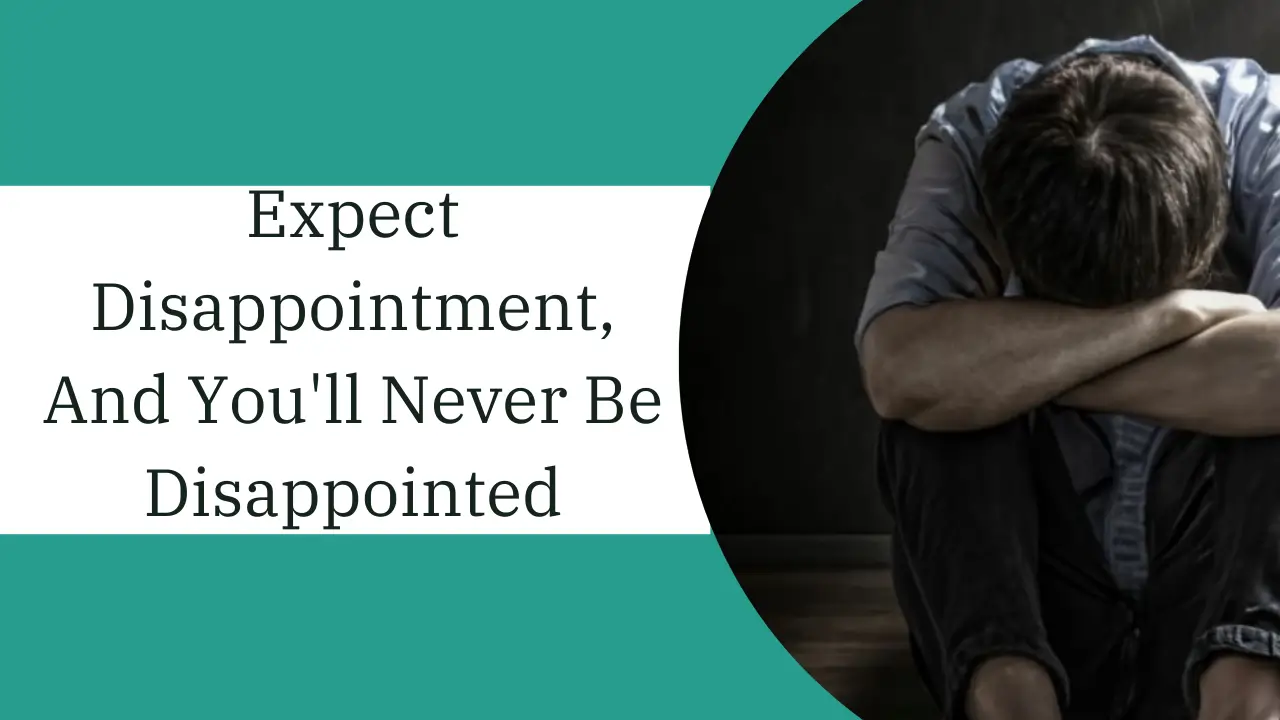
Expect Disappointment, And You’ll Never Be Disappointed Quotes To Learn
1. Respect Parents Not For What You Expect
“Parents give you life, not always the life you dream of.” The well of unconditional emotional support we hope to find in our parents can sometimes run dry. It’s crucial to appreciate the life they’ve given you, while consciously releasing the expectation that they will be the sole source of your emotional fulfillment. The Lesson to Learn: Practice grateful detachment. Be thankful for the foundation, but take ownership of building your own happiness and seeking validation from within, not from them.
“Their love is real, but sometimes their understanding isn’t.” A parent’s love is often a constant, unwavering force. However, their ability to understand your modern choices, values, or identity may be limited by their own experiences and perspectives. Expecting them to always “get you” is a recipe for mutual frustration. The Lesson to Learn: Differentiate between love and understanding. You can cherish their love without needing their approval on everything. Find your “chosen family” — friends and mentors who truly comprehend your journey.
“Some parents raise you for their dreams, not yours.” Out of love (or sometimes their own unmet ambitions), parents may try to steer you toward a path they envisioned. The script they hand you might be written for a different character. Recognizing this is the first step toward claiming your narrative. The Lesson to Learn: Learn to gently hand back the script that isn’t yours. Your life is not a continuation of theirs. Embrace the courage to define your own success and pursue a path that feels authentic to you.
“Blood gives the bond, not the blueprint.” The biological connection of family is a powerful bond, but it does not automatically mean they possess the wisdom, character, or tools to be your life’s architect. Expecting them to have a perfect blueprint for your life sets everyone up for failure. The Lesson to Learn: Become the architect of your own character. Your parents are a point of origin, not your entire destination. Actively seek out role models and learn from various sources to build the person you want to be.
“Not every ‘I love you’ comes with ‘I support you.’” Love and active support, while we hope they go hand-in-hand, are not always the same. A parent can love you deeply yet be unable or unwilling to support your decisions, career, or lifestyle due to their own fears or beliefs. The Lesson to Learn: Develop emotional self-reliance. Learn to validate your own choices and become your own biggest supporter. When their support is absent, your inner conviction must be strong enough to carry you forward.
Want to send kind and thoughtful vibes? Share a simple message that says
hope your day is going well
and brighten someone’s moment instantly.
2. Siblings Are Best Friends, But Not Always
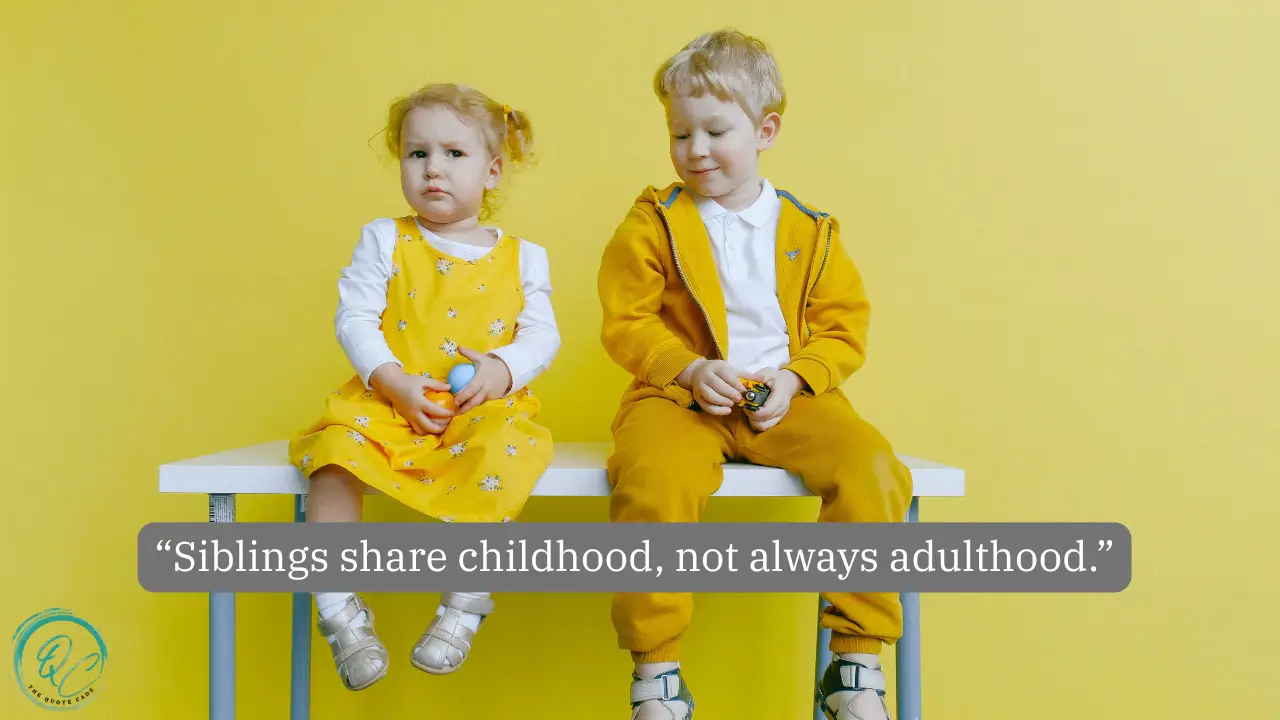
“Siblings share childhood, not always adulthood.” You grow up in the same house, forged by the same memories, only to become strangers with a shared past. Life pulls people in different directions, and the bond that felt unbreakable over toy disputes can quietly fade into yearly holiday texts. The Harsh Reality: The connection built by proximity in youth isn’t always strong enough to survive the diverging paths of adult life. Closeness is a choice, not a permanent state granted by blood.
“A shared roof doesn’t guarantee shared hearts.” You can sit at the same dinner table for eighteen years and never truly know the person across from you. Physical closeness can sometimes mask profound emotional distance, creating a silent chasm that only becomes visible once you no longer live under the same roof. The Harsh Reality: Coexistence is not the same as connection. A shared address is a circumstance, while a shared heart is a conscious, ongoing effort that not everyone is willing to make.
“Some siblings compete more than they care.” The sandbox rivalry never ends; it just evolves into competing for careers, relationships, and parental approval. What should be a source of support becomes a lifelong scoreboard where your joy is seen as their loss. The Harsh Reality: For some, the sibling dynamic is rooted in competition, not camaraderie. Expecting unconditional support from a person programmed to see you as a rival is an invitation for continuous disappointment.
The family title doesn’t make them your team.” The word “sibling” implies a built-in ally, but a title is not a contract. When life gets hard, you may find that some siblings are fair-weather friends at best, disappearing when you need a player for your team during the tough seasons. The Harsh Reality: Loyalty cannot be assumed based on genetics. Being related by blood doesn’t mean you are aligned in values, priorities, or the willingness to show up in a crisis.
“Love can be silent; help is even more so.” They may hold a fondness for you in their heart, a silent acknowledgment that you are family. But when you’re drowning and need a lifeline, that quiet love doesn’t translate into action. The phone doesn’t ring, and the help never comes. The Harsh Reality: Passive love has limited value in an active world. Love without supportive action, especially in critical times, can feel like a theoretical concept rather than a tangible source of strength.
Navigating these realities is one of adulthood’s toughest lessons. We’d love to hear from you—which of these quotes resonates most with your own life story? Share your experience in the comments.
Weekends are a great time to reset your mindset and recharge your energy. Discover
uplifting Saturday quotes
that encourages positivity, focus, and personal growth.
3. Relatives Are Just Like Other People
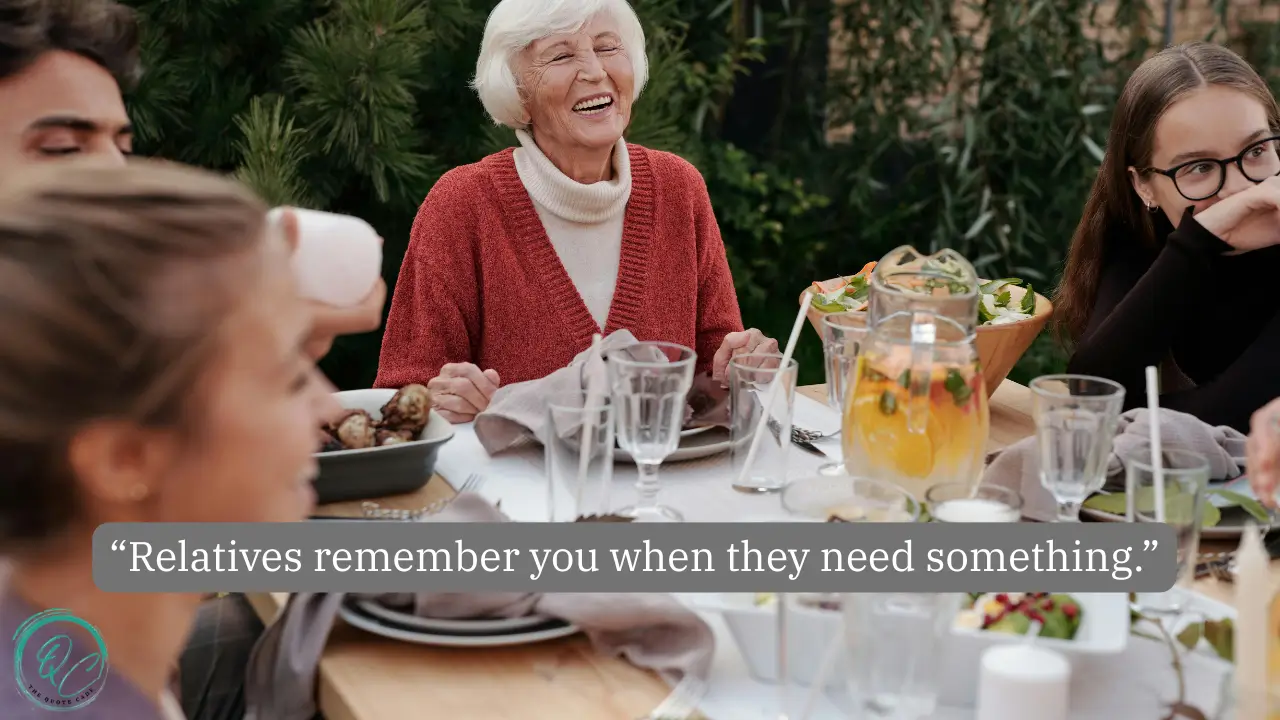
“Relatives remember you when they need something.” The Reality: Your phone rings only when a favor is needed—be it financial, social, or practical. Once the need is met, the silence returns, revealing the transactional nature of the relationship. How to Behave & Set Limits: Respond with polite but firm boundaries. You are not a resource to be tapped. Learn to say “No” gracefully without over-explaining. Invest your time and energy only in those who reciprocate your care consistently.
“Family gatherings don’t make them family in heart.” The Reality: Sharing a holiday table or a genetic link does not automatically create a meaningful, supportive bond. Presence under obligation is not the same as presence out of genuine love. How to Behave & Set Limits: Lower your expectations for deep connection at mandatory events. Be cordial and civil, but don’t feel pressured to perform emotional intimacy. Protect your peace by engaging in light, neutral topics and limiting the duration of your stay.
“Some call you ‘dear’ while wishing you less.” The Reality: Sweet words and affectionate terms can be a thin veil for jealousy, competition, or resentment. Not every compliment is genuine; some are subtle digs or ways to gather information. How to Behave & Set Limits: Take overly sweet or prying comments with a grain of salt. Do not feel compelled to share your vulnerabilities or successes with them. A simple “Thank you,” and a change of subject is your best defense. Protect your personal news.
“Bloodline isn’t loyalty’s proof.” The Reality: The accident of birth does not guarantee that a relative will have your back. In fact, some of the deepest betrayals can come from within the family, where confidentiality and trust are assumed but not honored. How to Behave & Set Limits: Treat trust like a privilege, not a right granted by DNA. Share confidential information slowly and only with those who have proven themselves dependable. If someone betrays you, demote them in your inner circle and adjust the level of personal information you share accordingly.
“They’ll clap for you in public, curse you in private.” The Reality: Two-faced behavior is painfully common. The same people who offer a congratulatory hug at a party will be the first to pick apart your achievements behind your back, often to make themselves feel better. How to Behave & Set Limits: Do not seek or rely on their validation. Their opinions are a reflection of their own insecurities, not your worth. Keep interactions public and light. When you hear the gossip, refuse to engage in the drama. Your silent success is the ultimate response.
4. Friends Depend on Situation
“Friends turn strangers when life tests loyalty.” Fair-weather friends are abundant when the sun is shining, but they evaporate at the first sign of a storm. They are companions for good times, not partners in hardship. How to Know a True Friend? A true friend doesn’t fade; they step closer. They are the one who asks, “How can I help?” without you having to beg. They sit with you in your silence and aren’t afraid of your mess. You’ll know them by their unwavering presence when you have nothing to offer but your struggles.
“A friend’s promise is lighter than life’s weight.” Words are costless, and promises made in comfort are often forgotten in chaos. Many will vow to be there, but their commitment dissolves when it requires real effort. How to Know a True Friend?A true friend’s actions write the check that their words promised. They may not have all the answers, but they show up. They remember the small things, follow through on their commitments, and their consistent reliability is proof of their loyalty. Watch their feet, not their lips.
“A friend’s promise is lighter than life’s weight.” Words are costless, and promises made in comfort are often forgotten in chaos. Many will vow to be there, but their commitment dissolves when it requires real effort. How to Know a True Friend?A true friend’s actions write the check that their words promised. They may not have all the answers, but they show up. They remember the small things, follow through on their commitments, and their consistent reliability is proof of their loyalty. Watch their feet, not their lips.
“The ones who say ‘always’ often mean ‘until.’” Some friendships have an expiration date you’re never told about. They are for a season or a reason—a chapter in your life, not the entire story. How to Know a True Friend? A true friend doesn’t need to proclaim “forever” because they are actively building it with you. The bond evolves but doesn’t break with life’s changes—new jobs, marriages, or moves. There’s a mutual effort to bridge the new distances, proving the connection is stronger than circumstance.
“Laughter is easy, loyalty is rare.” Anyone can enjoy your company when you’re fun, successful, and happy. This is the easiest form of connection, requiring little more than a good time. How to Know a True Friend? A true friend is not just an audience for your joy but a shelter in your sorrow. They are the ones who stay when your life falls apart, who defend you in your absence, and whose loyalty is not conditional on your performance or mood. You find them not in the crowd that cheers your wins, but in the quiet room where they help you face your losses.
“Laughter is easy, loyalty is rare.” Anyone can enjoy your company when you’re fun, successful, and happy. This is the easiest form of connection, requiring little more than a good time. How to Know a True Friend? A true friend is not just an audience for your joy but a shelter in your sorrow. They are the ones who stay when your life falls apart, who defend you in your absence, and whose loyalty is not conditional on your performance or mood. You find them not in the crowd that cheers your wins, but in the quiet room where they help you face your losses.
“Friends forget faster than they forgive.” Life’s momentum can pull people apart with a quiet, unthinking force. It’s often not a dramatic fallout or a conscious choice, but a simple, gradual fading as their own world fills with new priorities, leaving your connection to gather dust. How to Know a True Friend? A true friend fights life’s momentum. They are the one who sends a “thinking of you” text in the middle of their own busy day. They remember the details you shared weeks ago and make a conscious effort to bridge the gaps of time and distance. You’ll know them not by the constant presence you once had, but by the consistent, deliberate effort they make to ensure you are never truly forgotten.
Sundays are ideal for slowing down and setting intentions for the week ahead. Explore
calming Sunday motivational quotes
that helps you reset your mindset and welcome inner peace.
5. Relationships can Make You Fool
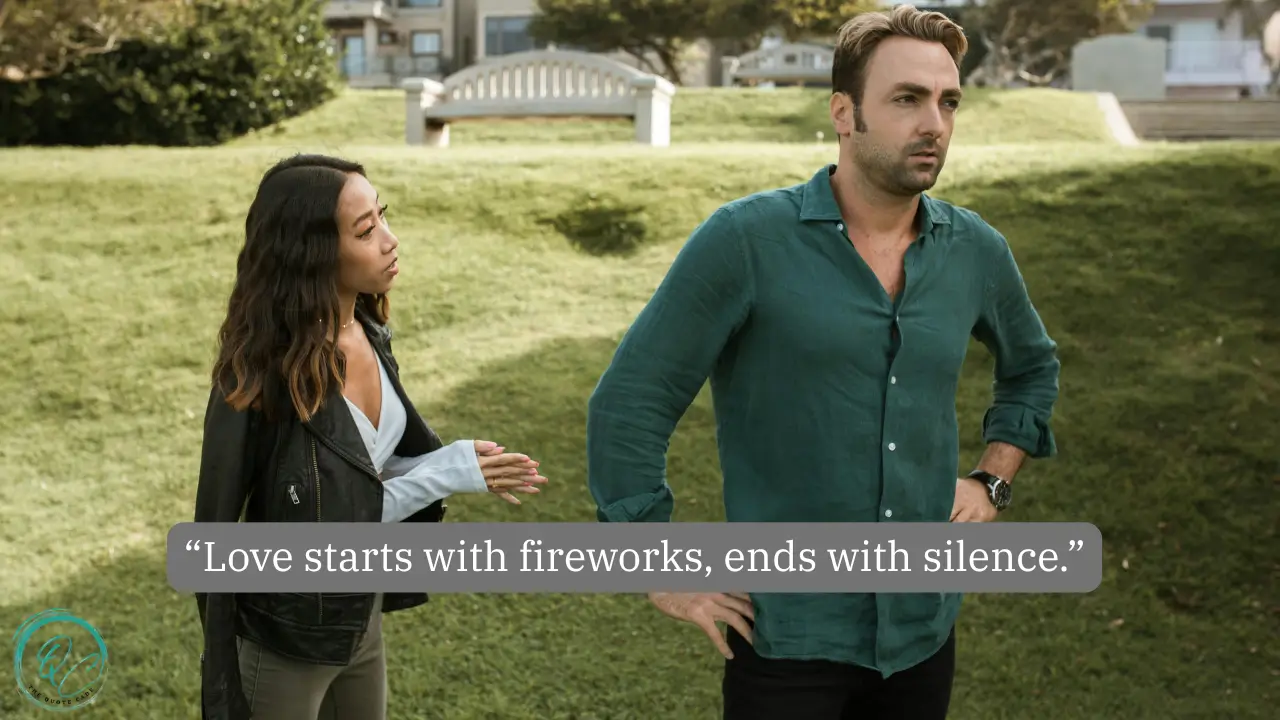
“Love starts with fireworks, ends with silence.” The initial, intoxicating high of infatuation is not sustainable. Mistaking this temporary intensity for the entirety of love sets you up for a devastating crash when the quiet, mundane reality of partnership sets in. How to Save Yourself: Build a relationship on the foundation of companionship, not just chemistry. Learn to find comfort and depth in the quiet moments. Nurture a life and identity outside of the relationship so your entire world doesn’t shatter when the fireworks end.
“They love the version of you they first met.” People often fall in love with a snapshot—the person you were at a specific time. When you grow, evolve, or reveal layers they didn’t expect, their love may waver, revealing it was conditional on you remaining static. How to Save Yourself: Never freeze yourself in time to preserve someone else’s affection. Your right to grow is non-negotiable. A partner who truly loves you will love the person you are becoming, not just the museum exhibit of who you were.
“Promises in love have the shortest expiry date.” Grand, future-focused promises made in a moment of passion are often the first to break under the weight of present reality. Words are effortless; consistent action is the true currency of love. How to Save Yourself: Stop collecting promises and start observing patterns. Trust is built not on poetic vows but on daily, reliable behavior. Listen less to what they say they will do and watch more closely at what they actually do.
“Some love you until loving you is no longer easy.” Fair-weather partners are abundant. They are there for the laughter and success, but disappear during loss, grief, or struggle. Their love is a transaction, withdrawn when it requires real effort. How to Save Yourself: Pay close attention to how a person handles your “worst.” Do they retreat, or do they lean in? Let the difficult seasons reveal their character. Your heart is too precious to entrust to someone who only shows up for the party.
“They can hold your hand and still let go inside.” Physical presence can be a deceptive mask for emotional abandonment. You can share a bed, a home, and a life with someone who has already checked out, leaving you in a relationship that is an empty shell. How to Save Yourself: Stay emotionally attuned. Don’t ignore the quiet cues—the lack of eye contact, the death of meaningful conversation, the emotional distance. Have the courage to ask, “Are you still here with me?” and believe the answer their actions provide, even if it hurts. Your peace is worth more than preserving a facade.
6. World Is Unknown
“The world sells hope and delivers disappointment.” We’re taught to dream big, but the path is rarely as smooth as advertised. The world’s surprise isn’t the failure itself, but the profound strength and adaptability we discover when we are forced to build our own path where the promised road ends. The World’s Surprise: It teaches you that the most reliable hope is not the one you’re sold, but the one you build yourself from the rubble of disappointment. The surprise is your own resilience.
“Kindness is often a currency, not a virtue.” We’re raised to believe kindness is its own reward, only to find it’s often a transaction. The world’s surprise isn’t the betrayal, but the clarity it brings, teaching you to recognize and cherish the rare, selfless kindness that asks for nothing in return. The World’s Surprise: It sharpens your discernment. You learn to appreciate genuine virtue without becoming cynical, discovering that the purest forms of kindness are even more valuable because of their rarity.
“The world listens when you win, ignores when you fall.” Society loves a victory lap but averts its gaze from the struggle. The world’s surprise is that this silence isn’t a void, but a filter. It clears out the noise of fair-weather admirers, revealing the quiet, steadfast presence of those who truly matter. The World’s Surprise: It gives you the gift of clarity. In the silence that follows a fall, you can finally hear the footsteps of the few who walk toward you, and you learn the true meaning of loyalty.
“Truth is less popular than comfort.” People often prefer a comfortable lie to an inconvenient truth. The world’s surprise is that speaking truth, despite the resistance, doesn’t isolate you—it magnetically attracts the right people. It builds a tribe of genuine connections who value integrity over illusion. The World’s Surprise: It rewards courageous honesty with a different currency: deep respect and authentic relationships. You trade shallow popularity for profound trust.
“In the end, everyone chooses themselves.” This seems like the ultimate lesson in loneliness, but the world’s surprise is one of liberation. When you accept that self-interest is a universal driver, you stop expecting others to sacrifice for you. You become the author of your own security and the architect of your own happiness. The World’s Surprise: It sets you free. You stop waiting for a rescue that will never come and start building your own fortress. The ultimate power lies in choosing yourself first and wisely.
Love powerful lines from the big screen? Browse our curated collection of
iconic movie quotes
that capture emotion, inspiration, and unforgettable moments.
7. Short Disappointed Quotes to Express Hurt
Moments come in life when a harsh experience gives you the biggest lesson. From the following quotes, check which one relates to you the most.
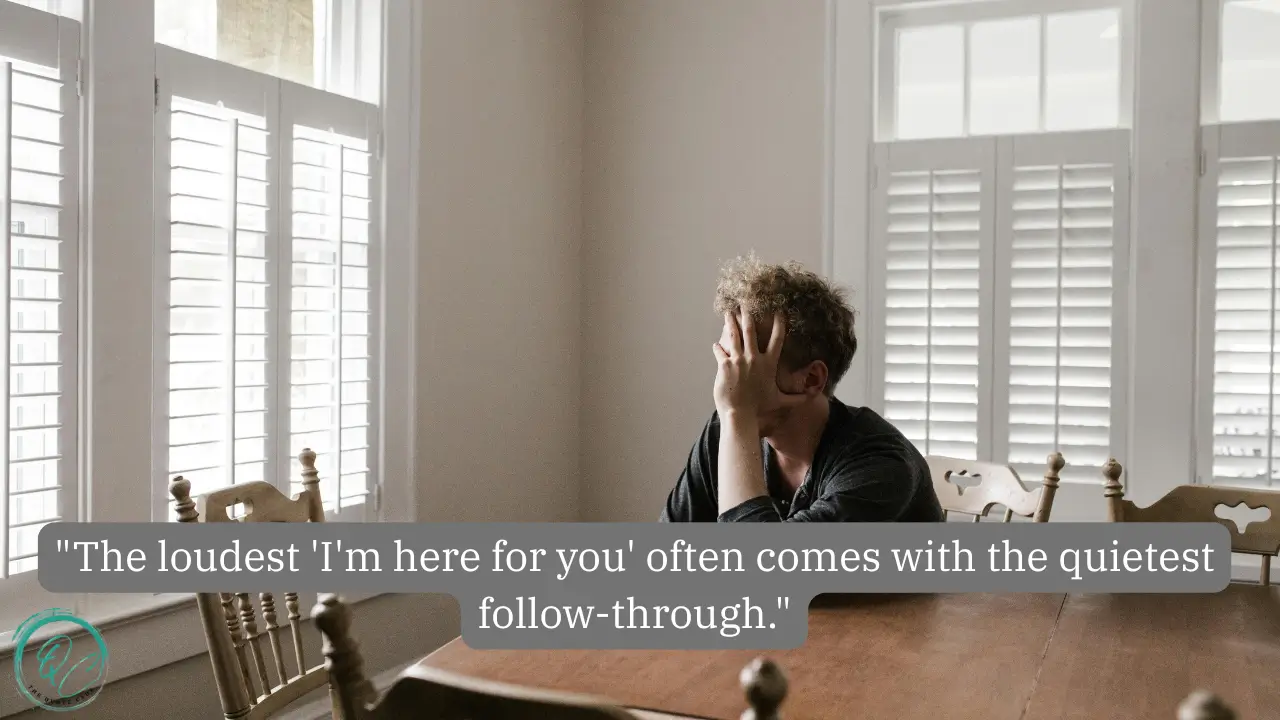
“The loudest ‘I’m here for you’ often comes with the quietest follow-through.” (When a friend’s big promise vanishes during your crisis.)
“You were my emergency contact, but you were never really on call.” (For the partner or parent who was physically present but emotionally absent.)
“I mistook your convenience for commitment, and paid the price in silence.” (For situationships and fair-weather friends who left when it got hard.)
“They sold me a dream, then charged me for the wake-up call.” (When a job, a person, or a system betrays the vision they promised.)
“You used my trust as a shortcut to your goal, and left me at the detour.” (For the colleague or loved one who exploited your support for their gain.)
8. Disappointed Quotes for Self-Reflection and Growth
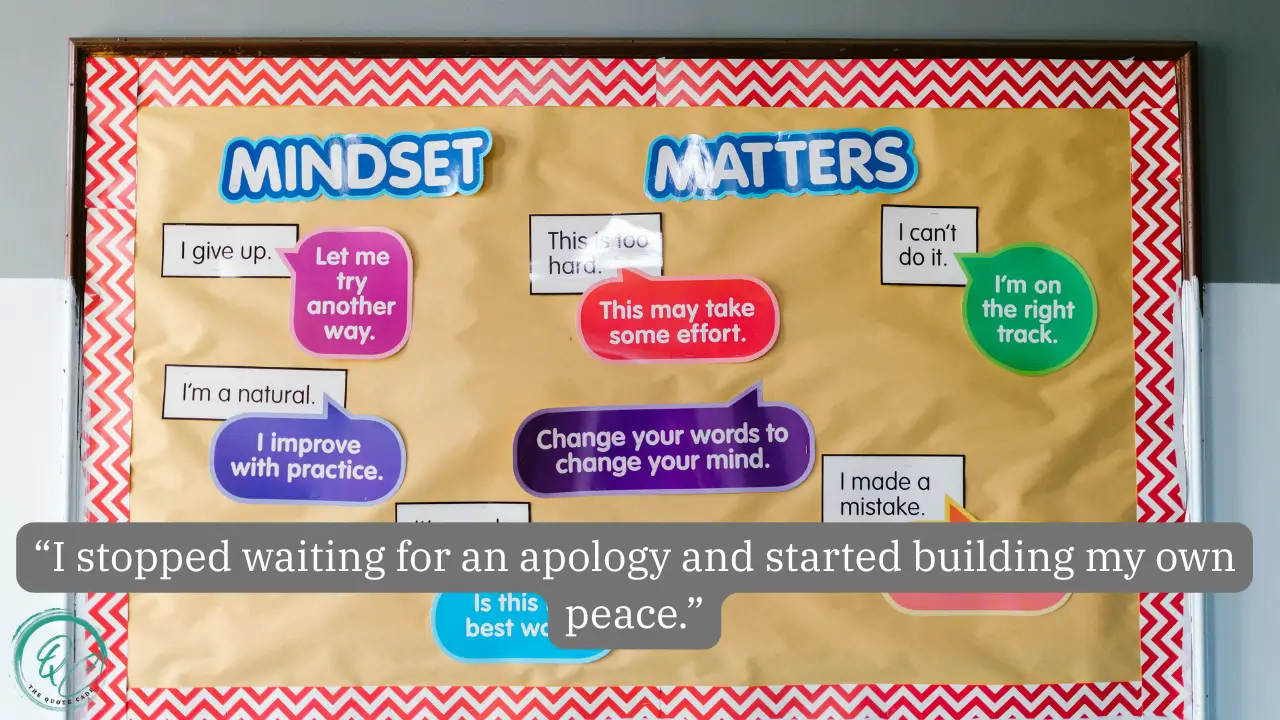
“I stopped waiting for an apology and started building my own peace.” Real Personality Example: Nelson Mandela Imprisoned for 27 years, he could have demanded an apology or revenge from his oppressors. Instead, he focused on building a peaceful, multiracial democracy for South Africa, transforming his personal suffering into a national project of reconciliation and becoming its first Black president.
“The moment I forgave myself for trusting them was the moment I got my power back.” Real Personality Example: J.K. Rowling After a failed marriage and living on state benefits, she stopped blaming herself for her “mistakes.” Forgiving her own past and trusting her creativity again empowered her to write Harry Potter, turning her deepest struggles into the foundation of her global success.
“I used the silence they left me in to finally hear my own voice.” Real Personality Example: Michelle Obama Often underestimated and unheard, she stopped trying to conform to others’ expectations. In the quiet of being overlooked, she refined her own authentic convictions, which later defined her powerful, independent voice and initiatives as First Lady.
“I stopped trying to win a race they weren’t even running.” Real Personality Example: Steve Jobs Ousted from Apple, he didn’t just try to build a better computer. He left the existing industry race entirely to create new categories (like at Pixar) and, upon his return, revolutionized technology by focusing on design and ecosystem—a vision no one else was competing in.
“My greatest strength was forged in the fire of their greatest doubt.” Real Personality Example: Oprah Winfrey Told she was “unfit for TV” for being too emotional, she didn’t hide her empathy. She amplified it, transforming the very trait others doubted into her superpower of authentic connection, which built her iconic media empire.
Moving Forward After Reading These Disappointing Quotes
“In my own life, avoiding disappointment is about protecting yourself. But too much of it weakens us. My philosophy is that setbacks are inevitable. They should not define your outlook.
It’s the balancing of realistic optimism with proper preparation that navigates challenges. Stay present for what comes next, and ask yourself while you are holding open or back. Thoughtful courage with openness provides the greatest rewards and leads me back to small joys”.
FAQ’s: (Frequently Ask Questions)
Q1. Who said, “Expect disappointment, and you will never be disappointed”?
This quote is commonly attributed to the Marvel character MJ (Michelle Jones-Watson), played by Zendaya, in Spider-Man: No Way Home (2021).
Q2. What does “expect disappointment and you’ll never be disappointed” mean?
It means adopting a defensive mindset: by assuming things will go wrong, you emotionally shield yourself from hurt when they do, but it can also limit joy and hope.
Q3. What does Zendaya say about disappointment?
Zendaya, through her character MJ, popularized the line about expecting disappointment, reflecting a guarded, self-protective attitude common among youth facing unreliable people and situations.
Q4. Who said, “Keep your expectations low, and you’ll never be disappointed”?
This similar sentiment is widely used in general life advice and pop culture, but is often linked to Drake from his song Marvin’s Room (2011), where he reflects on low expectations.
Q5. Who said,d “You and you’ll never be disappointed”?
This version of the quote is often credited to author Henry David Thoreau in various interpretations, though its exact origin in his works is debated. It echoes stoic philosophy.