

I know how a message can shift her ordinary afternoon into a special one. Your romantic good afternoon paragraphs for her are more powerful than romantic gestures. A simple and unexpected way in which a few little notes land on her phone.
I remember a thoughtful afternoon message that I sent to my wife. She told me later how those words lifted her spirits. This is how good afternoon messages show up. A sweet text leaves someone feeling loved and appreciated.
Come with us to explore the magic of good afternoon paragraphs. They can turn your moments into heartwarming evidence. A moment that someone special is holding for you.
Table of Contents
Toggle1. Romantic Good Afternoon Paragraphs for Her Happiness

The afternoon has a specific gravity. And the love adds a unique drift to trying. The following paragraphs are written for the exact moment that reminds her she is the center of attention.
- The sunlight coming through my window right now is the same color as your hair when you stand in the kitchen on Sundays. I wasn’t looking for you in the weather today, but here you are again.
Why is this for her only? No other woman stands in your kitchen on Sundays. No other woman has that specific shade of light living in her hair. This is a fingerprint, not a greeting card. - I don’t text you in the afternoon because I’m bored. I text you because 2 PM hits and my brain decides it’s done caring about spreadsheets and wants to care about you instead. You’re the upgrade my attention span was waiting for.
Why is this for her only? This references the specific rhythm of your relationship—the mid-afternoon check-in habit that exists only between the two of you. Another woman wouldn’t understand why 2 PM matters.* - You exist somewhere out there right now, probably doing something ordinary like refilling a water bottle or squinting at a screen, and the sheer normalness of that is what gets me. I love that you’re a real person with a real afternoon, not just a character in my head.
Why is this for her only? This is about her specific ordinary moments—the ones you’ve witnessed and memorized. You know how she squints. You know which water bottle is hers. These details belong to her alone. - If I could send you the exact temperature of this moment—the fan humming, the ice melting in my glass—I would. Because I want you to feel how much space you occupy in a day that doesn’t even have you in it physically.
Why is this for her only? You’re inviting her into your private space. You’re not describing a generic romantic scene. You’re describing the room where you sit, the glass you’re holding. It’s an intimacy meant for one recipient. - I hope your afternoon is soft. Not productive. Not impressive. Just soft. You do enough heavy lifting for the world. Let 3 PM be the hour that asks nothing of you except your presence.
Why is this for her only? You know her specific burdens. You know how hard she works and how rarely she permits herself softness. This is permission crafted for the woman who never takes it. - The thing about missing you at midday is that it’s never dramatic. It’s just a slight lowering of the volume on everything else. The world gets a little more gray, a little less interesting, until I remember you’re still mine.
Why is this for her only? “Still mine” is the operative phrase. This isn’t about missing someone. It’s about missing the woman who has already said yes to being yours. The relief at the end belongs to her specifically. - I wonder what sound you just made. A sigh at an email? A laugh at something on your phone? A quiet hum while you think? I’m collecting the imaginary soundtrack of your Tuesday afternoon because the real thing is too far away.
Why is this for her only? You know her sounds. You’ve heard her sigh at emails. You’ve heard her quiet thinking hum. A stranger wouldn’t know she even does that. You do. - You are the reason I now believe in the middle of things. Not just beginnings or endings. The middle of the day, the middle of a conversation, the middle of a life being built. You’ve made the in-between beautiful.
Why is this for her only? This is a statement of transformation that she caused. Before her, you rushed through afternoons. She changed the way you experience time. No one else can claim that. - Someone probably needed your patience today and got it. Someone probably took your kindness and didn’t notice. I see it. I see the energy you spend just to keep your corner of the world warm. Rest on that later. For now, just know I see it.
Why is this for her only? This is about her specific emotional labor—the way she holds space for others without recognition. You’re not praising a generic virtue. You’re witnessing her particular, often invisible, generosity. - I don’t need a sunset or a candlelit dinner to find you romantic. I find you romantic at 2:37 PM on a Wednesday when you’re probably wearing something comfortable and not thinking about me at all. That’s the version of you I’m most in love with—the one that just exists.
Why is this for her only? You’re loving the version of her that the public never sees. The unposed, unaware, comfortable version. That intimacy is reserved for the person who lives life alongside her, not the audience. - My afternoon brain is less careful than my morning brain. It’s too tired to be smooth. So here’s the unpolished truth: I adore you. Not the idea of you. Not the curated version. The woman who gets tired, hungry, and annoyed. That one. That’s my person.
Why is this for her only? You’re naming her unflattering, human edges—and claiming them as the reason you stay. This isn’t flattery. It’s a covenant. It’s for the woman who has shown you her rough drafts. - If you’re tired right now, consider this paragraph a permission slip to stop. Not forever. Just for the next seventeen minutes. Drink something cold. Look out a window. Be a human who is loved instead of a human who is performing. I’ll wait.
Why is this for her only? “I’ll wait” is the quiet promise of a partner who isn’t going anywhere. This isn’t advice for a crowd. It’s a specific man telling a specific woman he will hold space for her rest. - There’s a version of me from five years ago who would be stunned to know he spends his afternoons thinking about someone else’s happiness. You rewired something I never knew was broken.
Why is this for her only? You’re giving her credit for a change only she could have made. The “before you” and “after you” timeline is a story only the two of you share fully. - I hope you know you don’t have to be doing anything to be worth loving. You could be staring at a wall right now, and I’d still feel lucky. Your existence, not your output, is what has a grip on me.
Why is this for her only? This counters a specific lie she might believe about herself—that her value is tied to her productivity. You’re speaking directly to her hidden insecurity. That’s partner-level perception. - The afternoon is a hallway between morning and evening. Most people rush through it. But I’ve learned to linger here because this is where my thoughts of you live. In the quiet. In the waiting. In the space that’s just for us.
Why is this for her only? “The space that’s just for us” is the key. Afternoons have become your territory as a couple. It’s a private room in the architecture of a day that no one else has the key to.
2. Sweet Romantic Good Night Paragraph For Her

When the night falls, the fear of unguardedness appears. But when she hears from you, the noise fades, and the love becomes the armor. The following are the paragraphs that she wants to hear from you, so the comfort carries her into dreams.
- Before you close your eyes tonight, I need you to know one thing: you were the best part of my day, and you weren’t even in it. That’s the kind of hold you have on me. Sleep knowing you’re someone’s favorite thought without having to try.
How does this make her night good? It removes performance pressure. She doesn’t need to have done anything today to earn this love. She can rest in the knowledge that her mere existence was enough. - I hope sleep finds you gently tonight. Not because you’re exhausted—though you probably are—but because you deserve soft landings. The world asks so much of you during the day. Let the night ask nothing. Just rest. I’ll be here when you wake.
How does this make her night good? It reframes sleep as a gift she deserves, not a biological necessity she has to squeeze in. It’s permission to stop earning rest and simply receive it. - I wonder what position you fall asleep in. Curled on your side? One arm under the pillow? I’m collecting these small details like evidence that you’re real, because sometimes loving you feels like something I made up in a better dream than the one I’m about to have.
How does this make her night good? It makes her feel seen in her most private, unconscious moments. Someone is thinking about the way she sleeps. That’s a level of intimacy that wraps around her like a blanket. - If I could send you a sound right now, it would be the quiet hum of my breathing slowing down because I’m thinking of you. Steady. Calm. A rhythm that says you’re safe, you’re loved, you can let go now.
How does this make her night good? It’s an auditory lullaby in text form. It mimics the physical presence of someone beside her, regulating her nervous system through words alone. - Tomorrow will have its own problems. Its own emails. It’s own small disappointments and unexpected joys. But none of that exists yet. Right now, in this sliver of night, there is only you and the knowledge that you are deeply, unreasonably loved. Hold that. Sleep inside it.
How does this make her night good? It silences tomorrow’s anxiety. It draws a circle around the present moment and fills it with love. She can close her eyes without carrying the weight of a day that hasn’t arrived. - I hope you dream about something ridiculous tonight. Flying teacups. Talking dogs. A version of me who can actually dance. Your waking hours are so full of logic and responsibility. Let your sleeping hours be weird and free. You’ve earned a few hours of nonsense.
How does this make her night good? It gives her permission to be unproductive even in her subconscious. It’s a playful release from the adulting she does all day. Laughter before sleep is a gift. - You are the last thing I think about. Not because I’m trying to. Not because it’s romantic. But because my mind just naturally drifts to its favorite place when the engine of the day finally idles. You’re my brain’s default setting. Goodnight to my default.
How does this make her night good? It removes the pressure of “trying” to be romantic. It tells her she’s not an obligation or a performance. She’s home-based. She’s where his thoughts go to rest. - Somewhere between awake and asleep, there’s a small door. I hope you find it tonight. And I hope on the other side of that door, there’s a version of us that doesn’t have to say goodnight. Just sits together in the quiet. Until then, this sentence will have to hold my hand.
How does this make her night good? It acknowledges the ache of physical distance while offering a bridge across it. The paragraph itself becomes the hand she can’t hold. It’s presence disguised as punctuation. - Don’t check your phone again. I know you do that. One more scroll, one more check for something that never comes. Put it down. Face down. The only notification that matters is the one inside your chest that says you are enough. And that one doesn’t need a screen to glow.
How does this make her night good? It’s a gentle intervention. It breaks the doomscrolling habit with love instead of judgment. It tells her she’s not missing anything because she already is everything. - I don’t need you to text me back tonight. I don’t need you to be clever or cute or responsive. I just need you to be horizontal and breathing and maybe drooling a little on your pillow. That image? That’s my peace. Knowing you’re resting is my rest.
How does this make her night good? It releases her from the obligation to reply. No performance required. No energy to muster. She can simply receive the words and close her eyes. That’s a rare and restful freedom. - The version of you that’s about to fall asleep is my favorite version. Not because she’s prettier or quieter. But because she’s finally stopped performing for a world that takes too much. She’s just a person in some sheets who is loved. That’s the whole truth. Goodnight to her.
How does this make her night good? It validates her exhaustion and celebrates her unguarded self. It says the woman the world doesn’t get to see is the one worth loving most. That’s a profound kind of safety. - If I could build you a room out of words, it would have low light and no clocks. The walls would be made of the sound of my voice reading something unimportant. The floor would be warm. And you’d finally sleep like you used to before the world taught you to worry. Consider this paragraph the blueprint.
How does this make her night good? It creates an imaginative refuge. For a few seconds, her mind leaves her actual room and enters one built entirely for her comfort. That’s a mental vacation before sleep. - I’m not wishing you sweet dreams because I’m supposed to. I’m wishing you sweet dreams because you’ve been having bitter days lately, and I’ve noticed. I see the weight you’re carrying. I can’t lift it from here, but I can wrap these words around it. Maybe that makes it lighter. Maybe that’s enough for tonight.
How does this make her night good? It acknowledges the hard stuff without demanding she fix it. It doesn’t pretend everything is fine. It just offers company in the heaviness. That kind of honesty is more comforting than forced positivity. - Your bed is a small country tonight, and you are its only citizen. Govern it gently. Declare a ceasefire on your own thoughts. Lower the flags of worry and expectation. Let the borders be soft. Let the only law be rest.
How does this make her night good? It uses metaphor to give her agency over her own rest. She’s not a victim of insomnia or anxiety. She’s the ruler of a peaceful nation. That mental reframe is quietly powerful. - I’ll be here in the morning. That’s not a promise I make lightly, and it’s not one you need to doubt. When you open your eyes, these words will still be true. So there’s nothing to hold onto tonight. You can let go completely. I’ve got us until you wake.
How does this make her night good? It removes the fear of impermanence. The love she’s receiving isn’t fragile or conditional on the night ending. It’s a constant. She can surrender to sleep knowing nothing will have changed when she returns.
3. Romantic Good Afternoon Messages for Surprise

Surprise does not mean a big bash. But sometimes small gestures can give happiness that you cannot imagine. It can brighten your afternoons more than anything. Check the following paragraphs to provide unexpected warmth during her ordinary afternoon.
- I just realized I’ve been smiling at my phone for the last thirty seconds, and my coworker definitely thinks I’m looking at something inappropriate. The inappropriate thing is just your name on my screen. And the thought of you reading this right now. That’s the scandal.
How does this surprise? It arrives without occasion or preamble. No “happy afternoon” or “just checking in.” It drops her directly into a candid, slightly embarrassing moment that’s entirely about her effect on you. She didn’t see that coming. - I wasn’t going to text you. I told myself to leave you alone. Let you work. Be a normal person with boundaries. But then I remembered that normal is overrated and boundaries are for people who don’t have your laugh stuck in their head like a song they can’t skip. So here I am. Unboundaried. Thinking about your laugh at 2:41 PM.
How does this surprise? It confesses the internal battle and then gleefully loses it. The surprise is in the surrender. She expects restraint from the world. You’re giving her the opposite: someone who couldn’t resist reaching out. - Question. Hypothetically. If a person were to be thinking about you right now—not in a dramatic way, just in a quiet, “I wonder what she’s doing” kind of way—would that be weird? Asking for a friend. The friend is me. I’m the friend. And I’m not asking hypothetically.
How does this surprise? It uses humor and a fake “hypothetical” setup to disarm her before delivering the real message. She’s expecting a joke. She gets a confession wrapped in a joke. The bait and switch lands differently. - I just saw a cloud that looked exactly like the shape of your hair when you wake up. I know that’s a strange thing to say. I know clouds don’t really look like hair. But my brain is apparently incapable of seeing anything today without finding you inside it. Even the sky isn’t safe from you.
How does this surprise? It’s wonderfully specific and slightly absurd. She didn’t expect a cloudy report. She didn’t expect you to know the shape of her morning hair. The surprise is in the odd, intimate detail that proves you’re paying a ridiculous amount of attention. - I’m not going to ask how your day is going. Everyone asks that. It’s the small talk of people who don’t know you. I’m going to ask something else: What’s one tiny, insignificant thing that made you pause today? A good song? A weird shadow? The way your coffee tasted was exactly right? Tell me that thing. I want the footnotes of your Tuesday, not the headline.
How does this surprise? It rejects the expected script entirely. She’s braced for “how’s your day,” and instead gets asked for a microscopic detail. The surprise is in being seen as someone whose small moments matter more than her productivity report. - I had a whole paragraph planned. Something smooth. Probably involving a sunset metaphor I stole from a movie. But then I opened this chat, and my brain just went blank except for your name. So here’s the unedited version: I’m thinking about you. Not for any reason. Just because you’re my favorite thing to think about when the day gets long.
How does this surprise? It admits to failed smoothness. She expects polish from men trying to impress her. You’re giving her raw, stumbling honesty. The surprise is the vulnerability of admitting you had no good lines and went with the truth anyway. - If your afternoon had a flavor right now, I hope it’s something warm. Not too sweet. Just steady and good. Like you, you forgot you were steeping and came back to it at the perfect temperature. I hope the universe is that gentle with you today. And if it’s not, consider this message your perfect temperature tea.
How does this surprise? It’s a wish disguised as a sensory description. She didn’t expect someone to care about the flavor of her afternoon. The specificity makes her pause and actually consider the question, pulling her out of autopilot. - I’m about to be in a meeting for the next hour, and I need you to know something before I go mute: You’re the background hum of my entire day. Not loud. Not demanding attention. Just always there. And I notice when you’re not. So don’t be there. That’s an order disguised as a feeling.
How does this surprise? It frames an ordinary work update with unexpected weight. She thinks you’re just saying “busy for a bit” and instead gets told she’s the constant frequency beneath everything. The surprise is the depth hidden inside a practical message. - I wonder if you know how often you cross my mind when there’s absolutely no trigger. No song. No memory. No reason. Just your name arriving like it owns the place and doesn’t need an invitation. It does own the place, by the way. You should know that. The rent is unpaid, but the occupancy is permanent.
How does this surprise? It answers a question she’s never asked out loud but has probably wondered: “Do you think of me when I’m not around?” The answer is yes, and it’s not because of a reminder. It’s because she’s taken up permanent residence. - I’m not trying to be the highlight of your day. That’s too much pressure for a Tuesday. I’m just trying to be a small, good thing that happened between 2 and 3 PM. A footnote that made you exhale. A comma that slowed down the sentence. Nothing more. Nothing less. Just a pause with my name on it.
How does this surprise? It lowers the stakes on purpose. She’s used to men trying to impress her with grand gestures. You’re aiming for a quiet exhale. The surprise is the humility. It’s more disarming than any grand declaration. - You’re probably doing something important. Or boring. Or, importantly, boring. And I’m over here just… thinking about the way you tap your fingers when you’re deciding something. That’s it. That’s the message. I have no follow-up. No punchline. Just the image of your fingers tapping and me being unreasonably fond of it.
How does this surprise? It’s a message about nothing. Literally nothing except a tiny mannerism you’ve noticed. The surprise is being told that someone has catalogued something so small about you and finds it worthy of an unsolicited afternoon text. - I hope you’re drinking water. I know that’s not romantic. I know it sounds like something a doctor would text. But I also know you forget. And I also know you run on caffeine and willpower. So here’s your unsexy, deeply caring afternoon reminder: Hydrate. I love you. One of those statements is more important. The other is about water.
How does this surprise? It masquerades as a wellness reminder and then casually drops “I love you” in the middle like it’s nothing. The surprise is the emotional ambush wrapped in practical concern. She’ll read it twice. - I was going to wait until tonight to talk to you. Save it up. Be patient. But patience is for people who don’t have your voice in their head, saying something you said three days ago that I’m still turning over like a smooth stone in my pocket. So patience lost. I’m here early. Tell me something. Anything. Just let me hear you through a screen.
How does this surprise? It admits impatience as a compliment. She’s used to men playing it cool and waiting. You’re telling her she’s too interesting to wait for. The surprise is being chosen over strategy. - Your afternoon is probably fine. Manageable. Nothing special. And I’m not here to make it special. I’m here to sit in the fineness with you. To be a second person who also thinks this Wednesday is just okay. But together we’re two people thinking the same okay thought, and that makes it slightly better than okay. Math.
How does this surprise? It refuses to romanticize or exaggerate. It meets her exactly where she is—in the “fine” and “manageable”—and joins her there. The surprise is the companionship without the performance. It’s deeply unexpected and deeply comforting. - I have no idea what you’re wearing right now,w and I don’t care. I have no idea what you’re working on, and I’m mildly curious but not really. What I want to know is this: Are you feeling like yourself today? Not the version you show everyone else. The one underneath. Is she okay? Tell her I asked. Tell her I’m asking about her specifically.
How does this surprise? It bypasses surface-level check-ins and goes straight for the internal self. She expects questions about her day, her outfit, and her tasks. Instead, you ask about the version of her that no one else remembers to check on. That’s a surprise that feels like being found.
4. Sweet and Lovely Good Afternoon Texts

Sweetness is never loud. It arrives in silence like a light in the afternoon. And settles into the room without asking you. The following texts are written with the same frequency. They are waiting only for her to open.
- Afternoon light hits differently when I’m thinking about you. It’s softer. Slower. Like the day itself knows I need a minute to just sit with your name in my head.
What’s lovely and sweet about it? It credits her with changing the quality of daylight. Not the sun. Not the weather. Her. That’s a quiet, enormous compliment wrapped in observation. - I just caught myself smiling at absolutely nothing. Took me a second to realize I was replaying something you said yesterday. You’re not even here and you’re making my face do things.
What’s lovely and sweet about it? It’s involuntary joy. She didn’t perform for it. She didn’t earn it. She just exists in your memory, and that existence rearranges your expression. That’s pure, uncalculated sweetness. - I hope your afternoon has pockets of quiet in it. Not the lonely kind of quiet. The kind where you can hear yourself breathe and remember you’re a whole person outside of everything you do for everyone else.
What’s lovely and sweet about it? It wishes her peace, not productivity. It sees her as a human being, not a human doing. The distinction is tender and rare. - You know that feeling when you step outside, and the temperature is exactly what you needed? Not too hot, not too cold. Just right. That’s what thinking about you does to my afternoon. You’re my just-right.
What’s lovely and sweet about it? It uses a universal, sensory comfort and attaches it to her. Everyone knows the relief of perfect temperature. Now she knows she is that relief for someone. - No reason for this text. No occasion. No follow-up question you have to answer. Just a small boat of words floating into your afternoon to let you know someone is thinking about you and smiling like an idiot.
What’s lovely and sweet about it? It removes obligation. She can read it, feel it, and do nothing. The gift has no strings. That’s a rare and lovely freedom in a world full of required responses. - I was about to complain about my day, and then I remembered I get to talk to you later. Suddenly, the complaints felt smaller. You have that effect. You shrink the hard stuff without even knowing you’re doing it.
What’s lovely and sweet about it? It gives her credit for a power she didn’t know she had. She’s not just loved. She’s useful in the most tender way—she makes life feel manageable just by being in it. - If afternoons had a sound, I hope yours sounds like your favorite song playing softly from another room. Familiar. Warm. Just loud enough to remind you that something good is nearby.
What’s lovely and sweet about it? It’s a wish delivered as a sensory image. She can hear this text. It paints a small, beautiful scene and places her inside it. That’s an act of gentle imagination on her behalf. - I’m not going to ask if you’ve eaten. I’m not going to ask if you’re drinking water. I’m just going to say I hope something tasted good today. A snack. A sip of something. A small pleasure you didn’t rush through. You deserve small pleasures you don’t rush through.
What’s lovely and sweet about it? It skips the nagging and goes straight to pleasure. It doesn’t care if she’s being healthy. It cares if she’s happy, even for a bite or a sip. That’s sweetness with zero judgment. - You’re probably doing something ordinary right now, and I’m jealous of it. Jealous of the coffee cup you’re holding. Jealous of the chair you’re sitting in. Jealous of the sunlight that gets to land on your shoulder. I’m jealous of an afternoon that gets to be near you.
What’s lovely and sweet about it? It’s playful jealousy toward inanimate objects. It’s absurd and affectionate. She’ll roll her eyes and then feel her chest get warm. That combination is the signature of something lovely. - I don’t have anything profound to say. I just wanted my name to show up on your phone during the boring part of your day. So here it is. My name. On your phone. Accompanied by the quiet fact that I adore you.
What’s lovely and sweet about it? It admits the lack of an agenda. There’s no news. No plan. Just presence. And presence, when offered without demand, is one of the sweetest things a person can give. - I hope your afternoon is like a deep breath you didn’t know you needed. The kind where your shoulders drop, and you remember your body isn’t just a vehicle for your to-do list.
What’s lovely and sweet about it? It’s a gentle reminder of embodiment. It pulls her out of her head and into her shoulders, her breath, her physical self. It’s a tiny act of care for the parts of her she forgets about. - If I could send you the exact feeling of sitting in comfortable silence with someone who gets you, I would. But words will have to do. Consider this text a chair pulled up next to yours. I’m not saying anything. I’m just here.
What’s lovely and sweet about it? It offers companionship without conversation. It doesn’t ask her to be entertaining or engaged. It just sits beside her in textual form. That’s the sweetest kind of company. - You know what’s lovely? Knowing you’re out there somewhere. Existing. Breathing. Probably frowning slightly at a screen or tucking hair behind your ear. The world is full of people, and I only care about the tiny movements of one.
What’s lovely and sweet about it? It’s specific to her mannerisms and indifferent to the rest of humanity. She’s not special in a vague, everybody’s special way. She’s special in a you’re-the-only-one-I’m-watching way. That’s the root of all sweetness. - Afternoons are just mornings that got tired of trying so hard. They’ve loosened their tie. They’re thinking about dinner. I hope your afternoon has loosened its grip on you, too. You’ve tried hard enough today. Rest in the looseness.
What’s lovely and sweet about it? It personifies the afternoon as a tired friend and invites her to join the relaxation. It gives her permission to stop performing. That’s a lovely, merciful gift. - I’m going to stop texting you now and let you get back to your life. But I wanted to leave this little word here before I go: You. Just you. That’s the whole message. That’s the whole point.
What’s lovely and sweet about it? It ends on the simplest possible note. No explanation. No justification. Just her. The sweetness is in the economy of language. Four letters that say everything.
5. Inspiring Good Afternoon Messages
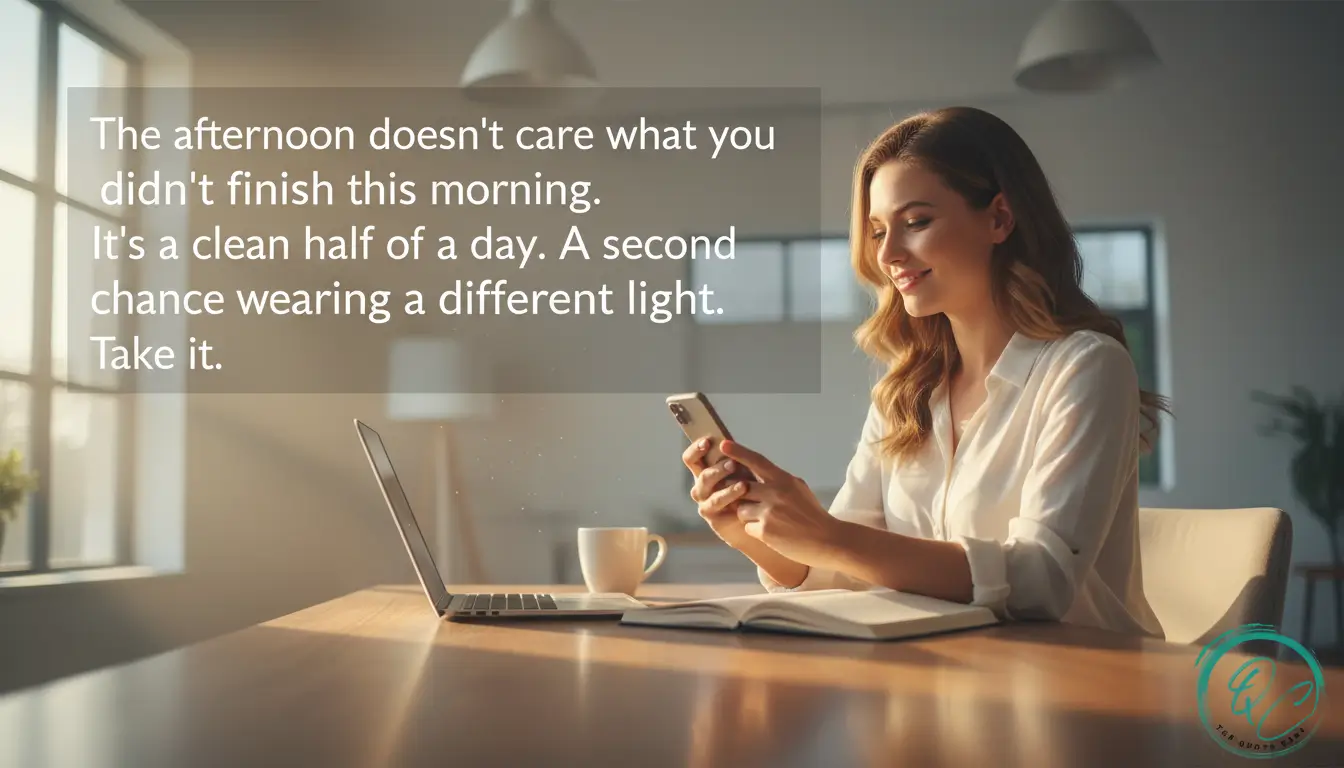
Inspiration doesn’t always arrive with trumpets and fireworks. Sometimes it slips in through the afternoon light, quietly reminding you that the day isn’t over yet and neither are you. These messages are crafted for that exact pivot point—when energy dips, doubt creeps in, and a few right words can turn the whole trajectory of someone’s remaining hours.
- The afternoon doesn’t care what you didn’t finish this morning. It’s a clean half of a day. A second chance wearing a different light. Take it.
How does it inspire? It reframes the afternoon as a reset, not a continuation of morning failures. It permits starting again without carrying the weight of unfinished tasks. That’s liberation in two sentences. - You’ve already done hard things today. You woke up. You showed up. You kept your heart beating and your lungs working and your mind churning through whatever the world threw at you. That’s nothing. That’s everything. The afternoon is just a bonus round.
How does it inspire? It validates invisible labor. It reminds the reader that survival itself is an achievement. The word “bonus round” reframes the rest of the day as a gift, not a grind. - No one is keeping score the way you think they are. Everyone is too busy worrying about their own scorecard to notice yours. So do the thing. Say the thing. Take the risk that’s been sitting in your chest since morning. The afternoon is a witness, not a judge.
How does it inspire? It dismantles the fear of being watched and evaluated. It frees the reader from the imaginary audience and invites action without the paralyzing weight of external judgment. - You are not behind. There is no behind. There’s only where you are and where you’re going, and the afternoon is perfectly willing to be the bridge between them if you let it.
How does it inspire? It challenges the toxic productivity narrative that says everyone is running the same race. It removes the concept of “late” and replaces it with present-moment agency. That’s a profound mental shift. - The version of you that exists at 2 PM is not the same version that woke up this morning. You’ve already learned things. Already felt things. Already changed. Honor that evolution. Let the afternoon meet the you that’s here now, not the you that hit snooze six hours ago.
How does it inspire? It acknowledges growth that happens within a single day. It permits one to shed the morning self and show up as the person who’s already accumulated new wisdom. That’s self-compassion in action. - Some of the best decisions in history were made after lunch. Not because lunch is magical. But because the people making them refused to let a slow morning define their entire day. Be one of those people.
How does it inspire? It uses a relatable, slightly humorous anchor (lunch) to make a larger point about persistence. It places the reader in the company of decisive, impactful humans who didn’t quit by noon. - You’re allowed to change your mind about today. You’re allowed to decide at 3 PM that the morning’s priorities were wrong. You’re allowed to pivot, scrap, and rebuild. The afternoon doesn’t require consistency. It only requires presence.
How does it inspire? It grants permission for mid-course correction without guilt. It releases the reader from the tyranny of earlier decisions and affirms that flexibility is strength, not failure. - What if the rest of this day is just a long, slow exhale? What if you stop gripping so hard and just let the hours carry you instead of the other way around? Try it. Just for the next few hours. Be carried.
How does it inspire? It offers an alternative to white-knuckling through the day. It proposes surrender as a strategy and rest as a form of wisdom. The invitation to “be carried” is deeply soothing to exhausted minds. - The afternoon sun hits things differently. Shadows stretch. Colors warm. What if you looked at your problems through that same lens? Softer. Longer. Less harsh. Maybe they’re not as sharp as they seemed at noon.
How does it inspire? It uses the literal changing light of the afternoon as a metaphor for shifting perspective. It suggests that the problem isn’t always the problem—sometimes it’s the angle we’re viewing it from. - You are not your unfinished to-do list. You are not the emails you haven’t answered. You are not the tasks that bled from morning into now. You are a person sitting in the middle of a day that still holds possibilities. That’s your identity. The rest is just noise.
How does it inspire? It separates self-worth from productivity in clear, unequivocal language. It names the reader as a human being first and a worker second. That distinction is oxygen to someone drowning in tasks. - Someone needs what only you can offer this afternoon. Not tomorrow. Not when you’re “ready.” Now. Imperfect. Unpolished. The world is waiting for the thing you’re still hesitating to give.
How does it inspire? It injects urgency without panic. It reminds the reader of their unique value and the cost of withholding it. It’s a gentle push disguised as a reminder of purpose. - The day isn’t judging you for slowing down. The clock doesn’t care if you take a breath. The afternoon will hold whatever pace you set. So set one that doesn’t break you.
How does it inspire? It personifies time as neutral and forgiving. It removes the imagined pressure of an unforgiving universe and returns agency to the reader. You get to choose the rhythm. That’s power. - You’ve survived every afternoon you’ve ever lived through. Every single one. Some were brutal. Some were beautiful. But you’re still here, reading this, with another one stretched out in front of you. That’s not luck. That’s evidence.
How does it inspire? It uses the reader’s own history as proof of resilience. It reframes survival not as passive endurance but as accumulated evidence of capability. The word “evidence” is the anchor—it makes strength feel factual, not motivational. - What’s one small thing you can finish before the sun starts thinking about setting? Not the big thing. Not the scary thing. One small, complete, satisfying thing. Do that. Let the afternoon hold one win for you.
How does it inspire? It breaks overwhelming days into manageable units. It lowers the bar to a height anyone can clear and affirms that small victories are still victories. Momentum starts somewhere. This is somewhere. - The afternoon is a long hallway between what you planned and what actually happened. You can spend it mourning the plan, or you can spend it decorating the hallway. Your choice. But only one of those makes the walk worth taking.
How does it inspire? It offers a vivid metaphor with a clear, empowering fork in the road. It doesn’t pretend that the disappointment isn’t real. It just asks what you want to do with the space between expectation and reality. The word “decorating” is unexpectedly joyful.
6. Short Good Afternoon Messages

Longer is not always important to impress the most. The shortest messages carry the meaning that can impact on their own. The following messages are complete little words with no missing words.
- Afternoon. You. Still my favorite combination.
How is this complete? It establishes time, names the recipient, and makes a quiet declaration. Nothing is missing. The reader knows exactly where she stands in your thoughts. - Half the day is gone. All of my thoughts are still on you.
How is this complete? It contrasts the passing of time with the constancy of attention. The math is simple, and the message is sealed. No follow-up required. - Pause. Breathe. You’ve done enough.
How is this complete? Three commands that form a full arc—stop, reset, release. It asks nothing of her except reception. The period at the end feels final and kind. - Afternoon light. Your name. Same warmth.
How is this complete? It equates a universal comfort with a personal one. The parallel structure closes the loop. She understands she’s being compared to something universally loved. - Still rooting for you. Even at 2 PM.
How is this complete? The word “still” carries the weight of continuity. “Even at” acknowledges the unglamorous hour. It’s a full sentiment delivered in six words. - You’re someone’s favorite ongoing thought. Just so you know.
How is this complete? It reveals a truth without demanding a response. The “just so you know” acts as a gentle period. The information is delivered and rests where it lands. - The day’s half over. You’re fully wonderful.
How is this complete? It sets up a contrast between partial and complete, then resolves it by affirming her wholeness. The structure is a closed loop of observation and compliment. - Quiet afternoon. Loud thoughts of you.
How is this complete? It paints a scene and an internal state in six words. The juxtaposition is the whole story. She gets the picture immediately and entirely. - Keep going. But also, rest when you can.
How is this complete? It holds two truths in balance without contradiction. It’s encouragement and permission wrapped in one short breath. The sentence contains its own wisdom. - You. This afternoon. Grateful for both.
How is this complete? It names three elements—person, time, emotion—and links them. The gratitude is stated, not explained. That’s enough. The feeling is whole. - Afternoons are better knowing you exist.
How is this complete? It makes a universal claim about a specific time of day and grounds it in her existence. There’s no caveat. No condition. The statement stands alone. - Small message. Big reminder. You matter.
How is this complete? It’s self-aware about its own brevity and uses that awareness to amplify the message. The final two words are the payload. Everything before was just the delivery system. - Half past something. Fully thinking of you.
How is this complete? It plays with the language of time to create a satisfying parallel. The imprecision of “something” makes it human. The “fully” closes the emotional equation. - Hope your coffee’s still warm. Hope you feel the same.
How is this complete? It uses a concrete, relatable detail as a metaphor for emotional warmth. The parallel hopes create a rhythm that lands softly and finally. - You’re doing better than you think. Afternoon reminder.
How is this complete? It delivers reassurance and then signs off with its own purpose stated plainly. The message is self-contained. She knows why it arrived and what it’s for.
7. Positive Good Afternoon Messages

Positivity is not about ignoring hard parts. But finding a reason to stay happy when things are against you. These afternoon messages are crafted with high optimism. They can transfer your next hours for something good.
- You’ve already made it through the part of the day that felt impossible this morning. Whatever comes next, you’re walking into it with proof that you can handle hard things. That’s nothing. That’s armor.
What’s positive about it? It reframes survival as evidence of strength. It doesn’t promise the rest of the day will be easy. It promises she’s already proven she’s capable. That’s grounded, believable positivity. - The afternoon doesn’t need you to be extraordinary. It just needs you to be here. Breathing. Participating. Letting the light land on your face for a few seconds. That’s enough. That’s actually everything.
What’s positive about it? It lowers the bar to something universally achievable and then declares that bar worthy. It removes the pressure to perform and celebrates mere presence as victory. - Something good is going to happen in the next few hours. Maybe small. Maybe quiet. Maybe just a song you love coming on at the right moment. But something. Stay awake for it.
What’s positive about it? It creates anticipation without overpromising. It doesn’t guarantee a miracle. It guarantees a moment. And it asks her to be present enough to receive it. That’s hopeful realism. - You are not the same person who started this day. You’ve already learned something. Already adjusted. Already grown in some tiny, invisible way. The afternoon gets a better version of you than the morning did.
What’s positive about it? It acknowledges growth that happens within hours, not years. It frames the present self as an upgrade, not a depleted version. That’s a forward-moving, optimistic perspective. - The world kept spinning. You kept showing up. That’s a tie score, and ties aren’t losses. Take the draw and use the rest of the day to pull ahead.
What’s positive about it? It reframes neutrality as victory. It removes the sting of “not winning” and replaces it with the relief of “not losing.” From that stable ground, forward motion feels possible again. - Someone out there is having a worse afternoon than you. Not to minimize your struggle, but to remind you that you’ve survived worse afternoons than this one. You’re not fragile. You’re just tired. There’s a difference.
What’s positive about it? It offers perspective without invalidation. It says her tiredness is real, but her fragility is not. It calls her strong while giving her permission to rest. That’s compassionate positivity. - The afternoon sun doesn’t discriminate. It lands on the productive and the procrastinating. The joyful and the struggling. It just shines. Be like the afternoon sun. Shine anyway.
What’s positive about it? It uses nature as a model for unconditional presence. It doesn’t ask her to feel shiny. It asks her to let whatever light she has simply exist without judgment. - You’ve been kind today. Maybe not to yourself, but to someone else. I know you have. That’s who you are. Now take some of that kindness and point it inward for the next few hours. You’ve earned your own softness.
What’s positive about it? It assumes the best about her character and then redirects that goodness toward herself. It’s a gentle nudge toward self-compassion wrapped in affirmation of who she already is. - The day isn’t over, and neither are you. Two things that are still true. Two things worth remembering when the clock feels like an enemy instead of an ally.
What’s positive about it? It pairs her persistence with the day’s persistence. They’re in it together. The solidarity between person and time is unexpectedly comforting. - You’ve already done something today that someone else couldn’t do. Maybe it was small. Maybe you didn’t notice. But you showed up with your specific combination of skills and heart and made something happen. That matters. That keeps mattering.
What’s positive about it? It names her uniqueness as a contribution, not a quirk. It connects her existence to impact without demanding she identify the impact herself. That’s affirming without being performative. - The afternoon is a long exhale waiting to happen. Let your shoulders drop. Let your jaw unclench. Let your mind stop sprinting for five minutes. The world will wait. It always does.
What’s positive about it? It gives somatic instructions for relief. It’s practical positivity. It tells her exactly what to do with her body to feel better and assures her the world won’t collapse if she does. - You’re closer to the end of this day than you were this morning. That’s math. That’s a fact. That’s something to smile about, even if it’s a small smile. Small smiles count.
What’s positive about it? It uses undeniable logic to create comfort. Progress is measurable and real. The validation of “small smiles count” removes the pressure to perform joy at full volume. - Whatever didn’t go right this morning doesn’t own the rest of your day. It had its moment. Now the afternoon gets its turn. Let it have a better one.
What’s positive about it? It personifies the morning’s failures and gives them boundaries. They’re not permanent residents. They’re visitors who’ve overstayed. The afternoon is a new host with new possibilities. - You are allowed to have a good afternoon even if your morning was terrible. You don’t have to earn joy through suffering. You can just have it. The door is unlocked. Walk through.
What’s positive about it? It dismantles the belief that happiness must be deserved through prior pain. It grants unconditional permission to feel better. That’s radically positive in a culture that worships the grind. - The best thing about afternoons is that they don’t ask for much. They just want you to keep going at whatever pace you can manage. Walking. Crawling. Standing still. All acceptable. All forward in some way.
What’s positive about it? It expands the definition of progress to include stillness. It removes the shame from slow days and slow hours. All movement counts. Even the movement of just staying.
Conclusion
After watching simple words for the entire day. Sending good afternoon paragraphs in messages is not about long,g fancy declarations. What is important is to create moments that she’ll treasure.
Every thoughtful message you send, nd even a short one, expresses love. They can create a genuine difference. These are the little moments of joy. Sharing them strengthens a bond in a brighter and happier way.
FAQ’s: (Frequently Ask Questions)
1. How can I make my good afternoon message more meaningful?
Mention a specific detail from her morning or yesterday—something only you’d know. Specificity proves attention, and attention is the root of meaningful connection.
2. How can I make good afternoon greetings more special and unique?
Drop the greeting entirely. Start mid-thought, like you’re continuing a conversation. “Also, I forgot to tell you earlier…” feels intimate and unrehearsed.
3. What are some funny good afternoon messages for my partner?
“I’ve decided afternoons are just mornings that gave up. You’re still my favorite person, even if the day has peaked emotionally.”
4. Can short messages be as meaningful as long romantic notes?
Yes. “Still thinking about you” lands harder than paragraphs. Short messages leave room for her to feel instead of just read.
5. How do I make messages stand out and feel personal?
Reference her habits no one else notices—how she taps her pen, her snack of choice. Seen details equal felt love.