I know how it feels when you realize you have upset the woman you love. Whether a seismic mistake or a small misunderstanding. I have seen couples crumble after these moments. But do you know that a small apology message for her is enough to fix your relationship?
You choose short texts or long heartfelt messages; the key is in finding the right one. A simple moment of expressing regret is enough to help heal wounds. That’s why I have crafted these sorry messages for her. They help you convey your feelings and bring you closer together.
These are not only words but a real tool. It will help you express remorse and open a new door for her to feel safe.
An apologize message to her is not only about admitting your mistake. It is about healing the person you have hurt so much. The right words do not defend; they restore her pain. The following are the original quotes that carry the weight of a genuine apology.
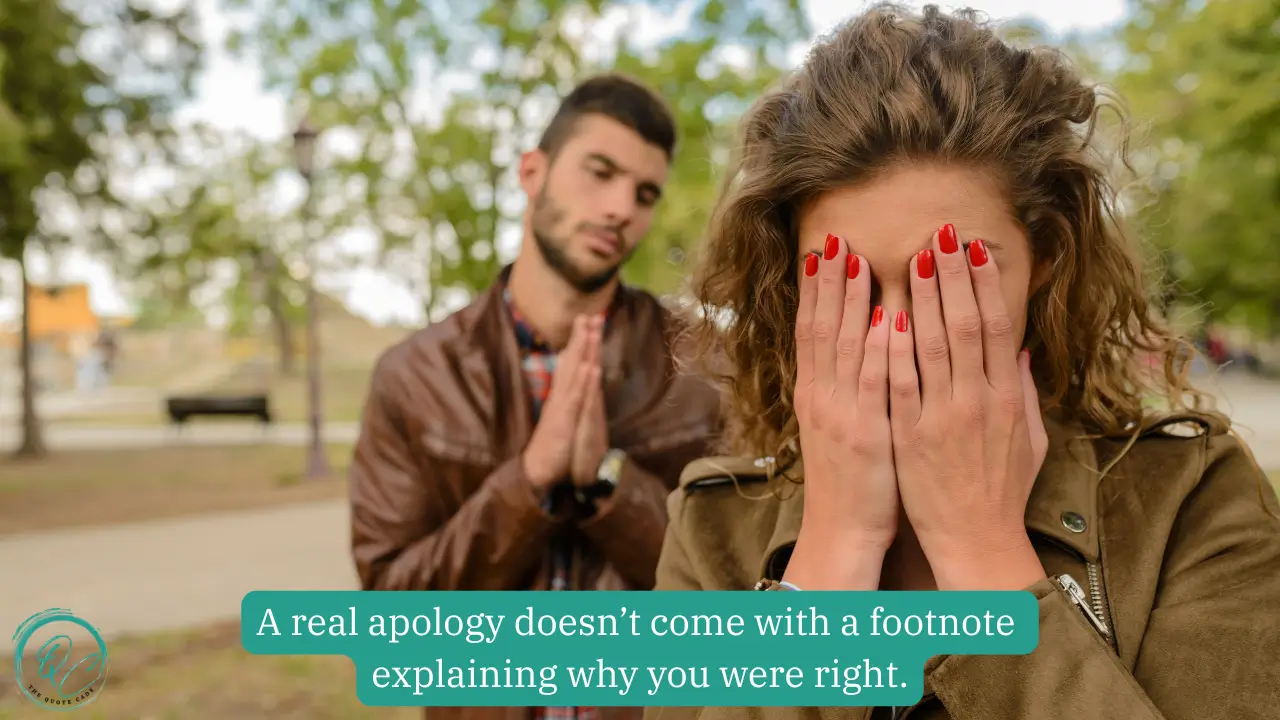
A real apology doesn’t come with a footnote explaining why you were right. How this apologizes: It strips away self-justification and offers pure accountability.
You don’t owe me your forgiveness. But I owe you the truth, spoken without armor. How this apologizes: It respects her autonomy while giving an undefended, honest admission.
I’m not asking you to forget. I’m asking you to let me earn back the trust I broke, one small, consistent act at a time. How this apologizes: It acknowledges the long road of restoration and refuses shortcuts.
Silence between us used to mean peace. Now it just means there’s a sentence I haven’t dared to finish. How this apologizes: It names the emotional distance and takes ownership of the unfinished repair.
I mistook your patience for permission, and that’s a failure I won’t repeat. How this apologizes: It recognizes a specific, often-overlooked boundary violation and commits to change.
Regret is easy. Remorse is what happens when I stop performing guilt and start absorbing the impact of what I did. How this apologizes: It signals a shift from superficial guilt to deep, transformative remorse.
Some apologies are just noise-canceling for the conscience. I don’t want that. I want you to feel safe enough to tell me I hurt you, without me collapsing into self-pity. How this apologizes: It rejects the performative apology and prioritizes her emotional safety.
The wound I caused isn’t a debate. It’s a place where I stand quietly, letting you describe the pain without correction. How this apologizes: It yields space for her experience without defensiveness or re-interpretation.
I can’t rewrite yesterday’s page, but I can stop scribbling all over tomorrow’s. How this apologizes: It promises changed behavior without the ego of grand promises.
I stopped looking for the right words and started looking for the right actions. Turns out, the words were never the missing part. How this apologizes: It confesses that words alone were never enough and pivots to tangible change.
Before I can stand beside you again, I have to stand alone with what I did—no audience, no applause for my honesty. How this apologizes: It insists on private, unperformed accountability before public reconciliation.
You loved me in a language I didn’t learn until I lost you. This apology is my first fluent sentence. How this apologizes: It shows a painful, late understanding of her value and the depth of the loss.
I’m done dragging your heart through the courtroom of my intentions. Impact is the only verdict that matters now. How this apologizes: It moves beyond “I didn’t mean to” and centers her actual hurt.
Every “I’m sorry” I said before was a comma. This one’s a full stop—with a new sentence waiting, if you’re ever willing to read it. How this apologizes: It marks a definitive end to old patterns and leaves the door open humbly.
Broken trust doesn’t heal in the light of my remorse. It heals in the quiet consistency of my changed presence. How this apologizes: It reframes healing as her timeline, not his, and defines real amends as steady, daily proof.
🌞 Looking for thoughtful words to wish someone relaxation, happiness, and a refreshing break from the week? Explore
cheerful have a great weekend messages
to spread positivity, brighten someone’s day, and help them start the weekend with a smile.
2. Thoughtful Sorry Messages for Wife
A perfect marriage is not one that has no mistakes. But the one where you come back, even if the damage is done. When your wife is hurt, you can apologize to her, but not quickly. It needs time and slow, careful work to slow down. The following messages are crafted to provide you with a way to make a daily effort for a real apology.
I stopped trying to win the argument and realized the only victory worth having is a peaceful heart on the other side of the table. How this apologizes: It sets aside the need to be right and prioritizes her emotional safety over ego.
You didn’t marry a perfect man, but you did marry a man who should have known better. That gap between what you deserve and what I gave you is where my apology lives. How this apologizes: It clearly articulates the distance between expectation and reality, placing full ownership on the speaker.
Some nights, I replay the moment I let you down. Not to punish myself, but to make sure I never become that version of me again. How this apologizes: It shows internal reflection that isn’t self-indulgent guilt, but a commitment to permanent change.
I can’t restuff the words back into my mouth, but I can make sure the next ones are worth the air they travel on. How this apologizes: It admits the irreversibility of hurtful speech while promising future words will be more intentional.
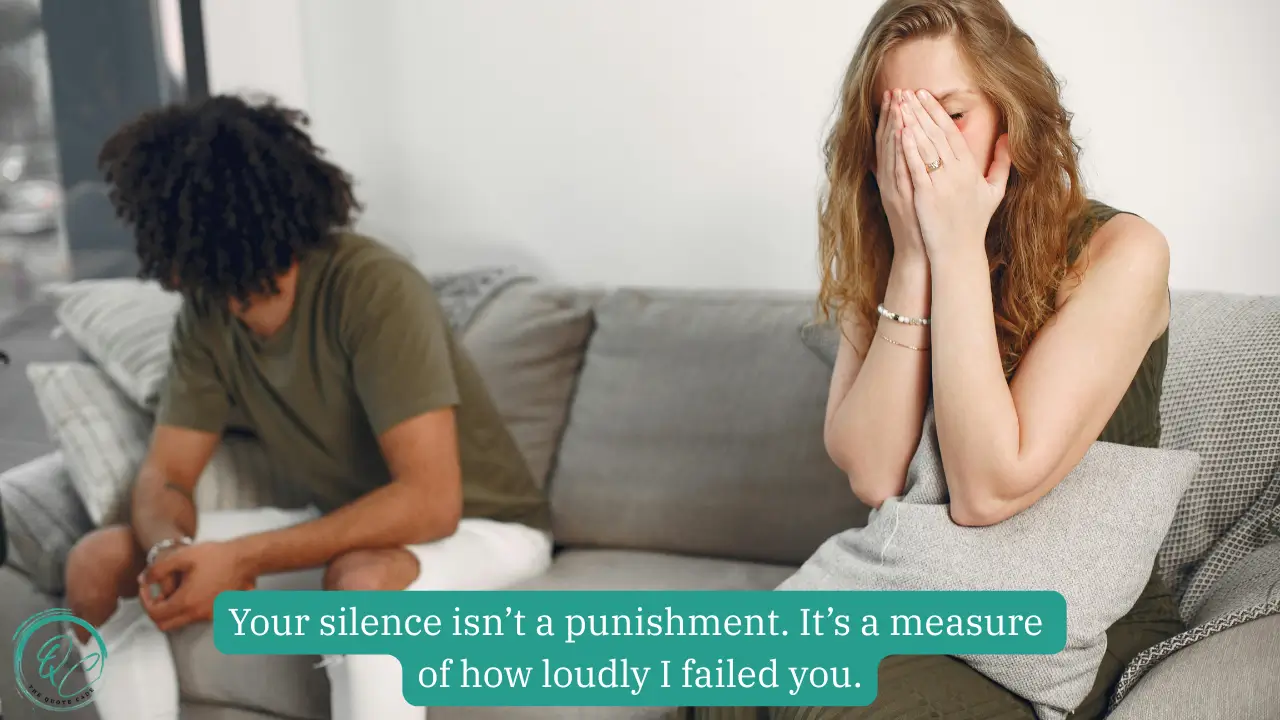
Your silence isn’t a punishment. It’s a measure of how loudly I failed you. How this apologizes: It respects her need for space and reframes her quiet as a rational response to hurt, not a tactic.
I’m not handing you a hurried bouquet of “sorry” and hoping the scent covers the mess. I’m standing in the mess with you, ready to clean up what I spilled. How this apologizes: It rejects the shortcut of a superficial gesture and commits to shared, patient restoration.
Every morning since that day, I’ve asked myself: “Is my presence going to feel like a comfort or a reminder?” I’m working hard to make it the first one again. How this apologizes: It demonstrates daily, active consideration of how she might experience his presence post-hurt.
I loved you with a loud voice but a distracted ear. The apology is me finally turning down my own volume and truly listening, even when the truth hurts. How this apologizes: It pinpoints a specific failure of inattention and redefines the apology as a shift toward receptive listening.
A marriage isn’t a courtroom, and I’m done presenting evidence. I hurt you. That’s the whole case. How this apologizes: It shuts down any instinct to defend or minimize, embracing stark, simple accountability.
If home is supposed to be your safest place, I made it feel unfamiliar. I want to rebuild that home, brick by careful brick, with you holding the blueprint. How this apologizes: It acknowledges a violation of safety and places her in the position of authority for the repair.
I mistook proximity for connection. Standing next to you wasn’t the same as standing with you, and I’m sorry for making you feel alone in the same room. How this apologizes: It identifies the subtle, painful loneliness of emotional absence despite physical presence.
The apology isn’t a period at the end of the story. It’s a new chapter heading, and you get to decide if the pages are worth turning. How this apologizes: It understands that the apology opens a new phase, but the narrative’s continuation is hers to permit.
You needed me to be a soft place, and I was a sharp edge. I won’t ask you to forget the cut, but I’ll spend every day learning to be a gentler shape. How this apologizes: It uses a tactile metaphor to express the failure and the intentional reformation of character.
I spoke in defense when I should have spoken in healing. That’s a language mistake I won’t repeat. How this apologizes: It frames the hurt as a fundamental communication error between defense and repair, promising correction.
I’m not waiting for a “return to normal.” I broke the norm. I want to build something stronger, but only if you feel safe holding the hammer with me. How this apologizes: It refuses to minimize the breach by aiming for mere restoration, instead proposing a collaborative and careful rebuild.
🌿 Want a thoughtful way to reconnect and show someone they’ve been on your mind? Read
kind hope life is treating you well messages
to express genuine care, start warm conversations, and make loved ones feel remembered and appreciated.
3. Quotes and Famous Lines to Say Sorry
Quotes and famous lines are what help us when we need a meaningful way to convey our meaning. A well-crafted line is best as it hits the reality and does not overlook the cost. The following lines are written for real moments and carry the emotional weight.
I’ve stopped rehearsing my defense. There isn’t one. There’s just you, hurt, and me, finally listening. What this line says and why you should say sorry: It announces the end of internal justification. You apologize because continued self-defense only deepens her isolation; surrender to the truth is the only door back to connection.
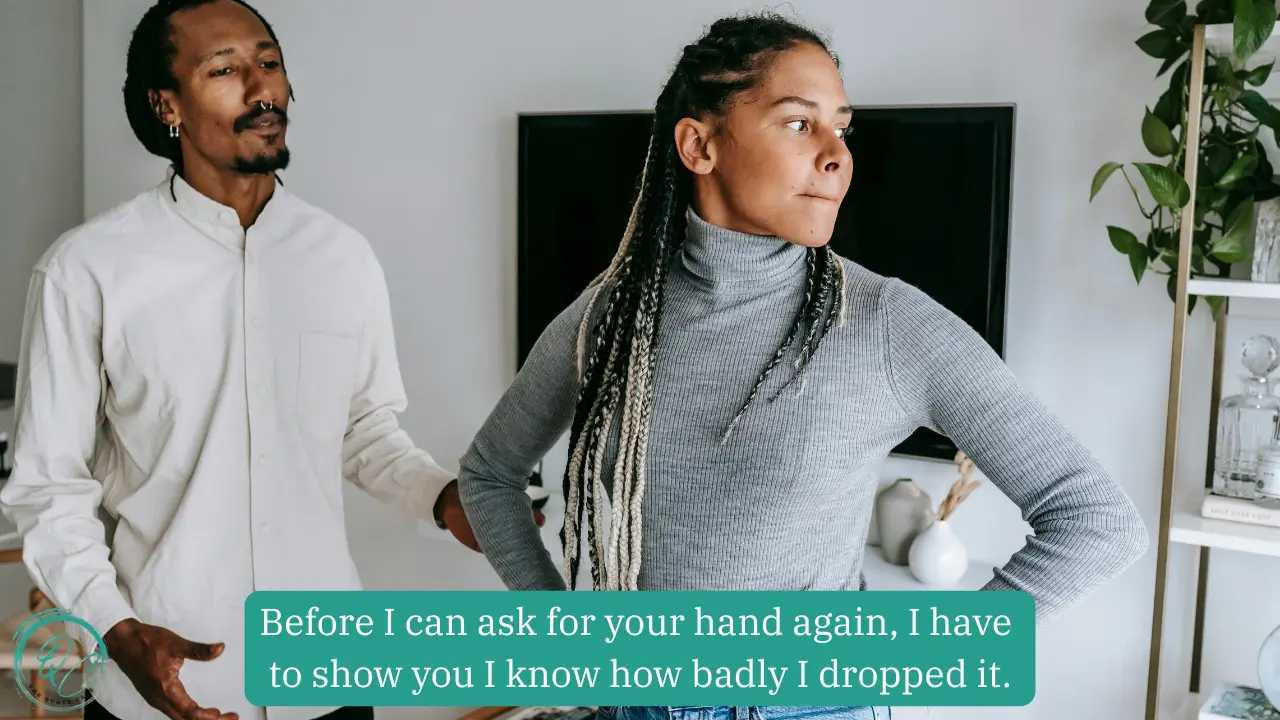
Before I can ask for your hand again, I have to show you I know how badly I dropped it. What this line says and why you should say sorry: It uses the physical metaphor of dropping a held hand to represent broken trust. You apologize because trust isn’t restored through requests—it’s rebuilt through demonstrated understanding of its loss.
I measured my intentions and ignored my impact. That math was wrong, and the sum was your pain. What this line says and why you should say sorry: It pinpoints the classic mistake of judging ourselves by intentions and others by outcomes. You apologize because the ledger needs balancing: your good intentions don’t erase the real-world hurt they caused.
You’re not asking for a perfect person. You’re asking for someone brave enough to say, “That was mine. I did that.” So here I am. What this line says and why you should say sorry: It reframes the apology as an act of courage rather than humiliation. You apologize because accountability is the specific thing she needs, not flawlessness.
Every justification I’ve been crafting is just another wall between us. I’m tearing them down, brick by brick. What this line says and why you should say sorry: It names the self-protective mental structures we build after hurting someone. You apologize because those walls don’t protect the relationship—they bury it.
The version of me that hurt you isn’t the version I’m bringing into tomorrow. But I have to prove that with my presence, not my promises. What this line says and why you should say sorry: It distinguishes between the promise of change and the evidence of it. You apologize because words without the backing of consistent action are just noise she’s learned to filter out.
You gave me a quiet, steady trust, and I returned it fractured. I’m not asking for glue—I’m asking for the chance to earn each splinter back. What this line says and why you should say sorry: It uses the visceral image of splintered wood to represent shattered trust. You apologize because cheap, instant fixes trivialize the original gift she gave you.
I won’t rush you past this. The timeline of your healing isn’t mine to dictate. What this line says and why you should say sorry: It addresses the common but toxic habit of pressuring the hurt person to “move on.” You apologize because real remorse respects her pace, not your comfort with the tension.
Love doesn’t give me a license for carelessness. It gives me a reason to be more careful. I forgot that. What this line says and why you should say sorry: It rejects the dangerous assumption that intimacy permits lax behavior. You apologize because you took her presence as a given rather than a gift that requires daily attention.
I’m not here to manage my guilt. I’m here to witness your pain without flinching and ask what you need now. What this line says and why you should say sorry: It separates a self-serving apology (guilt relief) from a genuine one (attending to her). You apologize because her pain, not your discomfort, must become the center of the conversation.
Some apologies are just elaborate ways to say, “Please stop being upset with me.” This isn’t that. This is me saying, “You have every right to be.” What this line says and why you should say sorry: It exposes the selfish apology for what it is and firmly rejects it. You apologize because validating her right to feel hurt is the foundation any real repair stands on.
The silence between us is a book I never wanted to write. This apology is the first true page. What this line says and why you should say sorry: It acknowledges the narrative of distance that grew from the mistake. You apologize because breaking that silence with honesty is the only way to start a new, truer story together.
I held your heart and got distracted. The apology isn’t just for the drop—it’s for every second I wasn’t paying attention. What this line says and why you should say sorry: It goes beyond the single incident to address a pattern of inattention. You apologize because the breach often starts long before the obvious crack, in all the moments of not being present.
I don’t want to win your forgiveness like a trophy. I want to earn your safety like a steady, quiet harbor. What this line says and why you should say sorry: It contrasts a conquest mindset (winning forgiveness) with a sheltering one (becoming safe). You apologize because the goal isn’t a prize—it’s a return to being the person she can rest in.
If the roles were reversed, I’d want to hear what I’m about to give you: the whole, unvarnished truth, held out in both hands. What this line says and why you should say sorry: It frames the apology through the golden rule of empathy. You apologize because offering the raw truth, without polish or spin, is the basic respect you’d expect from her.
💖 Searching for romantic words that spark deeper feelings and make her feel genuinely valued and adored? Explore
romantic texts to make her fall in love with you
to express heartfelt emotions, strengthen your connection, and create unforgettable moments through meaningful communication.
4. Apology Quotes to Say You’re Sorry
A perfect apology is not the one with fancy words. But the one that makes the other person feel respected. The following quotes are the quiet words spoken when pride finally steps aside.
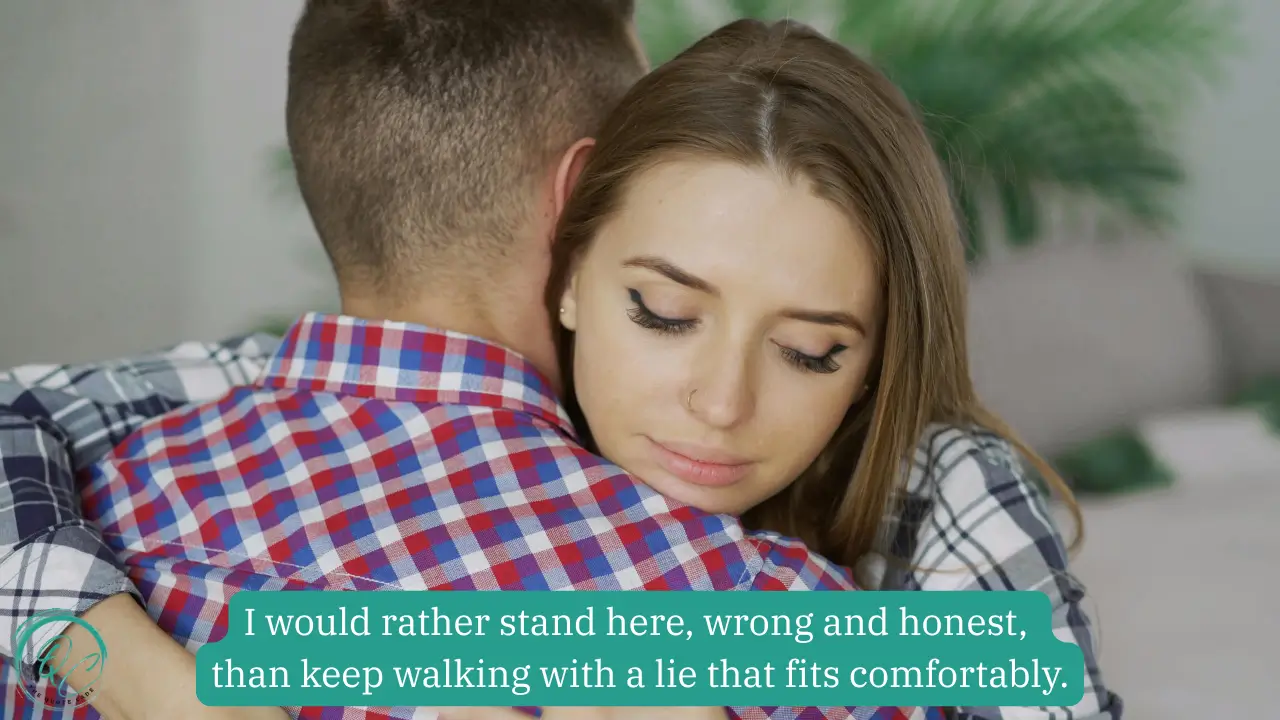
I would rather stand here, wrong and honest, than keep walking with a lie that fits comfortably. How sorry you are: So sorry that truth, however uncomfortable, has become more important than protecting your own image.
My words left a mark I can’t erase. But I can stop pretending my hand didn’t swing. How sorry you are: So sorry that denial is no longer an option—only full, unflinching ownership of the damage remains.
I’m not asking you to meet me halfway. I’m walking the whole distance, alone if I have to, until you feel safe enough to look back. How sorry you are: So sorry that you’re willing to do all the initial work of repair without demanding her effort or immediate reconciliation.
There’s a version of this story where I keep defending myself. I’m closing that book and starting one where I just listen. How sorry you are: So sorry that you’re actively abandoning your old, defensive narrative and choosing her perspective as the one that matters now.
You needed me to be steady, and I was the earthquake. I don’t get to complain about the cracks in the foundation I caused. How sorry you are: So sorry that you fully accept the consequences of your instability and refuse to blame her for the aftermath.
I’ve said “sorry” before, like it was a period. This time, it’s a comma—and what follows is a life that proves I meant it. How sorry you are: So sorry that the word itself isn’t the end; it’s the beginning of a sustained demonstration of change.
The weight of your disappointment sits in my chest, and I’m not trying to push it out. I’m letting it teach me. How sorry you are: So sorry that you’re allowing the full emotional consequence of your actions to reshape you rather than rushing to feel better.
I won’t dress this up in pretty language. I let you down in plain, ugly terms, and I see it clearly now. How sorry you are: So sorry that elegance and charm feel insulting; only blunt, undecorated truth feels appropriate for the size of the failure.
Your trust was a quiet, everyday gift. I didn’t notice its worth until I saw what life felt like without it. How sorry you are: So sorry that the loss has taught you what appreciation should have taught you from the start.
I can list a hundred reasons why I acted that way, but none of them matter more than the one fact I keep avoiding: I hurt you. How sorry you are: So sorry that explanations and context have been set aside in favor of the only thing that truly counts—her experience of pain.
I used to think apologizing was losing. Now I know the real loss is watching you slip further away while I hold onto my pride. How sorry you are: So sorry that the entire framework of “winning and losing” has crumbled, replaced by the clarity of what’s actually at stake.
You didn’t imagine my coldness. You didn’t exaggerate my harshness. You reported it accurately, and I’m done disputing the report. How sorry you are: So sorry that you’re finally validating her reality instead of gaslighting or minimizing it
This apology doesn’t come with a coupon for instant forgiveness. It comes with a quiet, open door and a chair I’ll keep empty until you’re ready. How sorry you are: So sorry that no pressure, no timeline, and no expectation is attached—only patient availability.
I’ve stopped measuring my apology by how sincere I feel and started measuring it by how safe you feel. The two are not the same. How sorry you are: So sorry that your internal sense of guilt has taken a backseat to the external evidence of her comfort and security.
I can’t rewind the clock and give you back the evening, the trust, or the peace I stole. But I can make sure the next hour I spend with you is gentle and true. How sorry you are: So sorry that you accept the permanent loss of what was taken, while committing to make the immediate future different.
🌅 Looking for uplifting words to make someone’s Thursday morning brighter, happier, and more productive? Explore
positive Thursday morning messages
to spread encouragement, boost motivation, and help loved ones welcome the day with energy and optimism.
5. Apology Message for Her To Comeback
Asking her to come back is not about forcing her. But it’s about standing between the doorway you created. An apology is not to pressurize. But to clear the way, let’s hear her decide with respect. The following quotes are a gentle offer of a door left open.
I’m not asking you to return to the person I was. I’m asking if you’d consider walking toward the person I’m becoming. How sorry you are: So sorry that you recognize the old version of you isn’t worth returning to, and you’re committed to becoming someone new.
The house hasn’t felt like home since your keys stopped hitting the counter. I’m not asking for normal. I’m asking for a chance to build something better with you. How sorry you are: So sorry that the physical absence has become a daily ache, and you’re seeking a fresh start, not a rewind.
I spent so much energy trying to keep you that I forgot to hold you. Come back, and I’ll remember what my hands are actually for. How sorry you are: So sorry that you confused possession with affection and are ready to offer genuine presence instead of anxious control.
You didn’t leave because you stopped loving me. You left because I stopped showing you what my love actually meant. I’m ready to show you now. How sorry you are: So sorry that you recognize the difference between having love and expressing it, and you’re prepared to close that gap.
The space you took was the most honest thing our relationship had had in months. I finally heard what the silence was saying. How sorry you are: So sorry that you needed her departure to truly listen, and you’ve now absorbed the painful lessons the quiet was teaching.
I won’t promise I’ve fixed everything. But I can promise I’ve started, and I’d rather continue with you beside me than finish alone. How sorry you are: So sorry that you’re offering an honest, incomplete process rather than a finished product, and you want her company on the journey.
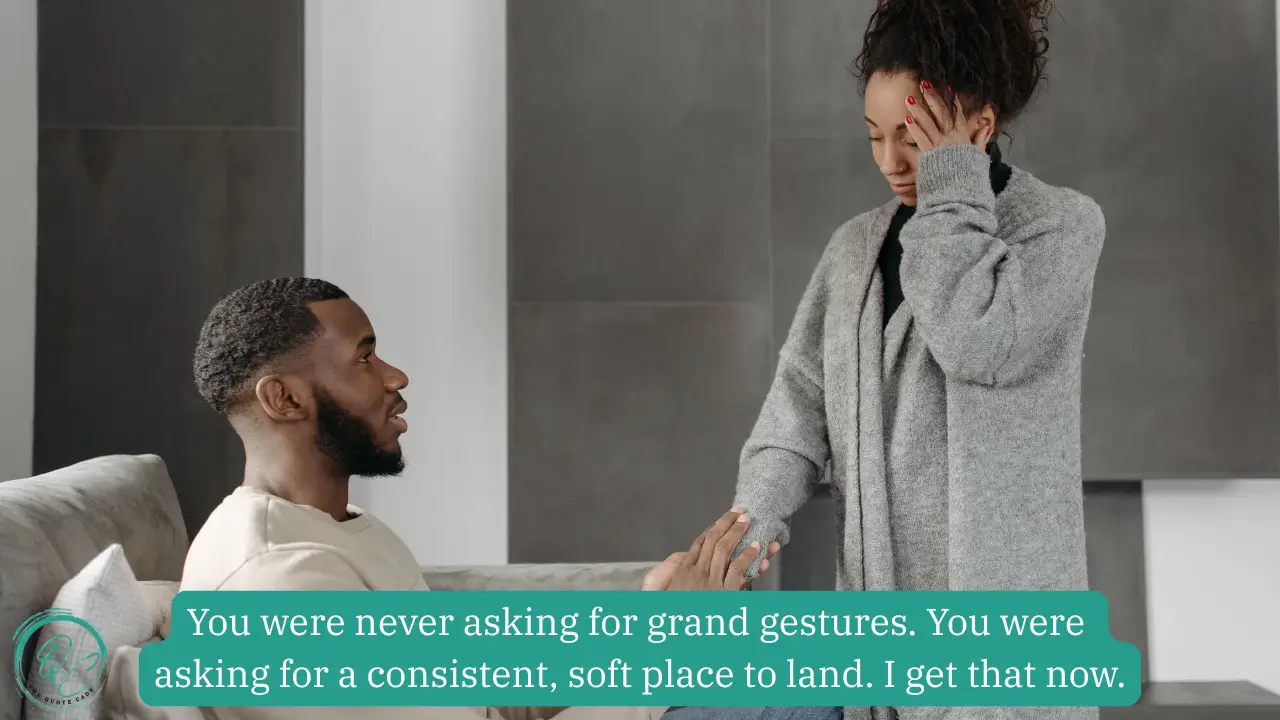
You were never asking for grand gestures. You were asking for a consistent, soft place to land. I get that now. How sorry you are: So sorry that you finally understand the simple, steady thing she needed all along, and you’re ready to be that place.
I’ve stopped looking for reasons why you left and started looking at the reasons you stayed as long as you did. Those are what I’m rebuilding. How sorry you are: So sorry that you’re honoring the patience she already gave you by focusing on what was worth saving, not what broke.
Your absence has been a mirror I couldn’t look away from. I saw everything. And I’m still standing here, asking you to look at what I’m changing. How sorry you are: So sorry that the forced self-reflection was accepted fully, and you’re inviting her to witness the transformation it sparked.
I won’t ask you to forget the last chapter. But I am asking if you’d write the next one with me, knowing I’ve learned how to hold the pen differently. How sorry you are: So sorry that you respect the story so far, including the painful parts, while hoping for a co-authored future.
The worst part wasn’t watching you go. It was realizing I’d given you every reason to, and not a single reason to stay. Let me change that math. How sorry you are: So sorry that you’ve counted the cost honestly and are ready to provide what you previously withheld.
Come back not because I miss you—though I do, terribly—but because I finally understand what I was too distracted to see when you were here. How sorry you are: So sorry that the missing is secondary to the understanding, and the understanding is what makes a real return possible.
I’m not offering the same love you walked away from. That love was tired and careless. This one is awake and paying attention. How sorry you are: So sorry that you’re distinguishing clearly between the depleted version of your love and a renewed, attentive one.
You owe me nothing. Not a response, not a chance, not even a glance back. But if you offer any of those, I’ll treat them like the undeserved gift they are. How sorry you are: So sorry that you’ve released every claim and expectation, framing any future contact as pure, unearned generosity from her.
The door isn’t just open. It’s warm, quiet, and patient. It doesn’t rush you. It just waits, knowing the best returns happen when they’re chosen freely. How sorry you are: So sorry that the invitation carries no pressure, only the steady, unconditional availability of a space she can enter at her own pace.
6. Texts To Say “I’m Sorry.”
A sorry text for her is an apology that brings a unique challenge. It has no benefit that face-to-face words can offer. But it also gives you the chance to be honest, clear, and simple. The following text has the powerful format that a message demands, and the power to deliver something clear enough.
I’ve been sitting here trying to craft the perfect message, and then I realized that’s just another way of avoiding the simple truth: I was wrong, and I hurt you. I’m sorry. How it says sorry: It admits the delay was a form of avoidance and then cuts straight through it with plain accountability.
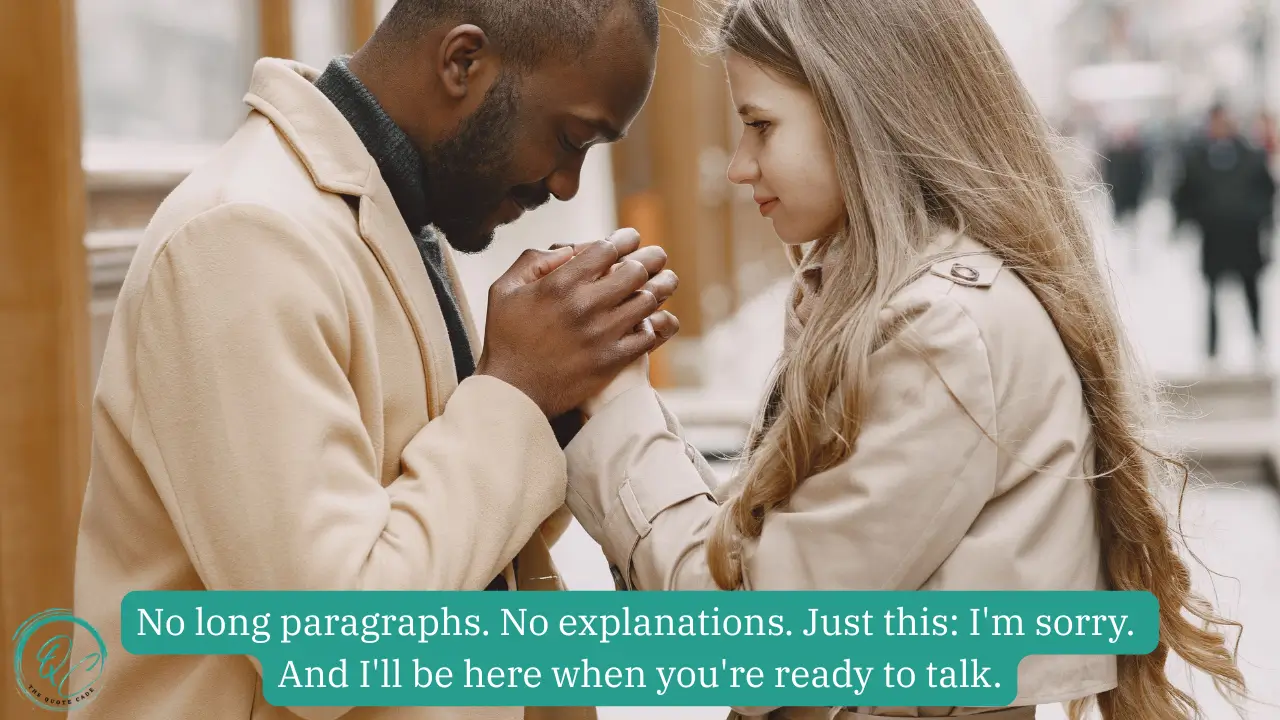
No long paragraphs. No explanations. Just this: I’m sorry. And I’ll be here when you’re ready to talk. How it says sorry: It respects her space by refusing to overwhelm her, offering a clean apology with no pressure attached.
I keep typing and deleting, typing and deleting. The only words that stay are these: I messed up, and I miss you. How it says sorry: It shows vulnerability through the visible struggle to find words, ending with the raw essentials.
You deserved my patience, and I handed you my frustration instead. That’s not who I want to be, and it’s certainly not what you deserve. How it says sorry: It names the specific failure—trading patience for frustration—and holds up her worth as the standard.
I’ve replayed our conversation about a hundred times, and every replay makes me cringe at my own words. You were right. I wasn’t listening. How it says sorry: It demonstrates the internal work of reflection and validates her perspective without qualification.
This message isn’t a bandage. I know one text doesn’t fix anything. It’s just a starting point, if you’re willing. How it says sorry: It openly acknowledges the limits of a text apology and positions it as an invitation, not a solution.
I could send you a list of reasons why I acted that way, but reasons aren’t excuses, and your feelings don’t need a rebuttal. How it says sorry: It actively chooses not to defend or explain, centering her feelings as the priority
The day feels off, and I know exactly why. It’s because things aren’t right between us, and the fault sits squarely with me. How it says sorry: It connects the personal discomfort to the relational breach and accepts clear ownership.
I’m not sending this to get a response. I’m sending it because you deserve to hear it: I’m sorry for my part in what happened. How it says sorry: It releases expectations and focuses purely on delivering the apology she’s owed.
You were open with me, and I used that openness as a target instead of a trust. That was unfair and unkind, and I regret it. How it says sorry: It identifies a specific and painful betrayal—weaponizing vulnerability—and calls it exactly what it was.
I won’t ask you to move past this. I’m just asking you to know that I see what I did, and I’m holding myself accountable for it. How it says sorry: It refuses to rush her process and emphasizes self-accountability over her immediate forgiveness.
Some apologies are performative. I don’t want to send you a performance. I want to send you the truth, even if it’s simple and unpolished. How it says sorry: It distinguishes itself from hollow apologies by acknowledging that very danger, then delivering unvarnished honesty.
I forgot that love is in the small moments, not just the big declarations. I missed a small moment with you, and I’m sorry I made you feel invisible. How it says sorry: It pinpoints the subtle injury of being overlooked in everyday life, validating a pain often dismissed.
You reached for me, and I pulled back. I’ve thought about that all day, and it sits heavily. I’m sorry I wasn’t there when you needed me. How it says sorry: It describes a specific physical or emotional withdrawal and carries the weight of that absence honestly.
If I could rewind today and be the partner you needed, I would. Since I can’t, I’ll just say this: I see where I failed, and I’m working on it. How it says sorry: It acknowledges the irreversible nature of the moment while committing to present-tense improvement.
🤝 Looking for sincere words to acknowledge someone’s presence and make them feel truly valued? Explore
appreciation messages for being here today
to express heartfelt gratitude, strengthen relationships, and leave a lasting impression after any special occasion.
7. Apology Messages for Hurting Her Feelings
Not always is a massive mistake or action hurts the feelings. Sometimes, small careless words or actions can do more. Apologizing for this kind of mistake requires you to name the wound specifically. These messages are designed to heal the sharp pain.
I saw your face change when I said those words, and I kept talking anyway. That’s the part I can’t stop thinking about. I’m sorry I didn’t stop when you needed me to. How it says sorry: It acknowledges the visible cue of her pain and admits to the active choice of ignoring it in the moment.
Your feelings weren’t an overreaction. They were an accurate reading of my carelessness. I won’t ask you to adjust the reading to make me more comfortable. How it says sorry: It validates her emotional response as correct rather than excessive, refusing to gaslight her into comforting him.
I treated your sensitivity like a flaw when it’s actually one of the things I love most about you. I’m sorry for making you feel you need to be harder to be loved. How it says sorry: It reframes a trait she may have felt ashamed of as valuable, apologizing for ever suggesting otherwise.
I gave you my opinion when you needed my ear. That was selfish, and it left you carrying a weight alone that you brought to me to share. How it says sorry: It pinpoints the specific failure of offering solutions instead of presence, and recognizes the resulting isolation.
The joke landed wrong because it was wrong. I’m not going to blame your sense of humor for my lack of judgment. How it says sorry: It accepts full responsibility for hurtful humor without deflecting onto her reaction or sensitivity.
I got defensive when you told me the truth. So not only did I hurt you initially, I hurt you again by making your honesty feel like an attack. That stops now. How it says sorry: It traces the double injury—the original hurt and the defensive reaction—and commits to ending the pattern.
You shared something vulnerable, and I responded with logic when you needed warmth. I didn’t hold what you gave me carefully enough. How it says sorry: It recognizes the mishandling of a precious offering—her vulnerability—and names the specific mismatch of response.
The conversation moved fast, and I let my tongue outrun my heart. I can’t take back the words, but I can sit with their impact and learn from it. How it says sorry: It admits to speaking without emotional oversight and commits to letting the consequences teach rather than fade.
You weren’t asking for much. Just my attention. And I gave it to everything else in the room except you. I see how lonely that must have felt. How it says sorry: It identifies the quiet hurt of being deprioritized in real-time and empathizes with the loneliness it created.
I diminished something that mattered to you because I didn’t understand it. That was arrogant, and it dismissed your world in a way I had no right to do. How it says sorry: It admits to the arrogance of dismissing what she values and apologizes for shrinking her world through indifference.
You cried, and I looked away. Not because I didn’t care, but because my own discomfort mattered more to me in that moment than your pain. I’m ashamed of that. How it says sorry: It exposes a raw and specific failure—choosing personal comfort over her visible distress—and expresses genuine shame.
I made you feel like a burden for having needs. That’s an awful thing to communicate to someone you claim to love, and I’m sorry I sent that message. How it says sorry: It names the cruel subtext her behavior communicated and directly apologizes for the underlying message.
Your joy was bright, and I dimmed it with a careless comment. I saw the light leave your eyes, and I’ve been carrying that image since. How it says sorry: It uses the vivid metaphor of dimmed light and carries the specific visual memory of hurting her, showing it has stayed with him.
I held your past against you in a moment of anger. That was a low blow, and it used your trust against you. I won’t reach for that weapon again. How it says sorry: It identifies a specific, trust-violating action—weaponizing her history—and explicitly renounces it for the future.
I can offer explanations, but explanations don’t feel like a hug, and that’s what you actually needed. I’m sorry I offered words when you needed warmth. How it says sorry: It distinguishes between intellectual response and physical comfort, apologizing for providing the wrong form of care entirely.
8. Romantic Apology Messages for Him/Her
A romantic apology is different from an ordinary one. It not only resolves the conflict but also makes your connection unique. This is not about grand gestures or poems. This is about reminding the person you love and think is most important in the world. The following messages are crafted with genuine affection.
I hurt the one person who makes my world feel whole, and that weight sits heavier than anything I’ve ever carried. I’m sorry, my love. How it says sorry: It contrasts the value of the partner against the gravity of the mistake, framing the apology within the context of deep emotional significance.
My heart knew I loved you even as my words did damage. That disconnect is something I’m working to close, because you deserve a love that matches in thought and speech. How it says sorry: It admits to a painful internal contradiction and commits to aligning words with genuine feeling.
You are the gentlest chapter in my life, and I wrote a harsh sentence into our story. Let me rewrite it with the tenderness you’ve always given me. How it says sorry: It uses the metaphor of a shared narrative, honoring her character while taking ownership of the discordant moment.
I fell short of the man you believe I am. That gap between who I was in that moment and who you deserve is where this apology lives. How it says sorry: It acknowledges a specific ideal she holds and confesses to failing it, placing the apology in the space between potential and action.
Every love story has rough pages. This is one I wish I could tear out, but since I can’t, I’ll fill the next ones with the patience and care you’ve always deserved. How it says sorry: It accepts the permanence of the mistake while promising that future chapters will reflect the love properly.
You handed me your heart with quiet trust, and I fumbled it. Not because it wasn’t precious, but because I got careless. That stops today. How it says sorry: It describes the mishandling of something treasured and couples the confession with an immediate, firm boundary against repetition.
The roses aren’t an apology. This message is. The flowers are just a small reminder that you deserve beauty, even when I’ve brought sadness to your door. How it says sorry: It clarifies that a gesture isn’t the apology, protecting the sincerity of the words while still offering a token of affection.
I miss the sound of your laugh in our home. I miss the easy quiet we used to share. I’m sorry I traded those things for a moment of thoughtless frustration. How it says sorry: It names specific, cherished aspects of the relationship now absent, directly linking the loss to the mistake.
Loving you has been the most natural thing I’ve ever done. Hurting you felt completely wrong, like a note out of tune in our favorite song. I want to bring the music back. How it says sorry: It uses the shared language of music and harmony to express how alien and wrong the hurt felt, and signals a desire to restore connection.
I looked into your eyes and chose my pride over your peace. That’s not the partner I promised to be. I’m sorry for breaking that promise, even for a moment. How it says sorry: It identifies a specific, intimate moment of failure and frames it as a temporary break in a long-term commitment.
You love with a fullness that astounds me. I responded with a half-present heart, and I’m sorry for giving you anything less than everything. How it says sorry: It praises her capacity for love while confessing to offering diminished presence, vowing to meet her fullness with equal devotion.
The distance between us right now is my doing, and every inch of it aches. I’ll cross it as many times as it takes until I’m standing beside you again. How it says sorry: It acknowledges the physical and emotional gap, takes full ownership, and commits to persistent effort without complaint.
I spoke to you like a stranger when you’ve been my closest friend. That betrayal of our intimacy is what I regret most. How it says sorry: It contrasts the cold behavior with the warmth of the relationship’s foundation, naming the specific injury as a betrayal of closeness.
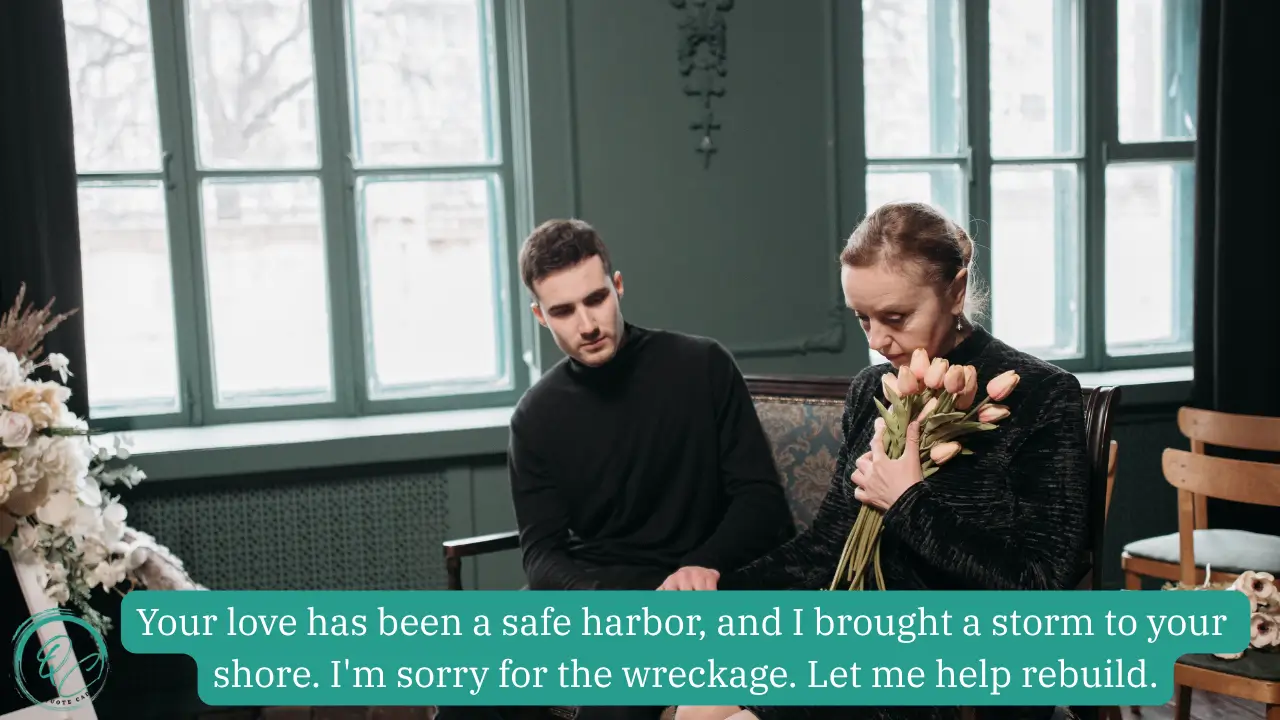
Your love has been a safe harbor, and I brought a storm to your shore. I’m sorry for the wreckage. Let me help rebuild. How it says sorry: It uses the metaphor of safe harbor and storm, honoring her steady love while taking responsibility for the damage.
I don’t want to be right in this argument anymore. I just want to be close to you again. That’s the only victory that matters now. How it says sorry: It surrenders the need to win and reorients the entire conflict toward the singular goal of restored intimacy.
🔥 Need sharp responses that help you handle disrespect, sarcasm, or unwanted remarks without losing your cool? Explore
Best Comebacks to Shut Someone Up
to boost your confidence, improve your verbal skills, and respond with humor, intelligence, and composure.
9. Apology Message for Her to Forgive
Asking for forgiveness from a person who is your partner day and night is the most difficult thing. Asking for forgiveness is not enough; you need an apology message for her. The following messages are sincere words for her to forgive without any pressure.
I know forgiveness isn’t a button you press to make me feel better. It’s a journey you take when you feel safe enough to start walking. I’ll wait. How it says sorry: It defines forgiveness on her terms and communicates a willingness to wait without applying pressure or timelines.
I’m not standing here with a list of reasons I deserve your forgiveness. I’m standing here with a list of reasons I don’t, and a hope that you’ll help me become someone who eventually does. How it says sorry: It rejects entitlement and invites her into a collaborative process of growth rather than demanding a result.
You don’t have to say the words today, or tomorrow, or ever. But I wanted you to know I’m genuinely sorry, and that won’t change even if your answer never comes. How it says sorry: It releases her from any obligation to respond, proving the apology exists for her benefit, not his relief.
Forgiveness, to me, isn’t about pretending it never happened. It’s about you feeling light enough again, and if I can help carry what I put on your shoulders, I will. How it says sorry: It reframes forgiveness as her emotional freedom rather than his absolution, and offers to share the burden.
I’ve stopped asking myself when you’ll forgive me and started asking myself what I’m doing each day to make forgiveness feel possible for you. How it says sorry: It shifts the focus from her timeline to his daily actions, demonstrating an internal change in perspective.
The word “sorry” feels too small for what I did, but it’s the honest start. I’m hoping you’ll let me build on it with better choices, one day at a time. How it says sorry: It admits the limits of language while positioning the apology as a foundation for sustained, visible change.
I can’t earn your forgiveness like a paycheck. But I can show up every day and be the person who deserves it, whether you grant it or not. How it says sorry: It rejects transactional thinking and commits to consistent character regardless of her response.
Your heart knows its own pace. I won’t rush it, manipulate it, or crowd it with demands. I’ll just be here, quietly, ready when it opens. How it says sorry: It honors her emotional autonomy and promises patient, non-manipulative presence.
I broke something beautiful, and I can’t glue it back together overnight. But I can sit beside the pieces with you and ask what you need to rebuild. How it says sorry: It acknowledges the severity of the damage and invites her to set the terms and pace of repair.
Every time I’ve pushed you to “move on,” I’ve made the wound deeper. This time, I’m not pushing. I’m just here, and I’m sorry. How it says sorry: It admits to past harmful pressure and distinguishes the current apology by its complete absence of demand.
I want your forgiveness, but more than that, I want you to feel whole again. Even if that wholeness doesn’t include me. How it says sorry: It prioritizes her well-being over the relationship, proving the apology isn’t self-serving.
The door to my apology doesn’t have a handle on your side. You can push it open when you’re ready, or leave it closed. Either way, I meant every word. How it says sorry: It gives her complete control over the response, removing any sense of obligation.
I’ve learned that forgiveness isn’t a single moment. It’s a process with setbacks and silences. I’m prepared for all of it, as long as you need. How it says sorry: It demonstrates a realistic understanding of forgiveness as non-linear and commits to patience through every phase.
I can’t take back the pain I caused, but I can promise you this: I will never make you defend your right to take time with it. How it says sorry: It defends her right to process slowly and promises never to challenge or rush her healing.
If you ever choose to forgive me, I’ll treat it like the gift it is—undeserved, precious, and something I’ll spend my life being worthy of. How it says sorry: It frames forgiveness as pure grace rather than an earned outcome, and commits to lifelong gratitude.
10. Heart-Melting Apology Messages to Your Girlfriend
A heart-melting apology does not mean dramatic gestures. It should be honest enough to heal the wound and spark the love again. These apology messages are to speak directly to the heart with warmth and sincerity.
If I could gather every careless word I said and take them back into my mouth, I would. Instead, I’m offering you the words I should have said: you matter, you’re loved, and I’m sorry. How it says sorry: It expresses the impossible wish to undo the hurt while replacing the damaging words with the affirming ones she deserved all along.
Your eyes tell me everything, even when you’re silent. Right now, they’re telling me I let you down, and I’m here to listen to that quiet truth until it feels heard. How it says sorry: It pays attention to her nonverbal communication and commits to sitting with her pain until she feels fully acknowledged.
I know we’re in the middle of a storm, but I’m not reaching for an umbrella. I’m reaching for your hand, even in the rain, until the sky clears again. How it says sorry: It refuses to protect itself from the discomfort of conflict and chooses connection over comfort.
You’ve loved me through my rough edges, and today I let one of those edges cut you. I’m sorry for being sharp when I should have been soft. How it says sorry: It uses the metaphor of rough edges to explain hurtful behavior and apologizes for failing to soften for her.
The distance between us right now is my fault, and every step of it feels like a mile. I’ll walk the whole thing back to you, no shortcuts, no excuses. How it says sorry: It acknowledges the emotional gap and commits to doing the full work of closing it without seeking an easy way out.
I saw that little flicker of hurt cross your face before you looked away. I noticed, and I should have stopped right then. I’m sorry I kept going. How it says sorry: It proves he was paying attention to her subtle cues and admits to the choice to ignore them in real time.
You are the softest, warmest part of my life, and I brought coldness into that space. I want to warm things up again, starting with this apology. How it says sorry: It contrasts her warmth with his cold behavior and expresses a desire to restore the emotional temperature.
I never want to be the reason your smile fades. Today I was, and the image of that is sitting heavily in my chest. I’m so sorry, beautiful. How it says sorry: It connects a specific visual memory of her dimmed joy to his regret and uses an affectionate term to reaffirm her value.
You gave me your trust like an open book, and I dog-eared a page carelessly. I’m sorry for treating something so sacred with casual hands. How it says sorry: It uses the metaphor of a cherished book to represent her trust and apologizes for handling it without proper care.
My phone is full of pictures of you smiling, and I scrolled through them tonight thinking about how I made that smile disappear today. I want to bring it back. How it says sorry: It describes a reflective moment using tangible memories and connects the regret to a desire to restore her happiness.
You’re not just my girlfriend. You’re my best friend, and I spoke to you today like you were neither. That betrayal of our friendship hurts me as much as it hurt you. How it says sorry: It elevates her role beyond romantic partner to best friend and names the specific injury as a betrayal of that deeper bond.
I can list all the reasons I love you, but today my actions didn’t match the list. I’m sorry for creating a gap between my words and my behavior. How it says sorry: It acknowledges the inconsistency between stated love and demonstrated love and takes responsibility for the disconnect.
Your love has always felt like coming home. Today I made home feel unfamiliar, and I’m sorry for shaking the foundation of what we’ve built together. How it says sorry: It uses the powerful metaphor of home to describe her love and apologizes for destabilizing the sense of safety.
I held your heart in my hands and squeezed it a little too tightly. Not because I wanted to hurt you, but because I wasn’t paying enough attention. That changes now. How it says sorry: It describes the hurt as a failure of attention rather than intent and promises immediate correction.
Every love song sounds different when you’re upset with me. The notes are flatter, the words don’t land. I want to hear the music with you again, the way it’s supposed to sound. How it says sorry: It uses the shared experience of music to illustrate how the conflict has drained color from his world and expresses longing for restoration.
💼 Conclusion
A meaningful apology is more than a few carefully chosen words. It is a sincere acknowledgment of a mistake and a genuine commitment to making things right. True apologies focus on healing, rebuilding trust, and showing respect for the feelings of the person who was hurt.
When spoken from the heart, an apology can accomplish what explanations alone cannot. It creates space for understanding, growth, and reconciliation. Take responsibility for your actions, express your remorse with honesty, and let your words become the first step toward restoring the bond that matters most.
FAQ’s: (Frequently Ask Questions)
Q1. How do I apologize to her after hurting her?
Acknowledge the specific hurt without excuses, express genuine remorse, and give her space to process. Your tone matters more than perfect words—sincerity lands deeper.
Q2. How do you write a heart-touching apology message?
Recall a specific moment you failed her and name it honestly. Pair your regret with appreciation for who she is, making the message personal.
Q3. How to say sorry to make her cry?
Speak to the exact wound with tenderness, not drama. Use intimate details only you know, showing you truly see her pain.
Q4. How to apologize romantically?
Weave your apology into a reminder of your love story. A handwritten note with shared memories softens the mistake naturally.
Q5. How to say sorry very deeply?
Go beyond words with consistent changed behavior. Acknowledge the full impact, accept responsibility completely, and commit to earning trust again.